


Latest blog
A Complete Guide to Mobile Crushing Stat... Unstable Primary Crushing in Large Mines... How to Choose a Reliable Crusher Manufac... Crushers: Classification, Selection Prin... Performance advantages of tire‑mounted m... What are the characteristics of tire‑mou...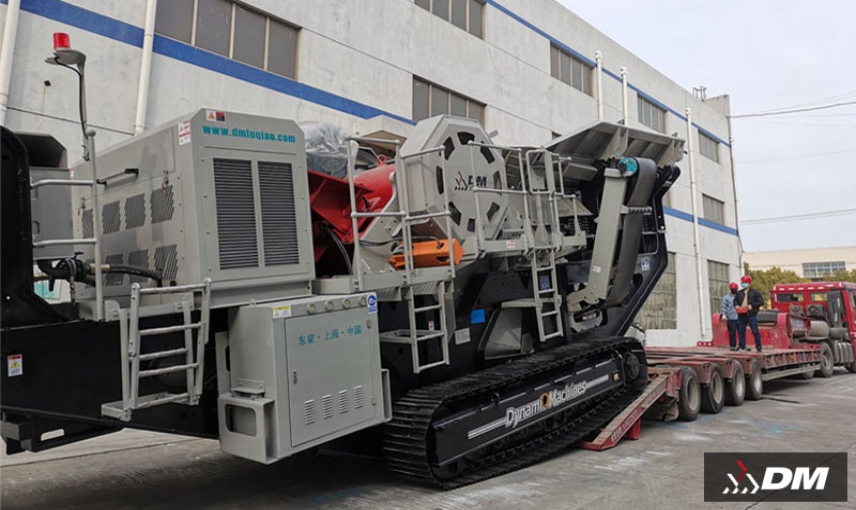
Mobile Crusher Plant: The Pros and Cons They Don't Tell You
Mobile Crusher Plant: The Pros and Cons They Don’t Tell You
Driven by the global infrastructure boom and growing demand for mining development, mobile crusher plants have become a popular alternative to traditional fixed crushing lines due to their "produce-and-move" flexibility. However, most marketing promotions focus only on their glamorous advantages while avoiding the hidden issues in actual operation. For overseas investors and mining operators, a comprehensive understanding of the "less-known" pros and cons of mobile crusher plants is essential to make project-aligned decisions. This article breaks down information barriers, analyzing the core value and potential challenges of mobile crusher plants from a practical perspective to provide objective references for overseas users.
I. Undervalued Core Advantages: In-depth Value Beyond "Flexibility"
The advantages of mobile crusher plants go far beyond "mobility". Their value in cost control, scenario adaptability, and risk mitigation is often unmatched by traditional lines—these are the core competencies most valued in overseas projects.
1. Zero Infrastructure Costs, Significantly Shortened Commissioning Cycle
Traditional fixed crusher plants require huge investments in foundation construction, workshops, and material conveying corridors, with the infrastructure phase alone taking 3-6 months. In regions with underdeveloped infrastructure such as Africa and Southeast Asia, costs can increase by over 50%. In contrast, mobile crusher plants need no fixed infrastructure; they can complete commissioning and start production within 1-2 days after arriving at the site. This makes them particularly suitable for short-term overseas mining projects or emergency crushing needs. In a temporary road repair project in the Middle East, a mobile crusher plant was put into production on the same day it arrived, saving nearly 2 months of preparation time compared to traditional solutions and ensuring on-schedule project delivery.
2. "On-site Material Conversion" Cuts the Largest Transportation Cost
Most overseas mines are located in remote areas, and the cost of transporting ore to fixed crusher plants often accounts for 30%-40% of total costs. Mobile crusher plants can be directly deployed at mining sites to crush ore into finished aggregates on-site, eliminating long-distance transportation. This reduces transportation costs per ton of materials by 60%-80%. In an Australian iron ore project, the annual transportation cost was reduced by over 12 million US dollars after adopting mobile crusher plants, shortening the investment payback period from 2.5 years to 1.2 years.
3. Multi-scenario Adaptability for Complex Overseas Working Conditions
Overseas mining working conditions are diverse, ranging from muddy rainforests to high-temperature deserts. Mobile crusher plants feature crawler chassis design with a climbing capacity of up to 35°, enabling easy navigation through rough mountain roads. Their sealed bodies and high-temperature resistant hydraulic systems can operate stably in environments from the -20℃ Siberian permafrost to the 60℃ Sahara Desert. Additionally, the equipment can quickly switch crushing modules—converting from jaw crushing mode for granite to impact crushing mode for limestone takes only 2-3 hours, meeting multi-material crushing needs.
4. Low Investment Risk, Suitable for Small and Medium-sized Projects
Overseas small and medium-sized investors are often constrained by capital and cannot afford the tens of millions of initial investment required for fixed crusher plants. Mobile crusher plants adopt modular configurations, allowing flexible combination based on output demand, with initial investment only 1/3 to 1/2 of traditional lines. If the project ends or ore sources are exhausted, the equipment can be directly transferred to new sites, with an asset retention rate of over 80%—far higher than the 30% of fixed equipment—greatly reducing investment risks.
II. Hidden Potential Disadvantages: Unignorable Challenges in Operation
Blindly trusting the "flexibility" of mobile crusher plants while ignoring their inherent shortcomings may lead overseas projects into operational dilemmas. The following easily overlooked disadvantages require advance planning and countermeasures.
1. Slightly Higher Unit Capacity Cost, Less Advantageous for Large-scale Production
The integrated design of mobile crusher plants results in higher manufacturing costs per unit capacity. For large-scale projects with annual output exceeding 500,000 tons, the production cost per ton of aggregates is 10%-15% higher than that of fixed lines. Taking a 1 million-ton annual output quarry as an example, using mobile crusher plants would increase annual costs by nearly 3 million US dollars, making them less economical than fixed lines in the long run. Therefore, caution is needed when selecting mobile plants for large-scale, long-term stable crushing projects.
2. Higher Requirements for Operation and Maintenance
Mobile crusher plants integrate crushing, screening, conveying and other systems, making them much more difficult to operate than single fixed equipment. Professional technicians are required for commissioning and operation. In some overseas regions with a shortage of technical talents, insufficient personnel training may lead to operational errors and equipment failures. Meanwhile, the mobile nature of the equipment increases the wear of lubrication and hydraulic systems, requiring more frequent maintenance mechanisms—maintenance costs are about 20% higher than those of fixed equipment.
3. Additional Protection Required Under Extreme Weather
Although mobile crusher plants adapt to various working conditions, additional protection is still needed under extreme weather such as typhoons, heavy rains, and severe sandstorms. For example, during the rainy season in Southeast Asia, the electrical system of the equipment is prone to moisture and short circuits if no rain shelters and drainage systems are equipped. In desert areas of West Asia, the air filter needs regular cleaning to prevent engine overload and shutdown. These additional protective measures increase operational costs and workload to a certain extent.
4. Transportation Restrictions in Some Regions
The main body of mobile crusher plants can weigh dozens of tons, leading to transportation restrictions in some overseas areas with insufficient bridge load capacity and narrow roads. For example, in the Amazon rainforest region of South America, special transport ships and crawler trailers are required to transfer the equipment, with a single transfer cost as high as hundreds of thousands of US dollars and a long time consumption. Therefore, the feasibility of transportation must be evaluated in advance for projects with frequent transfers and inconvenient transportation.
III. Overseas Project Selection Guide: Maximize the Benefits of Mobile Crusher Plants
The core of selecting a mobile crusher plant is "adaptability"—comprehensive judgment based on project scale, working conditions, cycle and other factors to maximize its value.
- Priority Scenarios: Short-term mining projects (1-3 years), small and medium-sized capacity needs (annual output < 500,000 tons), remote area material crushing, multi-mine transfer operations, emergency crushing needs.
- Cautious Scenarios: Large-scale long-term projects (annual output > 1 million tons), areas with extremely inconvenient transportation and frequent transfers, high-dust enclosed space operations without protective conditions.
- Key Configuration Requirements: Overseas projects should select equipment equipped with intelligent remote operation and maintenance systems to facilitate remote debugging and troubleshooting by Chinese technicians. Meanwhile, priority should be given to products certified by CE and ISO to adapt to local voltage standards and environmental regulations.
Professional Partners Help You Avoid Risks and Amplify Advantages
As a manufacturer with 20 years of experience in the overseas mining machinery market, we deeply understand the pain points and needs of overseas users. Our mobile crusher plants not only have core configurations such as crawler all-terrain chassis and modular crushing systems but also optimize three major services for overseas scenarios: first, providing an integrated "equipment + training + maintenance" solution, with on-site training for local operators to reduce maintenance difficulties; second, establishing spare parts centers in more than 50 countries worldwide to realize 24-hour spare parts delivery; third, offering customized modification services to adjust dust-proof, rain-proof and high-temperature resistant configurations according to local working conditions.
From Australian iron mines to Brazilian quarries, from African gold mines to Middle Eastern infrastructure projects, our mobile crusher plants have served more than 800 overseas projects. Whether you are a small and medium-sized investor or a large mining group, we can match you with the most suitable mobile crusher plant solution, helping you avoid pitfalls and maximize equipment value. Contact us now to get an exclusive project evaluation report!
Prev Post
How Does a Mobile Crusher Work?

We will answer your email shortly!