


Latest blog
A Complete Guide to Mobile Crushing Stat... Unstable Primary Crushing in Large Mines... How to Choose a Reliable Crusher Manufac... Crushers: Classification, Selection Prin... Performance advantages of tire‑mounted m... What are the characteristics of tire‑mou...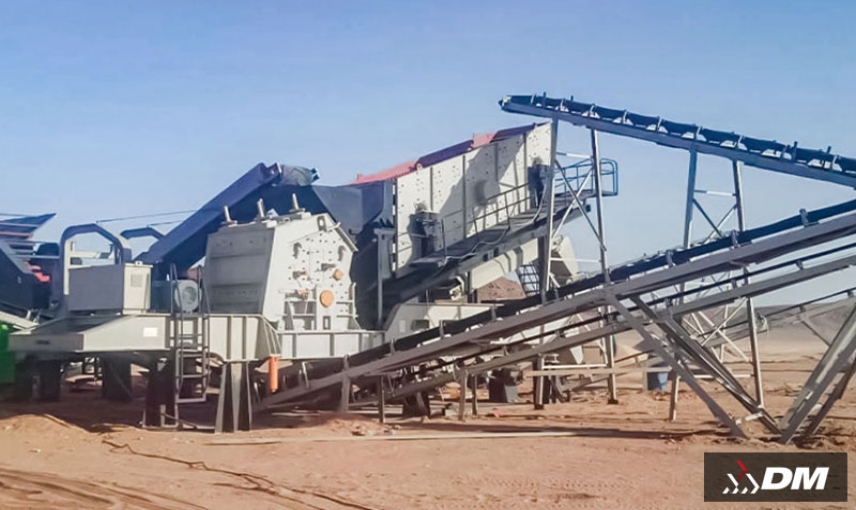
What is a rock crusher?
An industrial rock crusher, alternatively referred to as a rock crushing unit, is a specialized mechanical apparatus designed to fragment bulky solid materials into precisely sized particles via controlled external forces that induce brittle structural failure. It serves as a linchpin across sectors including mining extraction, building construction, highway engineering, and construction debris recycling, acting as the central processing unit for sand-gravel aggregate manufacturing, ore beneficiation, and solid waste valorization. As a pivotal category of material reduction equipment, it delivers irreplaceable value to contemporary material processing industries.
I. Core Operational Principles of Rock Crushers
At its heart, a rock crusher’s functionality hinges on applying mechanical force to overcome the internal molecular cohesion of materials, thereby reducing large lumps into smaller fragments. Based on the distinct mechanical force modalities employed, crushers are primarily categorized into three core types:
- Compression-Based Crushing: Utilizes the relative motion of two opposing working surfaces to squeeze materials, leading to compressive fracture and flexural deformation failure. Jaw crushers and cone crushers are the industry-standard equipment for this method;
- Impact-Driven Crushing: Breaks down materials by means of high-velocity moving components (e.g., crusher hammers and impact blow bars) striking the feedstock, or by accelerating materials to collide with one another at high speed. Impact crushers and vertical shaft impact (VSI) crushers are the typical implementations of this principle;
- Grinding-Assisted Crushing: Achieves fine particle size reduction through continuous friction and abrasion between materials and grinding media. Widely integrated into equipment like ball mills, this method also functions as an auxiliary crushing process for primary crushers.
II. Primary Classification of Industrial Rock Crushers
Rock crushers can be categorized by their crushing stage, structural configuration, and application scenario, with three types dominating global industrial applications:
1. Jaw Crusher (Primary Crushing Solution)
As the most time-honored and widely adopted crushing equipment, jaw crushers are engineered for primary size reduction of raw materials. Their structure comprises a fixed jaw plate and a movable jaw plate that form a tapered crushing cavity. Driven by an eccentric shaft, the movable jaw plate executes reciprocating oscillating movements, compressing and splitting large materials fed into the cavity. Boasting a generous feed inlet, this equipment can process various hard rock types with compressive strength up to 320MPa (including granite and basalt), making it the go-to choice for primary crushing operations in mines and quarries.
2. Cone Crusher (Secondary & Tertiary Crushing Equipment)
Cone crushers are specialized for secondary and fine crushing tasks, available in variants such as spring cone crushers and hydraulic cone crushers. Their core working components include a movable cone and a fixed cone. Propelled by an eccentric sleeve, the movable cone performs gyratory motions, exerting combined forces of compression, rolling, and shearing on materials trapped in the crushing cavity. Featuring a high crushing ratio and uniform finished particle size, cone crushers are ideal for processing ores and rocks with compressive strength ≤ 300MPa, serving as the core equipment in sand-gravel aggregate production lines for secondary and fine crushing stages.
3. Impact Crusher (Medium Crushing & Particle Shaping Tool)
Impact crushers leverage high-speed rotating blow bars to strike materials. After impacting the stationary impact plates, materials rebound and collide with subsequent feed batches, undergoing multiple rounds of crushing. The resulting products exhibit a cubic shape with minimal needle-like or flaky particles, enabling both medium crushing and particle shaping in a single pass. Suitable for processing soft rocks, construction waste, limestone, and other materials with compressive strength ≤ 180MPa, these crushers are extensively used in sand-gravel production for road construction projects.
III. Typical Application Scenarios of Industrial Rock Crushers
The utility of rock crushers spans multiple industries, with key application areas including:
- Mining Sector: Processing diverse ore raw materials to supply properly sized feedstock for mineral beneficiation and smelting processes;
- Construction Engineering: Reducing large boulders into sand and gravel aggregates for concrete mixing, mortar preparation, and road base construction;
- Construction Waste Recycling: Crushing and reusing solid wastes like concrete blocks and bricks generated from demolition and construction activities to achieve circular resource utilization;
- Highway & Infrastructure Construction: Producing specification-compliant crushed stone and manufactured sand to meet material demands for large-scale projects such as highways, railways, and airports.
IV. Mobile vs. Fixed Industrial Rock Crushers: Key Differences
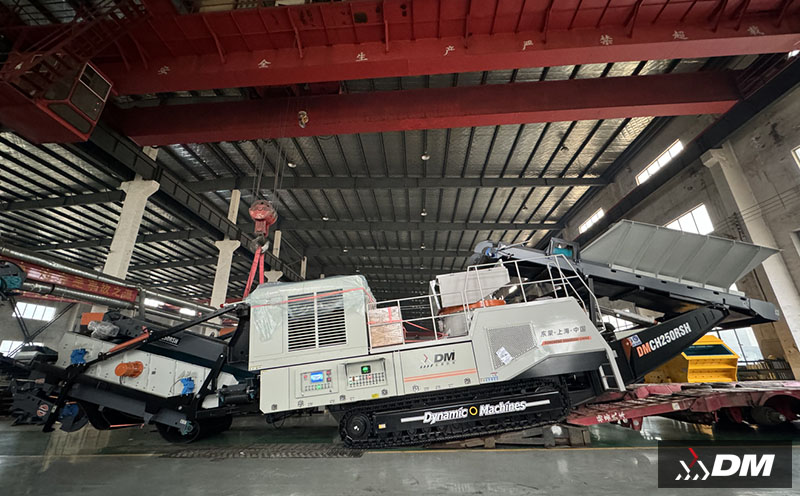
Beyond traditional fixed crushers—which require permanent foundation construction and are suited for large-scale production lines—mobile crushers have gained widespread traction in recent years. These units integrate crushing, screening, and conveying systems onto a wheeled or crawler-mounted chassis, eliminating the need for fixed foundations and enabling direct transportation to job sites. Particularly well-suited for decentralized construction waste processing, remote quarry operations, and temporary engineering material supply, mobile crushers offer distinct advantages such as flexible mobility, rapid deployment, and reduced transportation costs.
V. Key Takeaways
As the core equipment for material crushing and processing, the selection of an industrial rock crusher type must be tailored to factors including material hardness, required crushing particle size, and specific application scenarios. From conventional fixed equipment to advanced intelligent mobile crushers, the technological evolution of industrial rock crushers has consistently prioritized efficiency, energy conservation, environmental friendliness, and operational flexibility, providing critical technical support for the development of mining, infrastructure, solid waste management, and related industries.
How Does an Industrial Rock Crusher Work? A Comprehensive Guide
An industrial rock crusher stands as the central material reduction equipment in sectors like mining, infrastructure development, and solid waste treatment. Its primary objective is to overcome the internal bonding forces of materials using mechanical external forces, breaking down large solid materials into particle sizes tailored for industrial applications. While different types of industrial rock crushers vary significantly in structural design and application scenarios—leading to distinct operational principles—all fundamentally rely on mechanical forces such as compression, impact, grinding, and splitting to fragment materials. This guide provides a detailed breakdown of the working principles and applicable scenarios of mainstream industrial rock crushers.
I. Core Crushing Force Mechanisms of Industrial Rock Crushers
Irrespective of their type, all industrial rock crushers depend on one or more of the following mechanical force mechanisms, which form the foundation of their operational principles:
- Compression Force: Squeezes materials via the relative movement of two working surfaces, causing fracture due to insufficient compressive strength resistance. Ideal for primary and medium crushing of high-strength materials such as hard rocks and ores;
- Impact Force: Generates impact energy through high-speed moving components (e.g., hammers and blow bars) or the high-velocity movement of materials themselves, inducing brittle fracture in the feedstock. Suitable for crushing and shaping medium-to-soft materials;
- Grinding Force: Achieves fine particle reduction through friction and abrasion between materials and grinding media, as well as between individual material particles. Often deployed in the final fine-crushing stage of material processing;
- Splitting Force: Applies targeted force via sharp components to induce material cracking along natural textures or weak structural planes. Mostly used as an auxiliary force to enhance compression-based crushing.
II. In-Depth Working Principles of Mainstream Industrial Rock Crushers
1. Jaw Crusher: Primary Crushing Equipment Powered by Compression + Splitting
As the most widely used primary crushing equipment, jaw crushers feature core components including a fixed jaw plate, movable jaw plate, eccentric shaft, and flywheel. Their working principle is outlined below:
A motor drives the eccentric shaft to rotate via a V-belt, which in turn causes the movable jaw plate to oscillate reciprocally around the suspension shaft. This motion creates periodic changes in the volume of the crushing cavity between the movable and fixed jaw plates. When the movable jaw plate moves toward the fixed jaw plate, large materials in the cavity are squeezed, split, and bent until they break into particles meeting the discharge size requirements. As the movable jaw plate retracts, the crushed materials are discharged through the outlet under gravity. This cyclic process enables continuous primary crushing operations. With a large feed inlet, jaw crushers can process hard rocks like granite and basalt with compressive strength ≤ 320MPa, and discharge particle size can be adjusted by modifying the gap between the jaw plates.
2. Cone Crusher: Secondary & Fine Crushing Equipment Driven by Compression + Rolling
Cone crushers—including spring cone and hydraulic cone variants—serve as the core equipment for secondary and fine crushing of hard rocks. Their working principle is as follows:
The equipment’s core components are a movable cone and a fixed cone, which form an annular crushing cavity. A motor drives the eccentric sleeve to rotate via a transmission system, causing the movable cone to perform gyratory motions. The axes of the movable and fixed cones are offset (eccentric), so as the movable cone approaches the fixed cone, materials in the cavity are subjected to compression, rolling, and shearing forces, leading to fracture. When the movable cone moves away, the crushed materials fall to complete a crushing cycle. Hydraulic cone crushers are additionally equipped with a hydraulic cavity cleaning and overload protection system: if uncrushable foreign objects enter the cavity, the hydraulic system lifts the movable cone to expel the debris and automatically resets, ensuring stable equipment operation. With a high crushing ratio and uniform finished particle size, cone crushers are ideal for secondary and fine crushing of ores and rocks with compressive strength ≤ 300MPa.
3. Impact Crusher: Medium Crushing & Shaping Equipment Powered by Impact + Collision
Focused on medium crushing and particle shaping, impact crushers feature core components including a rotor, blow bars, impact plates, and a feed inlet. Their working principle is detailed below:
A motor drives the rotor to rotate at high speed (up to 1000–1500r/min), with the blow bars on the rotor moving synchronously at high velocity. As materials enter the equipment through the feed inlet, they are first struck by the high-speed rotating blow bars. The kinetic energy gained causes the materials to collide with the impact plates at high speed, rebound, and collide with subsequent incoming materials. Simultaneously, materials are squeezed and ground between the blow bars and impact plates. After multiple cycles of impact, collision, and compression, materials are gradually reduced to the specified particle size and discharged. The finished products of impact crushers are cubic with minimal needle-like or flaky particles, making them suitable for crushing limestone, construction waste, gangue, and other materials with compressive strength ≤ 180MPa.
4. Vertical Shaft Impact (VSI) Crusher: Sand Making Equipment Driven by Impact + Grinding
The vertical shaft impact (VSI) crusher—commonly called a sand maker—is the core equipment for manufactured sand production. Its working principle operates in two modes: "stone-on-stone" and "stone-on-iron":
- Stone-on-Stone Mode: Materials enter through the feed inlet and are split into two streams by a distributor. One stream enters the center of a high-speed rotating impeller, is accelerated, and is ejected outward by centrifugal force, colliding violently with the other stream of materials falling from the distributor’s periphery. Simultaneously, materials collide with the wear-resistant lining of the crushing cavity, achieving crushing via mutual collision and grinding;
- Stone-on-Iron Mode: After being accelerated and ejected by the impeller, materials collide directly with wear-resistant iron blocks in the crushing cavity, achieving fragmentation through impact and rebound. This mode delivers higher crushing efficiency but results in faster wear of vulnerable components.
VSI crushers produce manufactured sand with fine particle size and well-graded particle distribution, primarily used for processing hard rocks like granite and basalt into construction-grade sand that meets strict particle size standards.
III. Critical Factors Influencing Industrial Rock Crusher Efficiency
In addition to understanding working principles, optimizing equipment performance requires focusing on core factors that impact crushing efficiency:
- Material Properties: Compressive strength, moisture content, and clay content directly influence crushing outcomes. Excess moisture can cause cavity blockages, while high material hardness accelerates equipment wear;
- Equipment Parameters: Rotor speed (for impact crushers and VSI crushers), crushing cavity gap (for jaw crushers and cone crushers), and wear levels of blow bars/jaw plates must be adjusted to optimal settings based on material characteristics;
- Feed Particle Size: Feed size must align with equipment design specifications. Oversized feed can trigger overload shutdowns, while undersized feed reduces overall crushing efficiency.
IV. Final Summary
The working principle of an industrial rock crusher centers on the core concept of "fragmenting materials via mechanical force". Different equipment types adapt to crushing scenarios involving varying material hardness and particle size requirements by combining forces such as compression, impact, and grinding. Jaw crushers specialize in primary crushing, cone crushers excel at secondary and fine crushing of hard rocks, impact crushers deliver both medium crushing and particle shaping, and VSI crushers are dedicated to manufactured sand production. Mastering these working principles is the key to selecting the right equipment, optimizing operational parameters, and boosting overall crushing efficiency.


We will answer your email shortly!