


Latest blog
A Complete Guide to Mobile Crushing Stat... Unstable Primary Crushing in Large Mines... How to Choose a Reliable Crusher Manufac... Crushers: Classification, Selection Prin... Performance advantages of tire‑mounted m... What are the characteristics of tire‑mou...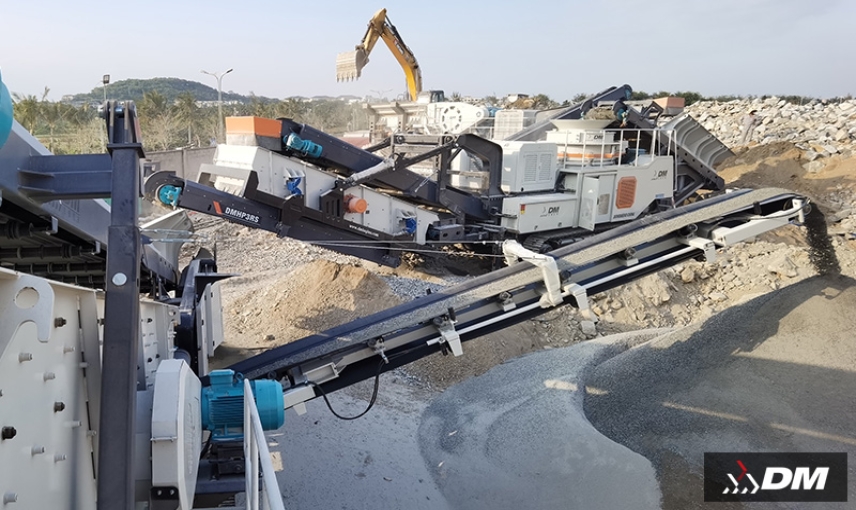
What is a Mobile Crusher?
A mobile crusher, also known as a mobile crushing plant or mobile crushing unit, is an integrated movable crushing equipment that combines feeding, crushing, screening, and conveying functions. Unlike traditional fixed crushing production lines, it eliminates the need for cumbersome foundation construction and fixed installation procedures. It can be flexibly relocated according to construction requirements and is widely used in construction waste disposal, mining operations, road infrastructure projects, and sand and aggregate production. As a core equipment in modern engineering crushing operations, it offers both flexibility and high efficiency.
1. Core Structure and Components of a Mobile Crusher
The overall structure of a mobile crusher is based on a towable frame, integrating key components such as the main crushing unit, feeder, vibrating screen, conveyor belt, power system, and control system. Configurations vary across models to meet functional needs:
- Main Crushing Unit: The core working component. Jaw crushers, cone crushers, impact crushers, or vertical shaft impact (VSI) crushers can be selected based on material characteristics, suitable for primary crushing, secondary/tertiary crushing, and sand making respectively;
- Feeding System: Typically uses a vibrating feeder to ensure uniform and continuous material feeding, preventing overload of the main crushing unit;
- Screening and Conveying System: The vibrating screen classifies materials by particle size, and conveyor belts transport finished products of different specifications to designated areas, forming an integrated "crushing-screening-discharging" process;
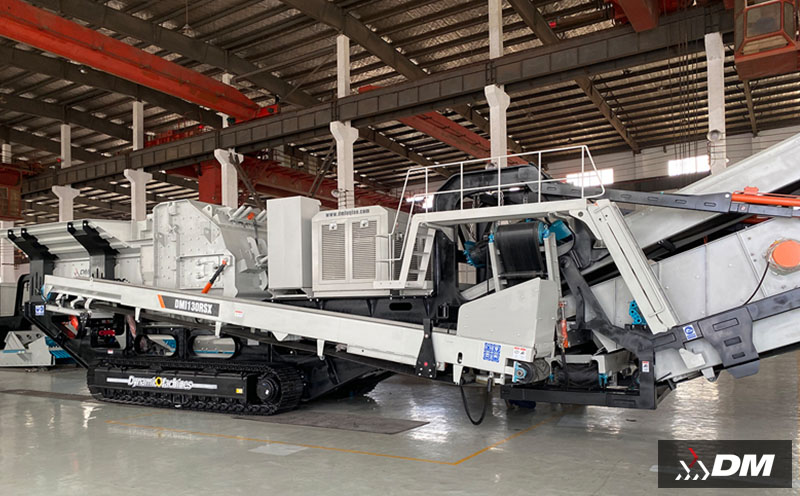
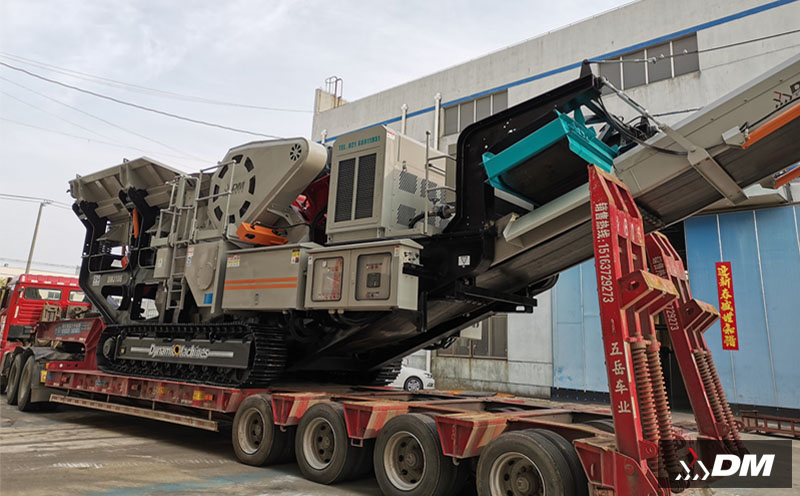
- Power and Travel System: Equipped with a diesel engine or electric motor as the power source. The frame is fitted with tire or crawler travel mechanisms—tire-type for flat terrain and crawler-type for muddy, rugged, or complex landscapes.
2. Key Advantages of Mobile Crushers
Compared to fixed crushing production lines, the advantages of mobile crushers lie in three core aspects: flexibility, cost-effectiveness, and adaptability:
- High Mobility and Easy Relocation: No disassembly or installation is required; it can be directly towed or self-moved to the job site. Ideal for decentralized construction waste disposal, remote mining, and temporary engineering projects, it significantly reduces material transportation costs;
- No Foundation Needed, Quick Commissioning: Eliminates the need for foundation excavation and workshop construction required for fixed lines. It can start operation immediately after on-site power connection, shortening project preparation cycles and improving capital turnover efficiency;
- Adaptability to Complex Working Conditions: Crawler-type mobile crushers offer excellent off-road performance, suitable for mountainous areas, wetlands, demolition sites, and other harsh environments. They can also flexibly adjust crushing parameters based on material hardness and output requirements;
- Energy Efficiency and Environmental Compliance: New-generation mobile crushers adopt low-energy-consumption power systems and are equipped with dust removal and noise reduction devices, meeting local environmental emission standards and avoiding shutdowns due to environmental violations.
3. Main Types and Application Scenarios of Mobile Crushers
Mobile crushers are categorized by travel mode and functional positioning to suit different operational needs:
- Tire-type Mobile Crushers: Low cost and fast mobility, suitable for concentrated material sites with flat terrain (e.g., urban construction waste recycling, temporary sand and gravel plant supplementation, highway reconstruction and expansion projects);
- Crawler-type Mobile Crushers: Strong off-road capability and stability, ideal for complex terrains such as mines, hydropower stations, and mountain infrastructure projects, capable of processing hard rock materials like granite and basalt;
- Combined Mobile Crushing Plants: Composed of multiple mobile crushing units with different functions (e.g., primary crushing unit + secondary/tertiary crushing unit + sand making unit), forming a complete production line to meet large-scale, multi-specification finished product demands.
In specific applications, impact mobile crushers are commonly used for construction waste disposal to achieve both crushing and shaping; jaw + cone mobile crushing combinations are preferred for hard rock mining; VSI mobile crushers are adapted for sand making projects to produce construction-grade manufactured sand.
4. Considerations for Purchasing and Using Mobile Crushers
When purchasing a mobile crusher, comprehensive consideration of actual needs is essential:
- Select the main crushing unit type based on material hardness, particle size, and output requirements (e.g., jaw + cone combinations for hard rock, impact crushers for soft rock or construction waste);
- Focus on wear part supply and after-sales service, prioritizing brands with nationwide service networks to reduce long-term maintenance costs;
- Choose the power type (diesel/electric) and travel mode (tire/crawler) based on on-site power availability and terrain conditions;
- During operation, regularly inspect wear part condition and tighten all connections to ensure stable equipment operation and extend service life.
5. Conclusion
With its flexibility, high efficiency, and strong adaptability, the mobile crusher has become a key alternative to traditional fixed crushing equipment. It plays an irreplaceable role especially in construction waste recycling, green mine development, and emergency engineering projects. As technology advances, mobile crushers are evolving toward intelligence and energy efficiency, further improving operational efficiency, reducing operating costs, and meeting the crushing needs of various industries.
What Are the Three Types of Crushers?
Crushers are essential equipment in industries such as mining, infrastructure construction, and construction waste disposal. Based on crushing principles, application scenarios, and material characteristics, the three most mainstream and widely used types of crushers in the industry are jaw crushers, cone crushers, and impact crushers. These three types cover the entire crushing process from primary to secondary/tertiary crushing, serving as the basic configuration for sand and aggregate production and ore processing. Below is a detailed analysis of their features and applications.
1. Jaw Crusher: The "Workhorse" of Primary Crushing
Also known as a "toggle crusher," the jaw crusher is the oldest and most fundamental type of crushing equipment. It operates by applying compressive force to materials through the periodic opening and closing of a movable jaw and a fixed jaw, specializing in primary crushing—the first stage of most crushing production lines.
Core Features: Simple structure, low failure rate, and strong compression resistance, capable of processing various hard rocks with compressive strength ≤ 320 MPa (e.g., granite, basalt, iron ore). It has a large feed inlet for directly handling large raw stones, and the discharge particle size can be flexibly adjusted by modifying the jaw plate gap.
Typical Applications: Primary crushing of raw mine ore, rough crushing of construction waste, initial processing of sand and gravel plant raw materials, and coarse stone treatment in highway and railway infrastructure projects. It is particularly suitable for harsh working conditions requiring high equipment stability.
2. Cone Crusher: The "Precision Tool" for Secondary/Tertiary Crushing
Based on the laminated crushing principle, the cone crusher uses the swinging motion of a moving cone within a fixed cone cavity to squeeze, grind, and shear materials that have undergone primary crushing. As the core equipment for secondary/tertiary crushing, it is divided into sub-types such as spring cone crushers and hydraulic cone crushers.
Core Features: High crushing ratio, uniform finished product particle size, and low content of needle-like or flaky particles. It is far more efficient than other models when processing hard rocks. Hydraulic models offer overload protection and automatic cavity cleaning, reducing maintenance costs and suiting large-scale, high-precision crushing needs.
Typical Applications: Fine crushing of metal mine ore, aggregate processing for high-grade highways, and production of crushed stone for concrete. It is often paired with jaw crushers to form the mainstream "primary + secondary/tertiary crushing" production line.
3. Impact Crusher: The "Versatile Machine" for Secondary Crushing and Shaping
The impact crusher crushes materials by using a high-speed rotating rotor to drive hammers that strike the material, while the material repeatedly collides between the impact plates and hammers. It combines both crushing and shaping functions, focusing on secondary crushing and material shaping.
Core Features: Excellent finished product particle shape (cubic with minimal needle-like/flaky particles), moderate feed inlet size, and low energy consumption during crushing. It can process medium-soft rocks with compressive strength ≤ 180 MPa (e.g., limestone, dolomite, construction waste).
Typical Applications: Resource utilization of construction waste, production of aggregate for road subgrades, and shaping of manufactured sand raw materials. It is widely used in the building materials and municipal engineering sectors, especially in scenarios requiring high-quality finished particle shape.
Comparison of Core Parameters of the Three Crusher Types
| Type | Crushing Principle | Applicable Material Hardness | Core Application Stage | Finished Particle Shape |
|---|---|---|---|---|
| Jaw Crusher | Compressive Crushing | High (≤320MPa) | Primary Crushing | General, Angular |
| Cone Crusher | Laminated Crushing | High (≤300MPa) | Secondary/Tertiary Crushing | Excellent, Uniform |
| Impact Crusher | Impact Crushing | Medium-Low (≤180MPa) | Secondary Crushing/Shaping | Superior, Cubic |
Key to Selection: Matching Requirements is Essential
When choosing among the three types, it is critical to align with actual scenarios:
- For processing large hard rocks requiring only primary crushing, prioritize jaw crushers;
- For high-output, uniform particle size fine crushing of hard rocks, cone crushers are the first choice;
- For processing medium-soft rocks with high-quality finished particle shape requirements, impact crushers are more suitable.
In practical production lines, jaw crushers are often combined with cone crushers or impact crushers to cover the entire process from primary crushing to finished products, meeting the processing needs of different industries.
Conclusion
As the three core types of crushers, jaw, cone, and impact crushers respectively undertake the functions of primary crushing, secondary/tertiary crushing, and secondary crushing/shaping, forming the basic framework of modern crushing production lines. Mastering the features and application scenarios of these three types enables precise matching with production needs, improving crushing efficiency and reducing operational costs—key to equipment selection in mining, infrastructure, and other industries.
Prev Post
What is a rock crusher?

We will answer your email shortly!