


Latest blog
A Complete Guide to Mobile Crushing Stat... Unstable Primary Crushing in Large Mines... How to Choose a Reliable Crusher Manufac... Crushers: Classification, Selection Prin... Performance advantages of tire‑mounted m... What are the characteristics of tire‑mou...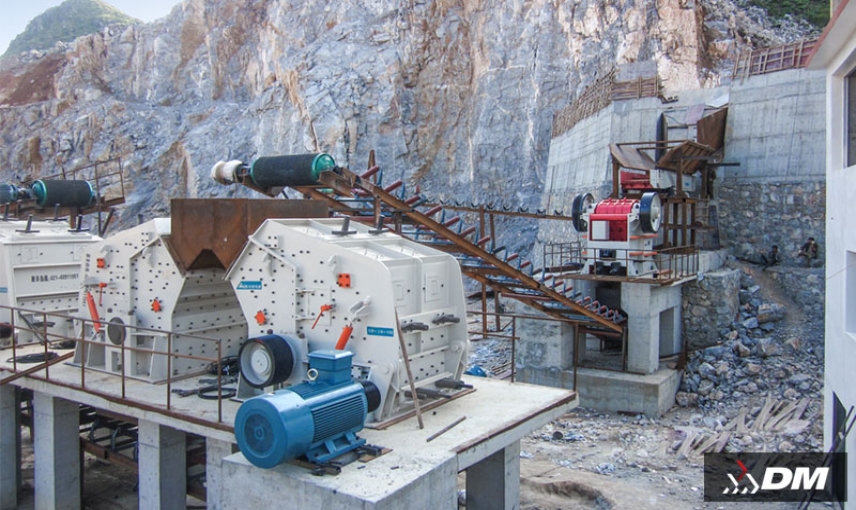
What is an Impact Crusher?
In mining, construction aggregate production, construction waste recycling, and artificial sand making, the impact crusher is an indispensable core crusher equipment. With its unique impact crusher principle, it demonstrates significant advantages in processing medium-hard materials and producing high-quality aggregates, making it a common piece of equipment in overseas quarries, infrastructure projects, and recycling companies. So, what exactly is an impact crusher? What are its working principles, types, and application scenarios? This article will provide a detailed analysis.
I. Basic Definition of an Impact Crusher
An impact crusher is a mechanical device that uses impact force rather than traditional extrusion force to crush materials. Unlike jaw crushers and cone crushers, which rely on extrusion and splitting, the impact crusher uses high-speed rotating components to impact and project materials, causing them to collide with each other, ultimately achieving material crushing. This crushing method gives it a high crushing ratio and excellent finished particle shape, making it important in medium and fine crushing and sand making processes.
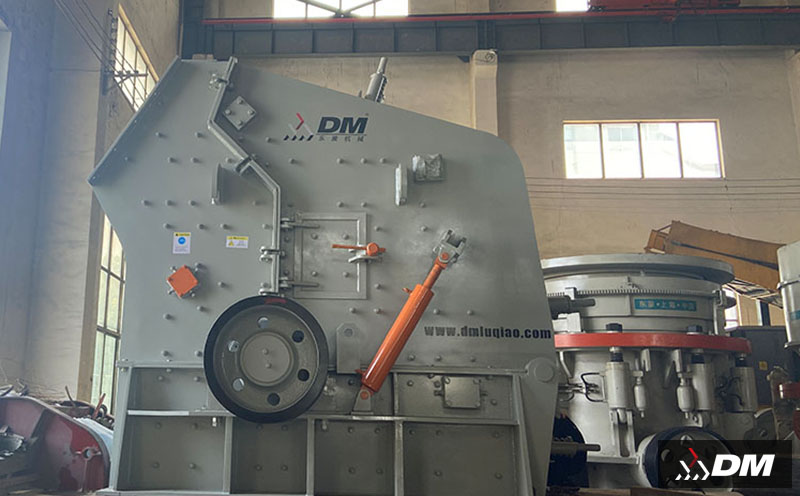
Structurally, an impact crusher mainly consists of core components such as a frame, rotor, hammers, impact plates, feed inlet, and discharge outlet. Among these, the rotor and hammers are key to achieving impact crushing, while the impact plates play a role in secondary crushing and adjusting the output particle size. The overall structural design balances crushing efficiency and ease of operation. II. Core Working Principle of an Impact Crusher The working process of an impact crusher can be divided into three stages. The entire process is highly efficient and continuous, which is the core difference between it and other crushing equipment: 1. Primary Impact Crushing After the material enters the crushing chamber through the feed inlet, it is instantly impacted by the hammers on the high-speed rotating rotor. The rotor speed can reach thousands of revolutions per minute. The hammers, carrying enormous kinetic energy, accelerate the material and throw it towards the impact plates inside the crushing chamber. The material undergoes primary crushing in the violent collision with the impact plates, rapidly reducing its volume.2. Secondary Self-Collision Crushing
The material after the initial crushing is bounced back to the center of the crushing chamber by the impact plate, where it violently collides, rubs, and grinds with the newly entering material. This stage is called "self-collision crushing." During this process, the material further breaks along natural fissures, forming more uniform particles.
3. Discharge Adjustment
The crushed material is discharged from the equipment through the gap between the impact plate and the rotor. Operators can adjust the position of the impact plate to change the gap size, thereby precisely controlling the discharge particle size to meet the material specification requirements in different scenarios.
III. Main Types of Impact Crusher
Based on different structures and application scenarios, impact crushers commonly found in overseas markets are mainly divided into two types, each suitable for different crushing needs:
1. Horizontal Impact Crusher (HSI)
The horizontal impact crusher, also known as a horizontal shaft impact crusher, has a horizontally arranged rotor and is the most widely used type of impact crusher. It is mainly used for secondary and tertiary crushing of materials, suitable for processing medium-hard and brittle materials such as limestone, dolomite, and construction waste, and can produce building aggregates with uniform particle size. In quarries and infrastructure projects in Southeast Asia and Africa, horizontal impact crushers are core equipment for producing concrete aggregates and road base materials.
2. Vertical Impact Crusher (VSI)
The vertical shaft impact crusher, also known as a vertical axis impact crusher, is also often referred to as a "sand making machine".
Its rotor is vertically arranged, with material fed from the top. After being accelerated by the rotor, it is thrown against the wear-resistant liner or material cushion layer of the crushing chamber, achieving crushing. Its core advantage is its ability to produce high-quality cubic manufactured sand, solving the problem of natural sand scarcity in many overseas regions. In large-scale high-speed rail and port infrastructure projects in the Middle East and Australia, vertical shaft impact crushers are standard equipment for manufactured sand production. IV. Application Scenarios and Advantages of Impact Crusher The characteristics of impact crushers have led to their widespread application in many overseas fields, and their core advantages have become an important consideration for overseas customers when selecting them: 1. Main Application ScenariosIn summary, the impact crusher is a piece of equipment that uses impact force as its core, combining the advantages of high-efficiency crushing and high-quality finished products. Whether in overseas quarries, infrastructure projects, or the recycling industry, it has become a key piece of equipment in the material processing stage due to its unique performance. Understanding the definition, principle, and application of impact crushers can help overseas customers select models more accurately, improving production efficiency and product competitiveness.
What are the differences between jaw crushers and impact crushers?
In mining, building aggregate production, and construction waste recycling, jaw crushers and impact crushers are the two most widely used crushing equipment. Although both are core devices for material crushing, they differ fundamentally in their working principles, applicable scenarios, and product effects. For overseas engineering projects and quarry operators, clarifying the differences between the two is crucial for selection, directly impacting production efficiency, operating costs, and product competitiveness. This article will analyze the differences between jaw crushers and impact crushers in detail from multiple core dimensions.
I. Working Principle: Compression Crushing vs. Impact Crushing
The core difference between jaw crushers and impact crushers stems from their drastically different crushing principles, which is also the root of all their characteristic differences.
1. Jaw Crusher: Crushing by Extrusion Force
The core structure of a jaw crusher consists of a fixed jaw plate and a movable jaw plate. During operation, the movable jaw plate reciprocates under the drive of an eccentric shaft, opening and closing with the fixed jaw plate. After the material is fed into the crushing chamber between the two jaw plates, it is continuously squeezed and split until the material's strength is insufficient to withstand the extrusion force, ultimately breaking into small pieces and being discharged from the discharge port. This crushing method is a static, gradual extrusion crushing process with a relatively gentle flow.
2. Impact Crusher: Crushing by Impact Force
The core of an impact crusher is a high-speed rotating rotor and hammers. During operation, the rotor drives the hammers to rotate at a speed of thousands of revolutions per minute. After the material is fed into the crushing chamber, it is struck at high speed by the hammers and thrown against the impact plates inside the chamber. Simultaneously, the materials also undergo violent collisions and grinding.
Under the action of multiple impact forces, materials are instantly crushed into particles that meet the specified specifications. This crushing method is a dynamic and instantaneous impact crushing, which is more efficient. II. Material Compatibility: Coarse Crushing of Hard Materials vs. Medium-Fine Crushing of Medium-Hard Materials Different crushing principles determine significant differences in the compatibility of the two methods with different materials, which is the primary consideration when selecting equipment for overseas projects. 1. Jaw Crusher: The "Main Force" for Hard and Highly Abrasive Materials The jaw crusher's compression crushing principle allows it to withstand high-intensity stress, making it very suitable for processing materials with high hardness and high wear resistance, such as granite, basalt, iron ore, and quartz. Whether it's coarse crushing of large ores in mining or preliminary crushing of large rocks in quarries, the jaw crusher is the preferred equipment. It can crush large materials with a diameter of 1-2 meters into smaller pieces of tens of centimeters, making it the core primary crushing equipment in the crushing process.2. Impact Crusher: The "Fine Processor" for Medium-Hard and Brittle Materials
The impact crushing principle of the impact crusher is more suitable for processing medium-hard and brittle materials, such as limestone, dolomite, gypsum, coal, and construction waste (concrete, asphalt blocks). It is not suitable for processing ultra-hard or highly abrasive materials, otherwise it will accelerate the wear of vulnerable parts such as hammers and impact plates, increasing maintenance costs. Impact crushers are mainly used for secondary and tertiary crushing in the crushing process, as well as artificial sand making operations. They are key equipment for further processing coarsely crushed materials into fine aggregates.
III. Product Output: Irregular Particle Shape vs. Excellent Particle Shape
The crushing method of materials directly affects the particle shape and quality of the finished aggregate, which is crucial for downstream applications such as construction engineering and road construction.
1. Jaw Crusher: Coarse, Irregular Finished Particle Shape
Due to the characteristics of compression crushing, the material particles produced by jaw crushers are **irregularly angular**, with a high content of needle-like and flaky particles, and uneven particle size distribution. This type of finished product can usually only be used as coarse aggregate. To meet the requirements of high-end projects such as concrete and asphalt pavement, secondary processing with subsequent equipment is required.
2. Impact Crusher: Good Finished Particle Shape, High Added Value
The impact and self-collision crushing process of the impact crusher allows material particles to break along natural fissures, producing **cubic** material with extremely low needle-like and flaky particle content and uniform particle size distribution. This type of aggregate has strong binding properties, making it an ideal raw material for high-end projects such as concrete, road construction, and high-speed rail infrastructure, and it has even higher added value in overseas markets.
Furthermore, the crushing ratio (the ratio of feed particle size to discharge particle size) of impact crushers can reach over 50:1, achieving "one-time forming," reducing crushing steps, and improving production efficiency. IV. Maintenance and Costs: Simple Structure and Easy Maintenance vs. Frequent Replacement of Wear Parts For overseas projects, the ease of equipment maintenance and operating costs are important long-term considerations. 1. Jaw Crusher: Simple Structure and Low Maintenance Costs Jaw crushers have a relatively simple structure with few moving parts. The core wear part is the jaw plate. The jaw plate is made of high-strength wear-resistant material, has a long service life, and is easy to replace without the need for specialized tools. Even in remote overseas project sites, ordinary operators can perform maintenance, significantly reducing equipment downtime and maintenance costs.2. Impact Crusher: High Wear Rate and Frequent Maintenance
The hammers, impact plates, and other wear parts of an impact crusher wear relatively quickly due to prolonged exposure to high-speed impacts, especially when processing materials with high silicon content, requiring even more frequent replacements. However, modern impact crushers employ modular designs, making the disassembly and replacement of wear parts relatively convenient. Furthermore, some high-end models are equipped with hydraulic opening systems, further reducing maintenance time. Overall, the maintenance cost of an impact crusher is slightly higher than that of a jaw crusher, but wear can be reduced through high-quality wear parts and proper operation.
V. Application Scenarios: Primary Crushing vs. Medium and Fine Crushing and Sand Making
Based on the above characteristics, the two types of crushers have a clear division of labor in the crushing process:
- Jaw Crusher: Primarily used for primary crushing in mines and quarries, it is the "first line of defense" in the crushing production line, responsible for reducing large pieces of material to a processable size.
- Impact Crusher: Primarily used for secondary/tertiary crushing and artificial sand making, it occupies a core position in construction waste recycling, high-end aggregate production, and manufactured sand projects.
In conclusion, jaw crushers and impact crushers are not substitutes, but rather complementary.
When selecting equipment for overseas projects, a comprehensive judgment must be made based on factors such as material hardness, production requirements, and finished product standards. If coarse crushing of hard materials is required, a jaw crusher is the obvious choice; if producing high-quality fine aggregates or manufactured sand is needed, an impact crusher is the optimal solution. Clarifying the differences between the two is crucial for achieving efficient and economical operation of the crushing production line.
Prev Post
What Kind of Crusher Machine for Stone?

We will answer your email shortly!