


Latest blog
What is a stone crusher used for?—Dongme... What is a stone crusher used for? Cone crusher working principle Reliable Primary Crusher Supplier What is a jaw crusher used for? What is the working principle of crusher...
What is a stone crusher used for?
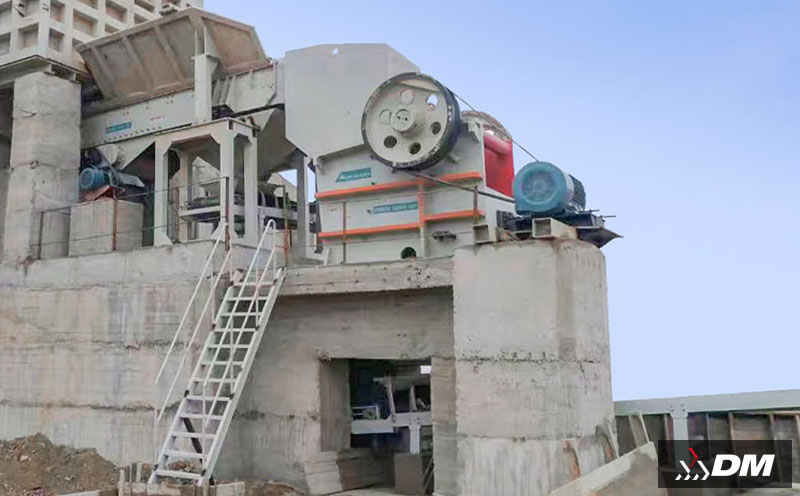
When purchasing a jaw crusher, the feed opening size is one of the most critical technical parameters, which directly determines whether the equipment can process your materials and the efficiency of the entire production line. So what is the feed opening size of a jaw crusher? The answer is not a single figure, but depends on the equipment model and specific application requirements.
Basic Concept of Feed Opening Size
The feed opening of a jaw crusher is formed by the space between the fixed jaw plate and the movable jaw plate, usually expressed as "width × depth" (or "length × width"), in millimeters (mm) or inches. For example, the common PEV6040 model has a feed opening size of 1500×1000mm, while the JC5149 European version crusher is 1250×1050mm.
Feed Opening Size Range of Different Models
Jaw crushers cover a complete series from small laboratory equipment to large mining machinery, with huge differences in feed opening sizes:
Small Equipment (for Laboratory/Testing)
- EP-1: 100×125mm, maximum feed particle size ≤80mm
- EP-2: 100×60mm, maximum feed particle size ≤60mm
- EP-3: 125×150mm, maximum feed particle size ≤100mm
- PE150×250: feed particle size ≤125mm, output 1-3t/h
Medium Equipment (for Mining/Building Materials Coarse Crushing)
- PE500×750: 500×750mm specification, suitable for small and medium-sized production lines
- DHKS1610: 1060×750mm, maximum feed particle size ≤640mm
- PEV6040: 1500×1000mm, maximum feed particle size ≤900mm
Large Equipment (for Large-scale Mining)
- JC5149: 1250×1050mm, maximum feed particle size ≤800mm
- 1500×2000 specification: feed opening 1500×2000mm, maximum feed particle size up to 1200mm, processing capacity 720-1500t/h
Relationship Between Feed Particle Size and Feed Opening Size
The internationally recognized industry standard is: The maximum feed particle size should not exceed 80% of the feed opening size. For example, if the feed opening width is 30 inches (about 762mm), the maximum recommended feed particle size is 24 inches (about 610mm).
This rule is crucial: oversized materials exceeding this limit may cause:
- Equipment material jamming and production interruption
- Abnormal wear of jaw plates
- Excessive impact load on the frame, which may cause structural damage
Differences Between Chinese and Western Standards
It is worth noting that there are differences in the measurement standards of feed opening sizes at home and abroad. Domestic standards mainly refer to the former Soviet Union, calculated by the distance between the tooth tip of the fixed jaw plate and the tooth bottom of the movable jaw plate; while international mainstream enterprises calculate by the straight-line distance between the fixed jaw plate and the movable jaw plate. This difference means:
- For products marked with the same specification, the actual allowable feed size of domestic products is often smaller
- The tooth depth of large-scale crushers is 60-100mm, and the actual feeding capacity differs by 50-80mm
How to Choose the Right Feed Opening Size?
The following factors need to be comprehensively considered during model selection:
1. Maximum material size: Accurately measure the particle size distribution of more than 90% of the raw materials
2. Target capacity: The width of the feed opening directly affects the processing capacity. In the same series, a wider feed opening usually means a higher ton/hour output
3. Material characteristics: Hardness, abrasiveness, water content, etc. all affect the actual passing capacity
4. Subsequent process matching: Ensure that the discharge particle size can be connected with the feeding requirements of secondary crushing equipment (such as cone crushers)
Conclusion
The feed opening size of jaw crushers ranges from 100×60mm for laboratory-grade to 1500×2000mm for large-scale mines, covering a wide range of application scenarios from 1 ton/hour to more than 1500 tons/hour. The core of model selection is: clarify your maximum feed particle size, follow the 80% feed opening utilization principle, and combine capacity requirements and material characteristics to select the most suitable model specification. Choosing the right feed opening size is the first step to achieve efficient and stable crushing operations.
Dongmeng Group: What is the working principle of jaw crusher?
In many global industries such as mining, stone processing and construction engineering, as the most classic and widely used coarse crushing equipment, jaw crushers undertake the key task of crushing large raw ores or rocks to a size suitable for secondary crushing. So how does a jaw crusher achieve efficient crushing? This article will deeply analyze its working principle for you.
Core Structure
A jaw crusher is mainly composed of frame, fixed jaw plate, movable jaw plate, eccentric shaft, toggle plate, adjustment seat and tension device. The fixed jaw plate is installed on the front wall of the frame, and the movable jaw plate is suspended on the eccentric shaft, forming a V-shaped crushing chamber with a wide top and a narrow bottom between them. The lower end of the movable jaw plate is supported by a toggle plate and connected to the frame through an adjustment seat.
Working Process
When the motor is started, it drives the eccentric shaft to rotate at high speed through the pulley and flywheel. The special structure of the eccentric shaft makes the movable jaw plate perform a complex movement - reciprocating movement close to and away from the fixed jaw plate in the horizontal direction, and slight movement in the vertical direction.
The specific working process is divided into two stages:
Crushing stage: When the movable jaw plate approaches the fixed jaw plate driven by the eccentric shaft, the materials in the crushing chamber are subjected to huge extrusion and shear forces. The materials are clamped between the two jaw plates, and as the space gradually shrinks, the internal stress of the materials increases continuously until it exceeds their compressive strength, resulting in cracks and fragmentation.
Discharging stage: When the movable jaw plate moves away from the fixed jaw plate, the space in the crushing chamber increases, and the crushed materials are naturally discharged from the lower discharge opening under the action of gravity. Then the movable jaw plate approaches again, entering the next crushing cycle.
This periodic movement of "crushing when approaching, discharging when moving away" is carried out continuously at a frequency of 200-400 times per minute, realizing continuous crushing and automatic discharging of materials.
Key Mechanical Mechanisms
The crushing effect of a jaw crusher mainly depends on the following mechanical actions:
Extrusion crushing: The huge pressure exerted on the materials by the movable and fixed jaw plates causes the materials to fracture under compression
Shear crushing: The complex movement trajectory of the movable jaw plate exerts a tangential force on the materials, helping to crush layered or flaky particles
Bending fracture: When materials span different positions of the crushing chamber, uneven stress leads to bending fracture, further improving crushing efficiency
Discharge Opening Adjustment and Particle Size Control
Jaw crushers control the finished product particle size by changing the width of the discharge opening. There are two main adjustment methods:
Gasket adjustment: Change the support position of the toggle plate by adding or reducing gaskets at the rear of the adjustment seat, thereby adjusting the minimum distance between the movable and fixed jaw plates
Hydraulic adjustment: Modern jaw crushers adopt a hydraulic system to achieve fast and accurate adjustment of the discharge opening, greatly shortening the downtime for adjustment
Global Application Characteristics
Jaw crushers are widely used worldwide due to their simple structure, reliable operation and convenient maintenance:
In iron and copper mines in Australia and South America: Large jaw crushers are used as primary crushing equipment with a processing capacity of thousands of tons per hour
In gold mines in Africa: Jaw crushers are the first choice for mine coarse crushing due to their adaptability to high-hardness ores
In infrastructure construction in Southeast Asia and South America: Mobile jaw crushing stations are flexible and convenient, and can directly conduct on-site crushing in quarries
In the recycling field in Europe and North America: Jaw crushers are widely used for crushing construction waste to realize resource reuse
Technology Development Trends
With the increasing global requirements for efficiency, energy consumption and intelligence in the mining and construction industries, jaw crushers are constantly evolving. Modern jaw crushers are developing in the following directions:
Deep cavity design: Optimize the crushing cavity shape to improve crushing efficiency and reduce liner wear
Increased inertia force: Adopt flywheels with larger mass to achieve more stable crushing force output
Intelligent control: Integrate online monitoring system to monitor equipment operation status in real time and realize predictive maintenance
Energy saving and consumption reduction: Optimize the transmission system to reduce unit energy consumption and meet green production requirements under the global carbon neutrality trend
Conclusion
The jaw crusher drives the movable jaw plate to perform periodic reciprocating motion through the eccentric shaft, and forms extrusion and shear effects on materials together with the fixed jaw plate, realizing continuous and efficient crushing of hard materials. Its simple structure, reliable operation and wide application range make it an indispensable coarse crushing equipment in global mining, building materials, infrastructure and other fields. With the continuous advancement of technology, jaw crushers will continue to play a key role in global resource development and engineering construction.


We will answer your email shortly!