


Latest blog
Unstable Primary Crushing in Large Mines... How to Choose a Reliable Crusher Manufac... Crushers: Classification, Selection Prin... Performance advantages of tire‑mounted m... What are the characteristics of tire‑mou... Mobile Crushing Station: Advantages, Typ...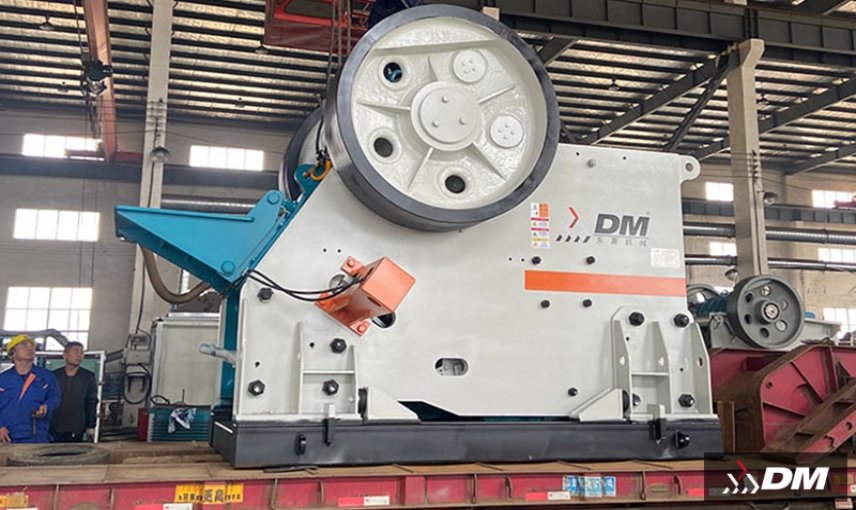
Reliable Primary Crusher Supplier
In fields such as mining, building materials, transportation, and water conservancy, primary crusher is the "first gateway" of the entire material processing process. Whether it is a large-scale mine production line with a capacity of 1,000 tons per hour or a mobile crusher station for construction waste treatment, the reliability of primary crusher directly affects the operational efficiency and cost of the entire system. Choosing a truly reliable supplier is a key guarantee for obtaining stable productivity throughout the equipment's life cycle.
What is a Primary Crusher?
A primary crusher is one of the most important crushing equipment in concentrators and mining plants, undertaking the task of crushing large mined rocks and ores into smaller, more manageable sizes. By placing materials between a fixed jaw plate and a movable jaw plate, enormous compressive force is applied to break them down to a size that can pass through the bottom discharge opening.
Typical primary crushers include jaw crushers and gyratory crushers. Among them, jaw crushers have become the most widely used primary crushing equipment globally due to their simple structure, high reliability, and strong adaptability. They can crush materials with compressive strength up to 300-350Mpa, handling various hard materials from granite and basalt to iron ore and copper ore.
Global Market Landscape: Who is in Control?
According to market research data, the global jaw crusher market size was approximately 2.141 billion US dollars in 2024, and is projected to reach 2.914 billion US dollars by 2031, with a compound annual growth rate (CAGR) of 4.7%. This is a competitive landscape composed of international giants and professional manufacturers.
Major players in the global market include international leading enterprises and key Chinese manufacturers, with the top three manufacturers accounting for approximately 40% of the global market share. Chinese manufacturers are playing an increasingly important role in the global market.
For global customers, choosing a reliable primary crusher supplier means conducting a comprehensive evaluation across multiple dimensions such as brand reputation, product quality, delivery capability, and after-sales service.
Five Core Characteristics of a Reliable Supplier
1. Excellent Product Quality and Technological Innovation
A reliable supplier is first reflected in the reliability of the products themselves. Taking jaw crushers as an example, high-quality equipment should have the following characteristics:
- Heavy-duty movable jaw assembly: Constructed with high-quality steel castings, the heavy-duty eccentric shaft is processed and heat-treated from forgings to ensure exceptional stability of the main machine operation
- High-quality bearing system: Adopts larger and more durable spherical roller bearings with higher load-bearing capacity and longer service life
- Optimized crushing chamber design: Deep crushing chamber without dead zones, improving feeding capacity and output, and ensuring uniform finished product particle shape
- Convenient discharge opening adjustment: Wide adjustment range to meet the needs of different users
2. Complete Production and Manufacturing System
A reliable supplier must have its own production base and manufacturing capabilities. Building a linked manufacturing base to achieve collaborative layout of R&D and precision manufacturing, regional manufacturing and services, and regional manufacturing and peripheral radiation can provide customers with tangible guarantees of "local production and rapid delivery".
At the same time, professional crushing equipment manufacturers should have processing equipment such as floor-type boring and milling machines, large vertical lathes, CNC cutting equipment, as well as complete testing instruments to ensure full-process quality control from raw materials to finished products.
3. Agile Supply Chain and Delivery Capability
In mining projects, the punctuality of equipment delivery directly affects project progress. A reliable supplier should have:
- Localized production capacity: Establish production bases in major market regions to shorten logistics cycles
- Adequate spare parts inventory: Maintain a reasonable inventory of commonly used wearing parts to ensure rapid response
- Flexible production capacity scheduling: Adjust production plans according to order situations to meet customers' urgent needs
4. Comprehensive After-sales Service System
Equipment sales are just the beginning of cooperation, and the real value is reflected in subsequent services. A reliable supplier should provide:
- Full life cycle support: From equipment installation and commissioning to operation and maintenance, and troubleshooting
- Localized service network: Set up service outlets in major market regions to achieve immediate response
- Professional technical training: Provide systematic training for customer operators to ensure correct use of equipment
5. Rich Global Project Experience
Practice is the sole criterion for testing truth. A reliable supplier should have extensive global project application cases. Suppliers whose products are applied in key national large-scale projects such as the Three Gorges, Xiaolangdi, and Xiangjiaba, and exported to Taiwan, Pakistan, Cambodia, Qatar, Malaysia, Ghana and other countries and regions have proven their reliability in practice.
How to Choose the Right Primary Crusher Supplier for You?
When evaluating potential suppliers, it is recommended that global customers consider the following aspects:
- Inspect production strength: Visit the supplier's production base in person as much as possible to understand its manufacturing capabilities and quality control system
- Evaluate project experience: Understand the supplier's successful cases in similar projects, especially experience matching your region and material type
- Verify service system: Confirm whether the supplier has service outlets in your region and the timeliness of spare parts supply
- Compare technical solutions: Request multiple suppliers to provide technical solutions and quotations tailored to your specific needs for comprehensive comparison
- Focus on long-term cooperation: Choose a strategic partner who can provide full life cycle support and is worthy of long-term cooperation
In the seemingly traditional but continuously advancing field of primary crushers, choosing a reliable supplier lays a solid foundation for your entire project. Whether it is an international giant or a key Chinese manufacturer, a truly reliable supplier has excellent product quality, a complete manufacturing system, agile delivery capabilities, and comprehensive after-sales service.
For investors in the global mining, infrastructure, and resource recycling sectors, prudent evaluation before investment is far more important than troubleshooting after equipment commissioning. Choosing a reliable primary crusher supplier means choosing long-term stable productivity.
What is the working principle of a jaw crusher?
A jaw crusher is a crushing equipment used for coarse and medium crushing of materials of various hardnesses, suitable for crushing various ores and rocks with compressive strength not exceeding 320Mpa. It is widely used in industries such as mining, smelting, building materials, highways, railways, water conservancy, and chemical engineering, and is the most important primary crushing equipment in concentrators and mining plants.
1. Core Structure: The "Skeleton and Teeth" of the Machine
To understand the working principle of a jaw crusher, it is first necessary to understand its core structure. A jaw crusher mainly consists of the following parts:
- Frame: The "skeleton" of the equipment, supporting all components
- Eccentric shaft: The core of power transmission, driving the movable jaw to move
- Large pulley and flywheel: Store energy to make the equipment run smoothly
- Movable jaw and fixed jaw: The "teeth" of the equipment. The fixed jaw plate (fixed jaw) is vertically fixed on the front wall of the machine body, and the movable jaw plate (movable jaw) is inclined, forming a crushing chamber that is large at the top and small at the bottom between them
- Toggle plate (thrust plate): Transmits power and plays an overload protection role
- Gap adjustment screw and return spring: Adjust the size of the discharge opening and ensure the normal operation of the equipment
2. Working Principle: The Mystery of Crank Motion Extrusion
The working principle of a jaw crusher can be vividly understood as "simulating the jaw movement of animals". Its core is a crank motion extrusion type crushing method, and the specific working process is as follows:
- Power transmission The motor drives the eccentric shaft to rotate through pulleys and V-belts. The rotational movement of the eccentric shaft is the power source of the entire equipment.
- Movable jaw movement When the eccentric shaft rotates, it drives the movable jaw to make a reciprocating motion along a predetermined trajectory. This movement includes two stages: Movable jaw rising stage: When the movable jaw rises, the angle between the toggle plate and the movable jaw increases, pushing the movable jaw plate close to the fixed jaw plate. At this time, the materials entering the crushing chamber composed of the fixed jaw plate, movable jaw plate and side guard plates are subjected to multiple crushing effects such as extrusion, rubbing, and rolling. Movable jaw descending stage: When the movable jaw moves down, the angle between the toggle plate and the movable jaw decreases, and the movable jaw plate moves away from the fixed jaw plate under the action of the pull rod and spring. At this time, the crushed materials are discharged from the lower opening of the crushing chamber.
- Continuous operation With the continuous rotation of the motor, the movable jaw of the crusher performs periodic crushing and discharging to achieve mass production. Simply put, the entire process is: approaching for extrusion and crushing from time to time, separating to discharge materials at other times, repeating continuously to achieve continuous operation.
3. Two Main Types
According to the movement characteristics of the movable jaw, jaw crushers are mainly divided into two types:
- Simple pendulum type (single-toggle type) The movable jaw is suspended on a spindle. When the eccentric shaft rotates, it pushes the movable jaw to swing left and right reciprocally through the action of the connecting rod and thrust plate. All points on the movable jaw swing purely in a circular arc centered on the suspension shaft. When this type of crusher works, the vertical displacement of the movable jaw is small, there is little over-crushing during crushing, and the wear of the jaw plates by materials is relatively small.
- Compound pendulum type (double-toggle type) The movable jaw is directly suspended on the eccentric shaft and is driven directly by the eccentric shaft. The movement trajectory of each point on the movable jaw is different: the trajectory at the top is close to a circular arc, the middle part is an elliptical curve, and the ellipse becomes longer as it approaches the bottom. Under the same conditions, the production capacity of the compound pendulum jaw crusher is 20%-30% higher than that of the simple pendulum type, but the vertical stroke of the movable jaw is larger. The materials are not only subjected to extrusion but also partial abrasion, resulting in relatively faster wear of the jaw plates.
4. Performance Characteristics
Jaw crushers can become the most widely used primary crushing equipment globally thanks to their unique performance advantages:
- Simple structure: Easy to maintain and use, low operating cost
- Large crushing ratio: Uniform finished product particle size
- Stable performance: Suitable for crushing large, medium and small stones
- Wear-resistant and durable: Made of high-strength manganese steel, one-time casting molding, wear-resistant and compression-resistant, long service life
- Energy-saving and environmental protection: 15%~30% energy saving for a single machine, low noise and less dust
The jaw crusher, a "veteran" equipment born in the 19th century, still plays an irreplaceable role in the global industrialization process. With "crank motion extrusion" as its core principle, it crushes hard materials step by step to the required particle size through the periodic approach and separation of the movable jaw from the fixed jaw. Whether it is crushing huge rocks in remote mountain mines or producing aggregates in quarries, jaw crushers have become the well-deserved cornerstone of modern material processing systems with their simple structure, reliable operation, and strong adaptability.
Prev Post
Cone crusher working principle

We will answer your email shortly!