


Latest blog
A Complete Guide to Mobile Crushing Stat... Unstable Primary Crushing in Large Mines... How to Choose a Reliable Crusher Manufac... Crushers: Classification, Selection Prin... Performance advantages of tire‑mounted m... What are the characteristics of tire‑mou...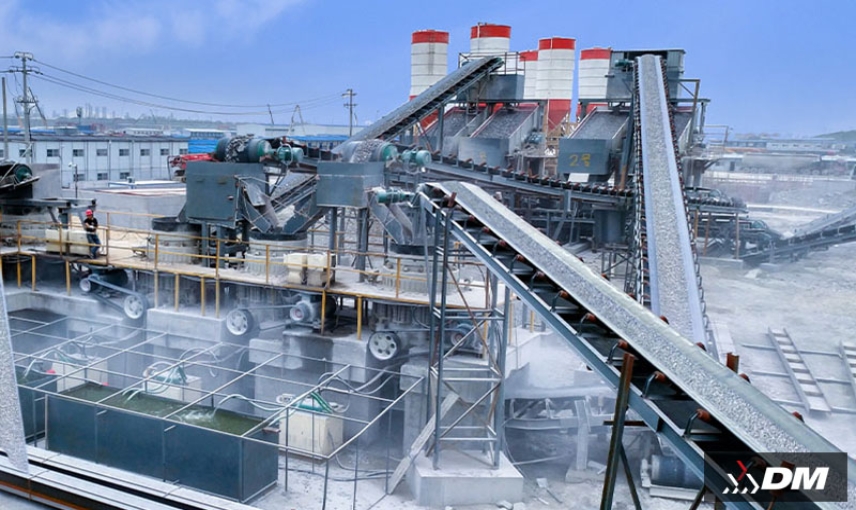
What is a stone crusher used for?—Dongmeng Group
From the foundations of skyscrapers to the subgrades of expressways, from the bodies of water conservancy dams to the ballast beds of railway tracks, behind every infrastructure in modern society, there is an indispensable key equipment - the stone crusher. So what exactly is a stone crusher used for? This article will give you a comprehensive analysis.
Core Purpose: Converting Large Rocks into Usable Aggregates
The fundamental task of a stone crusher is only one: to crush naturally mined large rocks, ores or industrial wastes into crushed stones or sand particles that meet specific particle size requirements through mechanical force. These finished aggregates are the core components of engineering materials such as concrete, asphalt, railway ballast and building foundations.
Without a stone crusher, huge stones mined from mines cannot be processed into usable building materials; without a stone crusher, the muck generated from tunnel boring can only be treated as waste; without a stone crusher, construction waste is also difficult to be recycled and reused.
Main Application Fields of Stone Crushers
1. Mining
In metal mines (iron, copper, gold, aluminum, etc.) and non-metal mines (limestone, granite, basalt, etc.), stone crushers undertake the task of crushing large blasted ores to the particle size required by the mineral processing process. The multi-stage crushing process of primary, secondary and fine crushing ensures that the ore meets the feeding requirements of the grinding stage.
2. Construction Engineering
Aggregates for concrete, aggregates for asphalt pavements, crushed stones for building foundations, and block stones for retaining walls - every cubic meter of concrete in modern buildings is inseparable from the aggregates produced by stone crushers. The global annual consumption of sand and gravel aggregates exceeds 40 billion tons, making it the second largest consumed resource of human beings after water.
3. Road and Railway Construction
Expressways and high-speed railways have strict gradation requirements for subgrade and ballast bed materials. Stone crushers produce crushed stones with good particle shape and stable gradation by precisely controlling the crushing process, ensuring pavement smoothness and track stability. From the Qinghai-Tibet Railway to the Mombasa-Nairobi Railway in Africa, stone crushers are indispensable supporting equipment.
4. Water Conservancy and Hydropower Engineering
World-class water conservancy projects such as the Three Gorges Dam and the Itaipu Hydropower Station require tens of millions of tons of concrete and rockfill materials. Large-scale stone crushing production lines continuously supply aggregates meeting strict quality standards for these projects.
5. Construction Waste Recycling
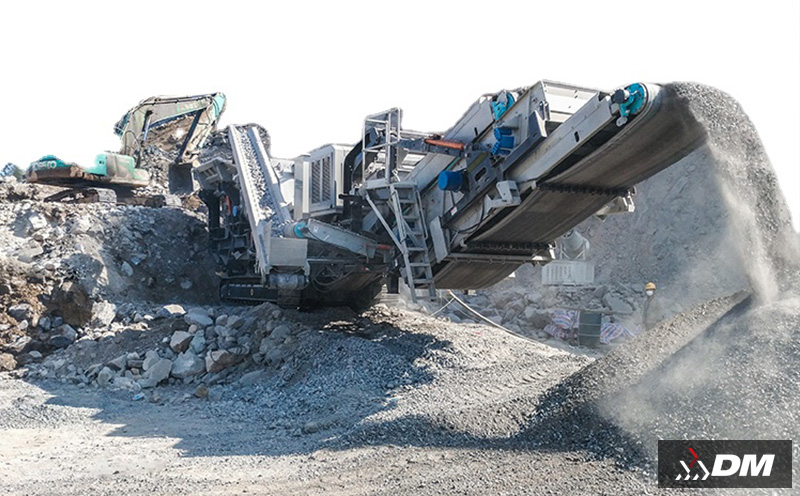
With the global emphasis on sustainable development, crushing and screening waste concrete and bricks into recycled aggregates through stone crushers has become an important direction of urban solid waste treatment. Mobile stone crushers can directly enter demolition sites to realize on-site conversion and utilization of construction waste.
Division of Labor for Different Types of Stone Crushers
The stone crusher family includes various equipment types, each with its own responsibilities:
Type | Main Purpose | Typical Application
Jaw Crusher | Primary Crushing (First Stage) | Crushing large raw ores over 1 meter to 20-30 centimeters
Cone Crusher | Secondary and Fine Crushing | Further crushing coarsely crushed materials to a few centimeters
Impact Crusher | Secondary and Fine Crushing | Producing aggregates with excellent particle shape, suitable for asphalt concrete aggregates
Vertical Shaft Impact Crusher | Sand Making and Shaping | Producing manufactured sand and improving aggregate particle shape
Mobile Crushing Plant | On-site Crushing | Suitable for demolition sites, remote mines and temporary projects
Application of Stone Crushers from a Global Perspective
The application of stone crushers in different countries and regions shows different characteristics:
Asia: As the world's largest consumer market for sand and gravel aggregates, infrastructure construction in China, India and Southeast Asian countries has driven the wide application of large-scale fixed stone crushing production lines and mobile crushing plants.
Africa: Driven by the Belt and Road Initiative, infrastructure projects such as railways, ports and hydropower stations in Africa have introduced a large number of stone crusher equipment, providing key material support for local construction.
Europe and North America: Focusing on environmental protection and recycling, mobile crushing plants play an important role in construction waste treatment and urban renewal projects, and equipment is developing towards intelligence and low energy consumption.
South America: Copper mining in Chile, Peru and other countries, and iron mining in Brazil have a continuous demand for large-scale mining crushing equipment.
Australia: As a global mining power, large-scale primary crushers cooperate with semi-autogenous mills and are widely used in the development of iron ore, bauxite and other resources.
Conclusion
A stone crusher, as the name suggests, is a mechanical device that "crushes" large rocks into small "stones". But its value is far more than that - it is the cornerstone of modern infrastructure construction, a key link in mineral resource development, and an important tool for the recycling of construction waste. From mines to cities, from highways to railways, from water conservancy dams to skyscrapers, stone crushers silently convert natural rocks into materials supporting modern civilization. Against the background of the global continuous promotion of infrastructure construction and sustainable development, stone crushers will continue to play an irreplaceable role.
Dongmeng Group:Reliable Primary Crusher Supplier
In the global mining, stone processing and infrastructure construction fields, as the "first pass" of the production line, the quality and stability of primary crushers directly affect the capacity and benefit of the entire project. Choosing a reliable primary crusher supplier is not only purchasing a piece of equipment, but also choosing a long-term and stable partner for the project. So what kind of supplier can be called "reliable"? This article will analyze it from a global perspective.
Primary Crusher: The Heart of the Production Line
Primary crushers (usually referring to jaw crushers or gyratory crushers) undertake the key task of crushing large blasted raw ores from over one meter to a size suitable for secondary crushing. It is located at the starting point of the entire production line, and once a failure occurs, all subsequent processes will be forced to stop. Therefore, the reliability of the primary crusher directly determines:
Production line operating rate: low equipment failure rate and convenient maintenance can ensure continuous and stable production
Unit production cost: long service life of wear-resistant parts and reasonable energy consumption can achieve optimal economic benefits
Finished product quality foundation: the stability of the discharge particle size of primary crushing affects the effect of subsequent crushing and screening
Core Characteristics of a Reliable Supplier
1. Profound Technical Accumulation
A reliable primary crusher supplier must have solid technical research and development capabilities. From the optimized design of the crushing cavity to the material selection of the eccentric shaft, from the structural strength of the toggle plate to the lubrication system of the bearing, every detail reflects the manufacturer's technical heritage. Excellent suppliers can provide customized cavity configurations according to different material characteristics (such as hardness, abrasiveness, water content) to ensure that the equipment achieves the best performance under the customer's actual working conditions.
2. Strict Quality Control System
Primary crushers work in harsh environments, bearing huge impact loads and strong vibrations. Reliable suppliers have established a strict quality control system from raw material procurement to the whole machine delivery:
Key components adopt high-strength cast steel or high-quality steel
Heat treatment process ensures the balance of hardness and toughness of wear-resistant parts such as jaw plates and main shafts
Precision processing guarantees the geometric accuracy of matching parts such as eccentric shafts and bearing seats
No-load test run and load simulation test are carried out before delivery
3. Global Service Network
Mining and engineering projects are often located in remote areas. Once equipment fails, the speed of spare parts supply and technical support directly determines the downtime. Reliable primary crusher suppliers usually have:
Warehousing centers covering major markets to ensure fast delivery of commonly used spare parts
Experienced after-sales service team that can provide on-site installation guidance and technical training
Remote fault diagnosis capability to early warn potential problems through intelligent systems
4. Rich Global Application Experience
The geological conditions, climatic environments and operating habits vary in different countries and regions. Reliable suppliers have accumulated rich application cases worldwide:
In tropical mines in Africa, equipment needs to adapt to high temperature and rainy environments
In extremely cold areas of Russia, hydraulic systems and lubrication systems must cope with low-temperature starting challenges
In river pebble processing in Southeast Asia, highly abrasive materials put strict requirements on the service life of wear-resistant parts
Suppliers with extensive global experience can predict and solve potential problems under different working conditions, providing more reliable guarantees for customers.
Considerations for Choosing a Reliable Supplier
Technical Matching
Whether the supplier can recommend the most suitable model and configuration according to your material characteristics (hardness, water content, mud content), target capacity and subsequent process requirements? The pertinence and completeness of the technical solution are important basis for evaluating the supplier's professional level.
Delivery Capacity
Large-scale crushing equipment usually requires a long production cycle. Reliable suppliers have a stable supply chain and production capacity, which can deliver on time and avoid delays in the entire project period due to equipment delays.
Life Cycle Cost
The purchase price is only the initial investment, and more worthy of attention is the total cost of the entire life cycle of the equipment - including energy consumption, wear-resistant parts consumption, maintenance man-hours and potential downtime losses. Reliable suppliers will provide transparent operating cost data instead of only emphasizing low prices.
After-sales Support
Whether on-site support is provided for equipment installation and commissioning? What is the failure response mechanism during the warranty period? Is the inventory of vulnerable parts sufficient? These questions should be clarified when choosing a supplier.
Global Market Trends and Supplier Selection
With the continuous advancement of global infrastructure construction and the in-depth development of mines, the primary crusher market presents new trends:
Large-scale: the scale of mines is expanding, and the demand for large-scale crushers with higher processing capacity is growing
Intelligent: intelligent functions such as online monitoring, automatic adjustment and remote operation and maintenance have gradually become standard configurations
Energy saving and environmental protection: environmental protection requirements such as low energy consumption design, dust control and noise control are increasingly strict
Mobile: the demand for mobile primary crushing plants is rising in demolition sites, temporary projects and remote mining areas
Choosing a supplier that keeps up with the trend of technological development means that your equipment can remain competitive for many years to come, and will not affect production benefits due to technological backwardness.
Conclusion
The primary crusher is the "heart" of the sand and gravel aggregate production line and mining crushing system. Choosing a reliable supplier is a guarantee for the long-term stable operation of the project. From technical strength to quality system, from global experience to after-sales service, reliability is reflected in every link of the supplier. When evaluating potential partners, you may wish to learn more about their past cases, customer reputation and technical accumulation - these are more decisive for the long-term success of the project than a single price factor.
Prev Post
What is a Vibrating Screen?

We will answer your email shortly!