


Latest blog
Unstable Primary Crushing in Large Mines... How to Choose a Reliable Crusher Manufac... Crushers: Classification, Selection Prin... Performance advantages of tire‑mounted m... What are the characteristics of tire‑mou... Mobile Crushing Station: Advantages, Typ...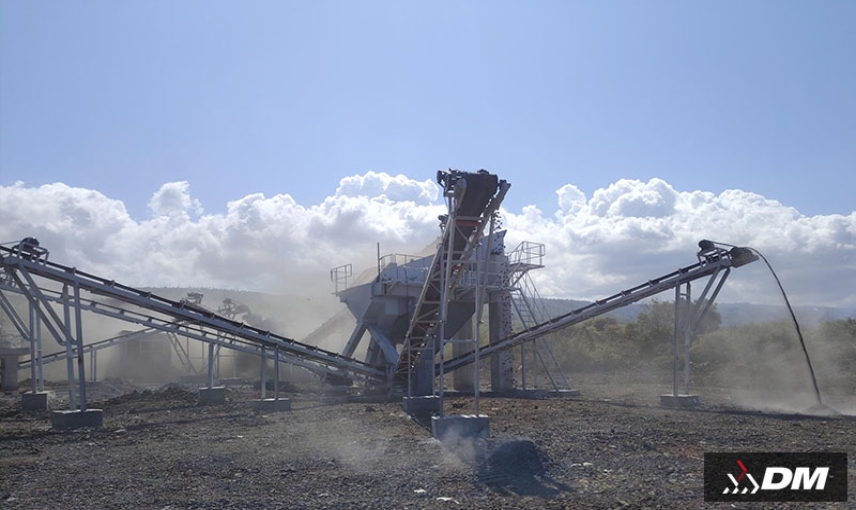
What is a crusher plant?
A crusher plant, also often referred to as a crushing production line or crushing and screening production line, is a systematic operation process composed of various crushing equipment, screening equipment, conveying equipment and auxiliary equipment. It completes the process from coarse crushing, medium crushing, fine crushing to screening and classification of raw materials (such as ore, construction waste, limestone, granite, etc.), and finally produces finished materials that meet the specified requirements. It is widely used in mining, sand and gravel aggregate production, construction waste resource utilization, metallurgy, building materials and other industries, and is an indispensable core production system in the material processing link.
1. Core Components of a Crusher Plant
A complete crusher plant is not a simple stack of single equipment, but a customized system configured according to material characteristics, finished product requirements and production capacity needs, mainly including the following types of core equipment:
1.1 Feeding Equipment
As the "front-end entrance" of the production line, feeding equipment (such as vibrating feeders) is used to uniformly and continuously transport raw materials to be processed to the crusher. It avoids equipment overload or low processing efficiency caused by uneven feeding, and ensures the feeding stability of the entire crusher plant.
1.2 Crushing Equipment
This is the core processing unit of the production line. According to the different requirements of material crushing granularity, it is usually divided into multi-stage crushing links:
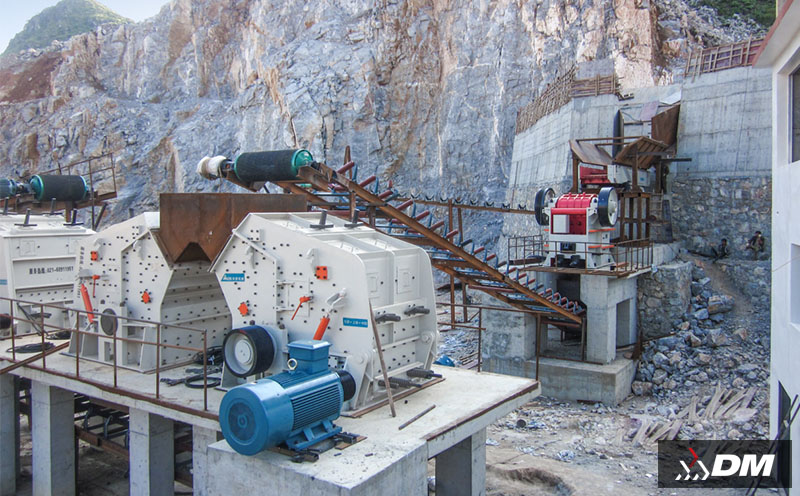
- Coarse crushing equipment: such as jaw crushers, mainly processing large and raw materials, crushing them to medium granularity to lay the foundation for subsequent processing;
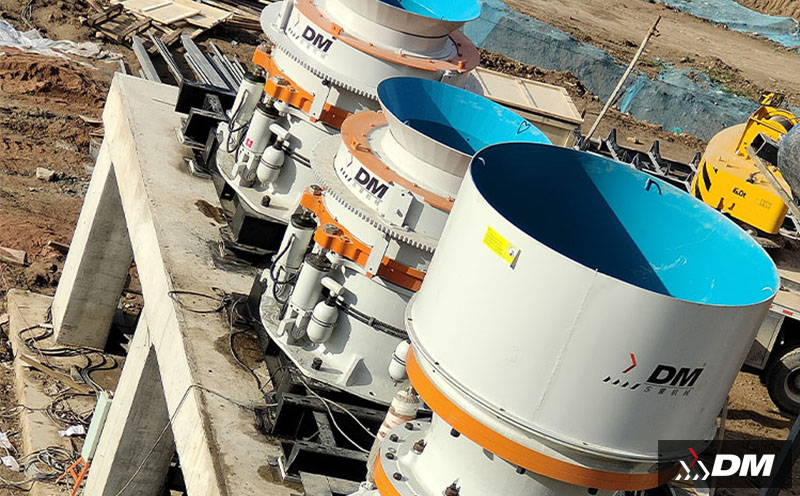
- Medium crushing equipment: such as cone crushers, impact crushers, performing secondary processing on coarsely crushed materials to further reduce the particle size of materials;
- Fine crushing equipment: such as sand making machines, hammer crushers, aiming at scenarios with high requirements for finished product granularity, processing materials into fine particles of millimeter level to meet the needs of fine finished products such as sand and gravel aggregates.
1.3 Screening Equipment
Screening equipment (such as Dongmeng YK series vibrating screens) is installed after each crushing link. Its function is to classify and screen the crushed materials according to the preset granularity specifications: materials that meet the finished product requirements are directly transported to the finished product area, while those that do not meet the granularity requirements are returned to the corresponding crusher for reprocessing, ensuring that the granularity of finished materials is uniform and meets production standards.
1.4 Conveying Equipment
Belt conveyors are the "link" for material circulation in the production line, connecting feeding, crushing, screening, finished product storage and other links, realizing efficient transfer of materials between different equipment, and ensuring the smooth flow of materials in the entire crusher plant.
1.5 Auxiliary Equipment
In addition to core equipment, the production line is also equipped with auxiliary equipment such as dust removal equipment (reducing dust pollution), sand washing machines (cleaning soil and impurities in materials), and electric control systems (centralized control of start-stop and operating parameters of various equipment), improving the environmental protection, finished product quality and operational convenience of the crusher plant.
2. Working Process of a Crusher Plant
Taking a common sand and gravel aggregate crusher plant as an example, its typical working process is as follows:
- Raw material feeding: Excavators or loaders send large ore, rock and other raw materials into the silo, and the vibrating feeder uniformly feeds them to the jaw crusher;
- Coarse crushing processing: The jaw crusher crushes large raw materials into semi-finished materials with a particle size of about 100-300mm, which are transported to the vibrating screen via belt conveyor;
- Screening and classification: The vibrating screen screens the coarsely crushed materials, large materials that do not meet the medium crushing requirements are returned to the jaw crusher for re-crushing, and those that meet the requirements are sent to the cone crusher/impact crusher;
- Medium/fine crushing processing: The medium crushing equipment crushes materials to a particle size of about 20-50mm, and if fine sand or high-quality aggregates need to be produced, they are sent to the sand making machine for fine crushing processing;
- Finished product screening and storage: The finely crushed materials are screened by the vibrating screen into finished products of different granularities (such as 0-5mm fine sand, 5-10mm crushed stone, 10-20mm crushed stone, etc.), which are respectively transported to the finished product silos to complete the entire processing process.
3. Characteristics and Application Scenarios of a Crusher Plant
3.1 Core Characteristics
- Customization: The combination of equipment can be flexibly configured according to material types (hard rock/soft rock/construction waste), finished product granularity, and production capacity requirements (several tens of tons to several hundred tons per hour);
- High efficiency: All equipment work collaboratively to realize continuous processing of materials, and the efficiency is several times higher than that of single-machine operation;
- Standardization: Strictly control the granularity of finished products through the screening link to ensure that the material quality meets industry standards (such as construction sand, crushed stone for road construction, etc.);
- Environmental protection: Equipped with dust removal, noise reduction and spray equipment to meet the environmental protection requirements of modern industrial production.
3.2 Main Application Scenarios
- Sand and gravel plants: Producing sand and gravel aggregates required for construction, road and bridge projects;
- Mining: Crushing and processing iron ore, copper ore, limestone and other ores to facilitate subsequent mineral processing or transportation;
- Construction waste treatment: Crushing and recycling construction waste such as concrete blocks and bricks generated from demolition and decoration into recycled aggregates to realize resource recycling;
- Metallurgical and chemical industries: Crushing and processing raw materials to meet the requirements of production processes for material granularity.
4. Summary
A crusher plant is a systematic processing solution integrating material feeding, crushing, screening and conveying. Its core value lies in converting raw materials into finished materials that meet the needs of industrial production through standardized and continuous operation processes. With the development of mining, infrastructure and environmental protection industries, the technology of crusher plants is constantly upgrading, moving towards intelligence, energy conservation and environmental protection, and has become the core support system in the field of material processing.
How to start a crusher plant?
Building an efficient, stable and production-demand-oriented crusher plant is not a simple stack of equipment, but a systematic project that requires scientific planning, selection, design and commissioning combined with multi-dimensional factors such as material characteristics, production capacity goals, site conditions and industry norms. Whether it is a sand and gravel plant, a mining enterprise or a construction waste treatment project, a reasonable production line construction process is the core premise to ensure the subsequent production efficiency and economic benefits. This article will detail the key steps in the whole process of building a crusher plant.
1. Pre-investigation and Requirement Clarification
Before starting the construction of the production line, a comprehensive investigation must be completed to clarify the core requirements and avoid equipment selection or layout errors in the later stage:
- Material attribute confirmation: Accurately grasp the type (such as granite, limestone, construction waste, etc.), hardness, moisture content, mud content of the materials to be processed, as well as the maximum feeding granularity of raw materials. This is the core basis for selecting the type of crushing equipment (for example, hard rock is suitable for cone crushers, while soft rock or construction waste is suitable for impact crushers);
- Finished product requirement definition: Clarify the granularity specifications of finished materials (such as 0-5mm fine sand, 5-10mm crushed stone, etc.), production capacity requirements (hourly/daily/annual output), and the use of finished products (construction sand, road aggregates, mining mineral processing, etc.). Different uses have significant differences in requirements for finished product granularity and purity;
- Site and compliance investigation: Survey the area, terrain and geological conditions of the construction site (such as mountainous or flat land), confirm the water, electricity and transportation supporting conditions of the site; at the same time, understand the local environmental protection, safety supervision, land planning and other policy requirements to ensure that the project meets compliance standards.
2. Equipment Selection: Scientific Matching of Core Links
Equipment selection directly determines the processing efficiency and operating cost of the crusher plant, and needs to be configured according to the results of the pre-investigation:
- Feeding equipment: Select the model of vibrating feeder according to the raw material feeding volume to ensure that the feeding speed matches the processing capacity of subsequent crushing equipment, avoiding equipment blockage caused by too fast feeding or reduced production capacity caused by too slow feeding;
- Crushing equipment: Select according to the grading principle of "coarse crushing - medium crushing - fine crushing". Jaw crushers are preferred for coarse crushing (suitable for large raw materials); cone crushers (hard rock) or impact crushers (soft rock) are selected for medium crushing according to material hardness; sand making machines are used for fine crushing if sand making is needed, and hammer crushers can be used if only fine-grained crushed stone is needed;
- Screening equipment: Select the number of layers and screen mesh aperture of circular vibrating screens according to the finished product grading requirements. More layers can achieve more refined finished product grading, which needs to match the number of types of finished product granularity;
- Conveying equipment: Select the bandwidth, length and conveying speed of belt conveyors according to the distance of equipment layout and material conveying volume, and consider the climbing angle (generally not more than 18°) at the same time;
- Auxiliary equipment: In areas with high environmental protection requirements, bag dust collectors and spray dust reduction equipment should be configured; if the raw material has high mud content, sand washing machines should be equipped; in addition, auxiliary facilities such as electric control systems (centralized control cabinets), silos and steel structure supports should be provided.
3. Crusher Plant Layout Design: Balancing Efficiency and Practicality
Reasonable layout can not only improve production efficiency, but also reduce material transfer costs and ensure operational safety:
- Process optimization: Follow the material circulation order of "raw materials - coarse crushing - screening - medium crushing - fine crushing - finished product screening - finished product storage", minimize the conveying distance between various equipment, reduce material reversion and lower energy consumption;
- Site utilization: Layout combined with topographical characteristics. Mountainous sites can use height differences to realize gravity flow of materials and reduce the number of conveyors; flat sites need to plan the zoning of raw material area, processing area, finished product area and office area to avoid cross-operation;
- Operation and maintenance space: Reserve sufficient maintenance channels (generally not less than 1.5 meters) between equipment to facilitate later equipment maintenance, spare parts replacement and personnel operation; at the same time, plan waste and dust collection areas to ensure a clean production environment.
4. Site Infrastructure and Equipment Installation
- Infrastructure construction: Complete site leveling, foundation pouring (reinforced foundations are required for crushing equipment to prevent vibration displacement during operation), water and electricity pipe network laying, finished product silo foundation construction, etc. according to the equipment layout drawings; the infrastructure must meet the load-bearing and size requirements for equipment installation;
- Equipment installation: Construct in accordance with specifications by professional equipment manufacturers or installation teams. First install the core crushing equipment, then install the feeding, screening and conveying equipment in turn to ensure that the levelness and coaxiality of the equipment meet the requirements, and adjust the belt tension of the conveyor to the optimal state;
- Auxiliary facilities installation: Complete the installation and commissioning of dust removal, sand washing and electric control systems synchronously to ensure that all auxiliary equipment are linked normally with the main crusher plant.
5. Commissioning and Trial Production: Verifying the Stability of the Crusher Plant
After the equipment installation is completed, comprehensive commissioning and trial production are required to troubleshoot and optimize:
- No-load commissioning: First start each single equipment for no-load operation, check whether the equipment speed, noise and vibration are normal, and whether the start-stop and protection functions of the electric control system are effective;
- Load commissioning: Gradually add raw materials for low-load trial production, observe the material crushing effect, screening accuracy and smoothness of conveying, and record the operating parameters of each equipment;
- Parameter optimization: Adjust the feeding speed, discharge port size of crushing equipment, amplitude of screening equipment and other parameters according to the trial production data until the finished product granularity and production capacity meet the preset requirements;
- Personnel training: Conduct professional training for operation and maintenance personnel to enable them to master equipment operation specifications, daily inspection points and common fault handling methods.
6. Compliance Acceptance and Official Production
- Compliance acceptance: Complete environmental protection testing (dust and noise emission), safety acceptance (equipment protection, fire-fighting facilities), special equipment testing (such as conveyors, pressure vessels), etc., and obtain relevant acceptance qualification documents;
- Official production: After passing the acceptance, gradually increase the load of the crusher plant to full production capacity, establish a daily equipment maintenance account, and regularly maintain the equipment (such as lubrication, replacement of wearing parts) to ensure the long-term stable operation of the crusher plant.
7. Later Operation and Optimization
After the crusher plant is put into production, it is necessary to continuously pay attention to the operation status and optimize and improve in a timely manner:
- Production capacity and quality monitoring: Regularly test the granularity and output of finished products, and adjust production parameters according to market demand;
- Equipment maintenance management: Formulate the replacement cycle of wearing parts (such as crusher liners, screen meshes) to avoid the decline of finished product quality or equipment failure caused by worn parts;
- Energy consumption and cost control: Count the operating costs such as water, electricity, spare parts and labor, and reduce the unit finished product cost by optimizing equipment operating parameters and improving equipment utilization rate;
- Environmental protection upgrading: Timely update dust removal and noise reduction equipment according to the latest environmental protection policies to ensure that the production process meets environmental protection requirements.
Summary
Building a crusher plant is a systematic project from demand investigation to commissioning and production. The core lies in "accurate matching" - equipment selection matches material and finished product requirements, layout design matches site conditions, and operation management matches cost and efficiency goals. Whether it is a new crusher plant or upgrading and transformation, it is necessary to take scientific planning as the premise, combined with professional equipment selection and standardized installation and commissioning, to build an efficient, stable and compliant crusher plant, and realize the dual guarantee of economic and social benefits.


We will answer your email shortly!