


Latest blog
Aggregate Grading Fails to Meet Standard... Shanghai Dongmeng Heavy Industry Debuts ... How to Match the Screening System for Cr... How to Troubleshoot Common Crusher Fault... A Complete Guide to Mobile Crushing Stat... Unstable Primary Crushing in Large Mines...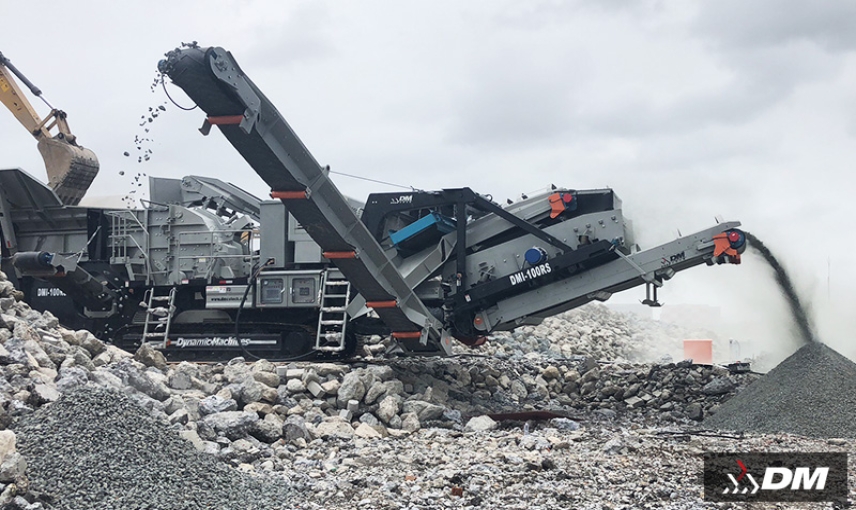
Tracked Mobile Impact Crushers: On-Site Shaping for RAP and Recycled Aggregate
20 Jul 2026
0View
The global push for circular economy practices in construction has transformed how contractors and material producers think about waste. Reclaimed asphalt pavement (RAP), crushed concrete, and demolished masonry are no longer just materials to be disposed of—they are valuable feedstocks that can be processed back into specification-grade products. But processing these materials at a central plant means hauling, handling, and double-handling costs that eat into project margins. What if the shaping and sizing stage could happen right where the material is generated? That is exactly what a tracked mobile impact crusher delivers. Combining the proven particle-shaping performance of an impact crusher with full crawler mobility, a mobile impactor brings secondary and tertiary crushing directly to the road rehabilitation site, the demolition zone, or the temporary aggregate stockpile. Unlike a tracked mobile jaw crusher that focuses on primary reduction, a tracked mobile impact crusher is engineered for mid-stage sizing and cubical shaping of softer to medium-hard recycled materials, producing finished aggregate that meets the strict flakiness requirements of asphalt and concrete applications.
The Pain Points of Mobile Recycled Aggregate Production
Recycling construction materials on site presents a unique set of challenges that stationary plants were never designed to solve. First, material quality varies enormously. RAP from a highway overlay is very different from crushed building concrete, which is different again from demolition rubble mixed with brick and tile. A mobile crusher must handle this variability while still producing a consistent, saleable product. Second, road rehabilitation projects move fast. A milling crew advances kilometers per week, and the crushing operation has to keep pace. Equipment that takes days to set up or requires permanent infrastructure simply cannot keep up. Third, urban job sites impose strict constraints on noise, dust, and space. A machine that works in a rural quarry may be completely unsuitable for a city street. Fourth, the economics of recycling depend on avoiding haulage. If the material has to be trucked to a fixed plant and the finished product trucked back, much of the cost savings of recycling disappear. The tracked mobile impact crusher is purpose-built to address all of these challenges.
How a Tracked Mobile Impact Crusher Delivers Value
Integrated Impact Crushing on a Mobile Chassis
At the core of every tracked mobile impact crusher is a horizontal-shaft impactor with two or three adjustable apron curtains. The high-speed rotor with heavy-duty blow bars accelerates feed material against the aprons, shattering it along natural fracture lines to produce cubical, well-shaped particles. This impact action is particularly effective on recycled materials because it cleans mortar residue from natural aggregate surfaces, liberates rebar and other contaminants, and produces a finished product with fresh, angular faces that bond well with bitumen and cement. All of this is mounted on a rugged crawler undercarriage with an onboard diesel-hydraulic power pack, feed hopper, vibrating feeder, and discharge conveyor—creating a completely self-contained processing unit.
Rapid Deployment and In-Field Mobility
The defining advantage of a tracked mobile impact crusher is its ability to move with the work. On a road rehabilitation project, the machine crawls forward as the milling train advances, processing RAP in place and depositing shaped aggregate directly onto the roadside stockpile. On a demolition site, it repositions as each zone is cleared, minimizing the distance an excavator has to travel to feed the hopper. Setup is measured in minutes: unfold the discharge conveyor, start the engine, adjust the aprons to the desired product size, and begin feeding. There are no foundations, no conveyor galleries, no electrical hookups—just a self-contained plant ready to work.
Versatility Across Recycled Material Types
One of the strongest features of a tracked mobile impact crusher is its versatility. With simple adjustments to apron gaps and rotor speed, the same machine can produce a coarse 0–63 mm base course product, a mid-size 0–32 mm general aggregate, or a finer 0–14 mm asphalt chip product. This flexibility means contractors can adapt to changing project requirements on the fly, or use a single machine across multiple applications—RAP processing one week, concrete recycling the next, and natural aggregate shaping the week after. Many units also include an integrated pre-screen or grizzly feeder that bypasses fines, reducing wear on the blow bars and increasing overall throughput.
Key Application Scenarios
Asphalt Pavement Rehabilitation and Milling Projects
Highway and road rehabilitation generates massive volumes of RAP, and this is where the tracked mobile impact crusher truly shines. Positioned directly downstream of a milling machine or working from RAP windrows, the impactor sizes and shapes the reclaimed asphalt into a gradation suitable for reuse in asphalt base courses or surface layers. The impact action gently resizes the RAP without stripping all the bitumen coating, preserving some of the binder value and making the recycled material more valuable for asphalt plants. On-site processing eliminates hauling of RAP to a central facility and hauling of virgin aggregate back to the job—saving both money and emissions.
C&D Recycling Secondary Shaping Stage
While a tracked mobile jaw crusher handles the primary reduction of bulky demolition debris, a tracked mobile impact crusher often follows as the secondary shaping stage. The jaw reduces large concrete slabs and masonry to a manageable size; the impactor further refines that material into cubical, marketable recycled concrete aggregate (RCA). The impact action is particularly effective at removing residual cement mortar from the surface of the natural aggregate, producing a cleaner product that commands a higher price. When paired with an overband magnet for rebar removal and a tracked mobile screening machine for sizing, the mobile impactor becomes part of a complete on-site recycling train.
Urban Infrastructure and Municipal Projects
Cities around the world are investing in water mains, sewer replacements, tram lines, and subway extensions—all of which generate excavated rock and demolished concrete. A compact tracked mobile impact crusher can operate within the tight confines of an urban construction site, processing material on site for reuse as backfill or road base. This reduces the number of trucks entering and leaving the site, cuts traffic disruption, and helps municipalities meet waste diversion targets. The low-profile design and optional dust suppression systems make these machines well suited for noise- and dust-sensitive urban environments.
Temporary Satellite Aggregate Yards
Aggregate producers and contractors often need a temporary supply of shaped aggregate near a large project. Rather than hauling from the main quarry 50 or 100 kilometers away, a tracked mobile impact crusher can be set up at a satellite pit or a stockpile of primary-crushed material to produce finished shaped aggregate on demand. When the project ends, the machine simply moves to the next opportunity. This approach is especially popular for large infrastructure projects like dams, airports, and industrial parks where aggregate demand is high but geographically concentrated.
Soft to Medium-Hard Natural Rock On-Site Processing
Although best known for recycling applications, a tracked mobile impact crusher also excels at natural limestone, dolomite, and soft sandstone. On small to medium quarry sites or borrow pits, a mobile impactor can serve as both primary and secondary crusher in a single pass, thanks to its high reduction ratio. For contractors who encounter limestone or sandstone during earthworks, the mobile impactor provides a way to process the excavated rock into usable aggregate rather than paying to dispose of it.
Customer Benefits and Economic Advantages
Haulage Cost Elimination
The single largest savings from on-site processing with a tracked mobile impact crusher comes from eliminated haulage. Every ton of material processed on site is a ton that does not need to be trucked to a recycling yard or quarry, and a ton of finished product that does not need to be trucked back. On large road projects, these savings can run into millions of dollars over the course of the contract. For urban projects where truck access is restricted or expensive, the savings are even more dramatic.
Premium Product Shape and Market Value
Because the tracked mobile impact crusher produces cubical, well-shaped aggregate rather than the more slabby product from a mobile jaw, the finished material commands a higher price in the market. Recycled aggregate with good particle shape can be used in higher-value applications—concrete products, asphalt surface courses, structural backfill—rather than being limited to general fill. This price premium can add 15–25% to the revenue per ton, significantly improving project economics.
Fast Project Mobilization and Demobilization
Traditional stationary crushing plants take weeks or months to install and commission. A tracked mobile impact crusher arrives on a lowbed trailer, drives off, and starts crushing the same day. This speed means contractors can begin generating revenue from recycled material immediately rather than waiting for plant construction. At the end of the project, demobilization is just as fast—fold the conveyors, load it up, and move to the next job.
Reduced Environmental Footprint
On-site processing with a tracked mobile impact crusher dramatically reduces truck traffic, which means lower fuel consumption, lower CO₂ emissions, less road wear, and less noise and dust from haul trucks. These environmental benefits translate into stronger ESG performance, better community relations, and often a competitive advantage in bidding for government and corporate projects with sustainability requirements. Many public tenders now give explicit credit for on-site recycling and reduced haulage.
Selection and Sizing Considerations
Choosing the right tracked mobile impact crusher requires careful evaluation of several factors. Feed size and throughput requirements determine the basic machine size—smaller units around 25–30 tons handle feed up to 350 mm at 100–150 tph, while larger 40–50 ton machines can accept 500+ mm feed at 250–350 tph. Rotor diameter and blow bar configuration affect both reduction ratio and particle shape. Material type matters too: for primarily RAP processing, a machine with good fines handling and adjustable rotor speed is desirable; for mixed C&D, a heavier-duty rotor with high-chrome blow bars may be necessary. Additional options to consider include integrated pre-screens, overband magnets for ferrous removal, dust suppression systems, remote control operation, and variable-speed feeders. Transport weight and dimensions are also critical—heavier machines require special permits in many jurisdictions, adding to mobilization costs.
Operation and Maintenance Best Practices
Optimizing Feed for Shape and Throughput
A tracked mobile impact crusher performs best with a consistent, controlled feed rate. Flooding the chamber causes packing, excessive wear, and poor particle shape; sparse feeding leads to uneven rotor loading and reduced throughput. The integrated vibrating feeder should be adjusted to maintain a steady material flow across the full width of the rotor. When processing RAP, operators should watch for asphalt binder buildup on the aprons, which can affect product gradation and may require periodic cleaning.
Blow Bar Management
Blow bars are the highest-wear component on any impact crusher. Operators should inspect blow bar wear daily and rotate or flip bars according to the manufacturer's schedule. Most blow bar designs allow both edges to be used, effectively doubling service life. The choice of blow bar material—high-chrome white iron, martensitic steel, or ceramic inserts—should be matched to the application: high-chrome for abrasive materials, martensitic for impact-heavy feeds with occasional tramp metal.
Apron Gap Adjustment
The gaps between the rotor and each impact apron control the product size distribution. These gaps should be checked and adjusted regularly, especially as blow bars wear down. Modern tracked mobile impact crusher units feature hydraulic apron adjustment that makes this operation fast and safe, even from ground level. Proper gap adjustment ensures that the product stays on specification throughout the wear life of the blow bars.
Undercarriage and Conveyor Care
Because the machine moves frequently across rough job sites, the track undercarriage needs regular attention. Track tension, pad condition, and roller wear should be inspected weekly. Conveyor belts—both the feeder belt and the discharge belt—should be checked daily for tears, proper tracking, and adequate tension. Material buildup on pulleys and idlers should be cleaned off regularly to prevent belt mistracking and premature wear.
Engine and Hydraulic System Maintenance
The diesel engine and hydraulic system are the power source of the tracked mobile impact crusher. Strict adherence to service intervals is essential, especially in dusty recycling environments where air filters and hydraulic filters clog faster. Daily pre-start checks should include engine oil level, coolant level, hydraulic oil level, and fuel water separator drain. Many modern machines include automatic central lubrication systems that reduce daily maintenance labor, but these systems should still be inspected regularly to ensure all points are receiving grease.
Conclusion
The tracked mobile impact crusher has become an indispensable tool for modern road contractors, C&D recyclers, and aggregate producers who need to produce shaped, high-quality aggregate directly on site. It bridges the gap between the rough reduction of a mobile jaw crusher and the finished product quality of a stationary impact plant, bringing premium particle-shaping capability to wherever the material is. For asphalt pavement rehabilitation projects, urban demolition sites, and temporary satellite aggregate operations, the mobile impactor is not just a piece of equipment—it is the machine that makes on-site recycling economically viable and environmentally superior. When selected for the right application, operated with consistent feed discipline, and maintained with attention to blow bars and aprons, a tracked mobile impact crusher delivers both the product quality and the operational flexibility that forward-thinking construction businesses need to compete in an increasingly cost-conscious and sustainability-focused market.


We will answer your email shortly!