


Latest blog
Aggregate Grading Fails to Meet Standard... Shanghai Dongmeng Heavy Industry Debuts ... How to Match the Screening System for Cr... How to Troubleshoot Common Crusher Fault... A Complete Guide to Mobile Crushing Stat... Unstable Primary Crushing in Large Mines...
Fixed Screening Machines: High-Precision Classification for Large Aggregate Plants
20 Jul 2026
0View
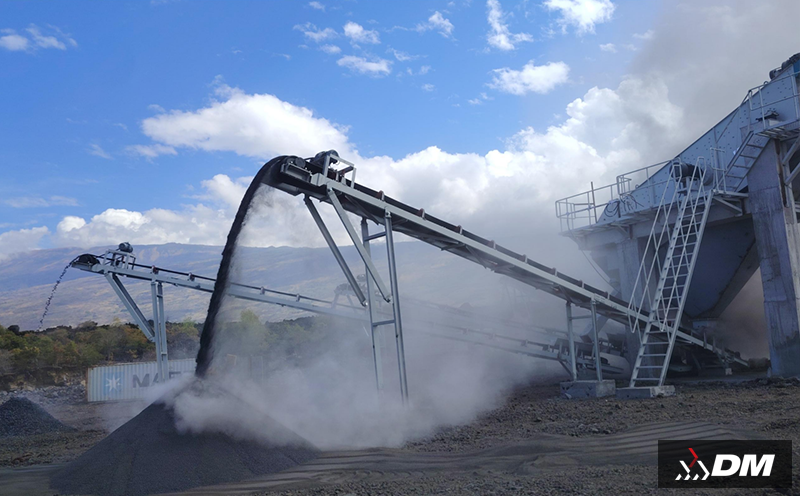
In any large-scale aggregate or mining operation, the screening stage is where tonnage becomes product. A crusher can reduce rock to a wide range of sizes, but it is the screening machine that separates that mixed output into the specific, saleable fractions that customers specify and pay for. For permanent, high-capacity plants—quarries producing millions of tons per year, mineral processing facilities, and large sand and gravel operations—the screening equipment must deliver more than just basic separation. It must deliver precision, reliability, and consistent efficiency across decades of continuous operation. This is where the fixed screening machine sets the industry standard. Permanently installed on robust steel structures with dedicated feed and discharge conveyors, a stationary screen is engineered for maximum throughput, precise gradation control, and the lowest cost per ton of any screening solution. While tracked mobile screening machine units serve temporary and mobile applications, the fixed screening machine is the backbone of every major aggregate plant, determining how many products can be produced, how accurately they meet specification, and how much revenue each ton of feed generates.
The Critical Role of Screening in Stationary Aggregate Plants
Screening is often described as the "bottleneck" of a crushing plant—and with good reason. If the screen cannot pass enough material, the entire upstream circuit is limited. If the screen does not separate cleanly, product quality suffers and recirculating loads climb, wasting energy and reducing effective capacity. For large stationary plants running 16 or 24 hours a day, screening efficiency directly affects plant throughput, product quality, and operating costs. A 5% improvement in screening efficiency can translate into thousands of tons of additional saleable product per year, or a significant reduction in recirculating load and power consumption. This is why serious aggregate producers invest in high-quality fixed screening machine units and pay careful attention to screen selection, media choice, and maintenance.
Core Pain Points in Stationary Screening Operations
Large plant operators face a specific set of screening challenges. First, high tonnage demands large screen area and robust construction. A screen that vibrates 24/7 under tons of material per hour must be built to last, or structural failures will cause costly unplanned shutdowns. Second, multi-product plants need multiple deck screens with precise aperture control. Producing five or six saleable fractions from a single feed requires a screen that separates cleanly at each size, with minimal contamination between fractions. Third, abrasive materials wear out screen media quickly, and media change downtime is expensive. Fourth, blinding and pegging—when fine material sticks to screen cloth or near-size particles get wedged in apertures—reduce effective screening area and degrade separation efficiency. Fifth, changing product specifications requires changing screen media, and the faster that can be done, the less production is lost. A well-engineered fixed screening machine addresses all of these issues.
How a Fixed Screening Machine Delivers Superior Performance
Large Screen Area and Heavy-Duty Construction
The most obvious advantage of a fixed screening machine is size. Because it does not need to fit on a transportable chassis, a stationary screen can be much larger—often 2.4 to 3.6 meters wide and 6 to 8 meters long, with two, three, or even four decks. This large screen area means higher throughput capacity and longer retention time for better separation efficiency. The supporting structure is equally robust: heavy steel side plates, reinforced cross members, and industrial-grade vibrator motors or eccentric shafts designed for continuous duty. The entire assembly is mounted on a steel support structure or concrete pedestal with isolation springs to contain vibration and protect surrounding equipment.
Precise Gradation Control and Clean Separation
Stationary screens operate at optimized stroke, angle, and speed for each application, delivering more accurate separations than mobile units that must compromise between transportability and performance. With properly selected screen media and correct operating parameters, a fixed screening machine can achieve very clean cuts—meaning each product fraction contains minimal oversize or undersize contamination. This precision is critical for high-value products like concrete aggregate and asphalt surface course, where out-of-spec material can lead to rejected loads and customer complaints. For mining operations, accurate screening ensures that only properly sized material enters downstream grinding circuits, optimizing mill performance.
Flexibility in Screen Media Selection
Because a fixed screening machine has standard, easily accessible decks, operators can choose from a wide range of screen media types to match each application. Woven wire cloth is economical for general use. Polyurethane panels offer excellent wear life for abrasive materials. Rubber screen media reduces noise and handles sticky feeds. Perforated and slotted plates are used for special applications. Modular panel systems allow quick replacement of worn sections without removing the entire deck. This media flexibility allows plant operators to optimize each deck for cost, wear life, and screening efficiency.
Integration with Complete Stationary Plants
A fixed screening machine does not operate in isolation. It is an integral part of a complete stationary crushing and screening plant that includes feeders, conveyors, a fixed jaw crusher, a fixed cone crusher, a fixed impact crusher, washing equipment, and stockpile systems. When properly integrated, each machine balances the others, creating a smooth, efficient material flow from raw feed to finished product. Stationary installation also allows for centralized control, automated lubrication, dust collection, and condition monitoring systems that would be impractical on mobile equipment.
Key Application Scenarios
Large Quarry Finishing Plants
The most common application for a fixed screening machine is as the final sizing stage in a large quarry aggregate plant. Primary and secondary crushed material feeds onto a three-deck or four-deck stationary screen, which separates it into multiple finished products—such as 0–4 mm sand, 4–10 mm chip, 10–20 mm concrete aggregate, 20–40 mm base course, and oversize recirculating back to the secondary crusher. The high capacity and precision of the stationary screen allow the plant to produce multiple specification-grade products simultaneously, maximizing revenue from every ton of rock quarried.
Mineral Processing Classification Screens
In mining and mineral processing plants, fixed screening machine units serve at multiple points in the flow sheet. Scalping screens remove oversize before primary grinding. Classification screens separate ground ore by size for gravity separation or flotation. Dewatering screens remove water from concentrate before transport. These screens are specially designed for the duty—often with linear stroke for dewatering, high-G vibration for fine sizing, or special corrosion-resistant materials for acidic ore environments.
Sand and Gravel Washing and Classification
Alluvial sand and gravel plants rely on fixed screening machine units for both dry sizing and wet washing applications. When paired with log washers, screw washers, or sand screws, stationary screens classify the washed material into clean, saleable fractions. The heavy-duty construction handles the weight of water-saturated material, and the large deck area provides the capacity needed for high-volume alluvial deposits.
Crusher Product Scalping and Closed-Circuit Return
Before material reaches the finishing screen, scalper screens often remove fines ahead of secondary or tertiary crushers to reduce unnecessary wear. Closed-circuit screens around fixed cone crusher or fixed impact crusher units return oversize material for further crushing while allowing on-size product to pass through to the next stage. These application-specific screens are essential for efficient plant operation and are almost always stationary installations in permanent plants.
Recycled Aggregate Finishing Stations
Large permanent C&D recycling plants use fixed screening machine units to size cleaned recycled concrete aggregate and recycled asphalt into marketable products. These screens are often equipped with special media to handle the mixed, sometimes sticky nature of recycled feed, and they play a critical role in ensuring that the finished recycled products meet strict gradation specifications.
Customer Benefits and Return on Investment
Higher Throughput per Machine
A fixed screening machine simply processes more tons per hour than a comparably priced mobile unit. The larger screen area, heavier drive, and optimized installation all contribute to higher capacity. For high-volume operations, this means fewer machines are needed to achieve target production, reducing capital cost, maintenance labor, and spare parts inventory.
Better Product Quality and Lower Contamination
Accurate screening means each product fraction stays within specification. Less oversize in the fine fractions means the product meets flakiness and gradation standards more consistently. Less fines in the coarse fractions means cleaner, higher-value aggregate. This quality advantage translates directly into higher customer satisfaction, fewer rejected loads, and the ability to supply premium markets that demand tight specification control.
Longer Service Life and Lower Long-Term Cost
Stationary screens are built for permanent installation and decades of service. With proper maintenance, a heavy-duty fixed screening machine can operate reliably for 20 to 30 years or more. The per-ton screening cost is lower than any mobile alternative because the machine is optimized for efficiency rather than transportability, and wear parts are sized for industrial duty cycles. For plants planning to operate for a decade or longer, the stationary screen is by far the most economical choice.
Easier Maintenance and Media Changes
Because a fixed screening machine is installed at a permanent, accessible height with surrounding walkways and platforms, maintenance and screen media changes are faster, safer, and easier than on cramped mobile units. Plant crews can access all decks comfortably, use overhead cranes for heavy panel lifting, and work from stable platforms. This reduces media change downtime—critical for plants that switch between product gradations frequently.
Selection and Sizing Logic
Selecting the right fixed screening machine begins with understanding the application: is it scalping, classifying, dewatering, or trash removal? From there, key parameters include required throughput per deck, feed size distribution, target cut points, material characteristics (density, abrasiveness, moisture), and available headroom. Screen area is calculated based on required tonnage and desired efficiency, typically using the screen manufacturer's sizing software or published capacity tables. The number of decks depends on how many product fractions are needed. The type of vibration—circular, elliptical, or linear—is chosen based on material characteristics and application. Deck angle, stroke, and speed are all tuned to the specific material. Operators should also consider the screen media system, bearing design and lubrication method, and whether the screen will be side-mounted or cross-mounted on the support structure.
Operation and Maintenance Best Practices
Proper Feed Distribution
For a fixed screening machine to perform at its best, feed material must be distributed evenly across the full width of the feed end. A properly designed feed chute with a deflector plate or a feed box ensures even loading. Concentrated loading on one side of the screen causes uneven wear, reduced capacity, and poorer separation efficiency.
Screen Media Tension and Inspection
Loose screen media is the number one cause of premature screen cloth failure and product contamination. Operators should check and retension wire cloth regularly, especially after installation and after the first few hours of operation. Modular poly panels should be inspected for broken clips and worn surfaces. Damaged sections should be replaced immediately to prevent oversize contamination of fine products.
Blinding and Pegging Prevention
Blinding (fine material sticking to the screen) and pegging (near-size particles wedging in apertures) both reduce effective screen area and hurt efficiency. Solutions include ball-deck trays with rubber balls that bounce and clean the underside of the screen, urethane media with tapered apertures that resist pegging, and higher-frequency vibration for sticky materials. Operators should monitor screen performance and address blinding or pegging early before it significantly impacts production.
Vibration and Bearing Monitoring
The vibrating mechanism and bearings are the heart of a fixed screening machine. Regular vibration analysis can detect developing problems—unbalance, bearing wear, loose fasteners—before they cause catastrophic failure. Bearing temperature monitoring and regular grease sampling are also recommended for critical machines. Following the manufacturer's lubrication schedule precisely is essential; both over-greasing and under-greasing can cause bearing failure.
Structural Inspection
Because stationary screens operate under constant vibration, structural fatigue is a real concern over long service lives. Periodic inspection of side plates, cross members, and support structure welds can catch cracking early and allow repair during scheduled shutdowns rather than emergency outages. Spring mounts and isolation pads should also be checked for wear and proper function.
Conclusion
The fixed screening machine is the unsung workhorse of every large aggregate plant, mining operation, and mineral processing facility. It is the stage where crushed rock becomes finished product, where tonnage becomes revenue, and where specification compliance is won or lost. For permanent, high-capacity operations, nothing matches the combination of throughput, precision, durability, and long-term economy offered by a properly selected and maintained stationary screen. While mobile screens serve their purpose for temporary and distributed applications, the fixed screening machine remains the gold standard for serious production—delivering cleaner cuts, higher capacity, and lower cost per ton across decades of reliable service. When integrated into a well-designed stationary plant alongside a fixed jaw crusher, fixed cone crusher, and fixed impact crusher, it forms the core of a production system that generates consistent, high-quality, specification-grade aggregate year after year. For quarry operators and mineral processors building for the long term, investing in the right fixed screening machine is one of the most important decisions they will make.


We will answer your email shortly!