


Latest blog
A Complete Guide to Mobile Crushing Stat... Unstable Primary Crushing in Large Mines... How to Choose a Reliable Crusher Manufac... Crushers: Classification, Selection Prin... Performance advantages of tire‑mounted m... What are the characteristics of tire‑mou...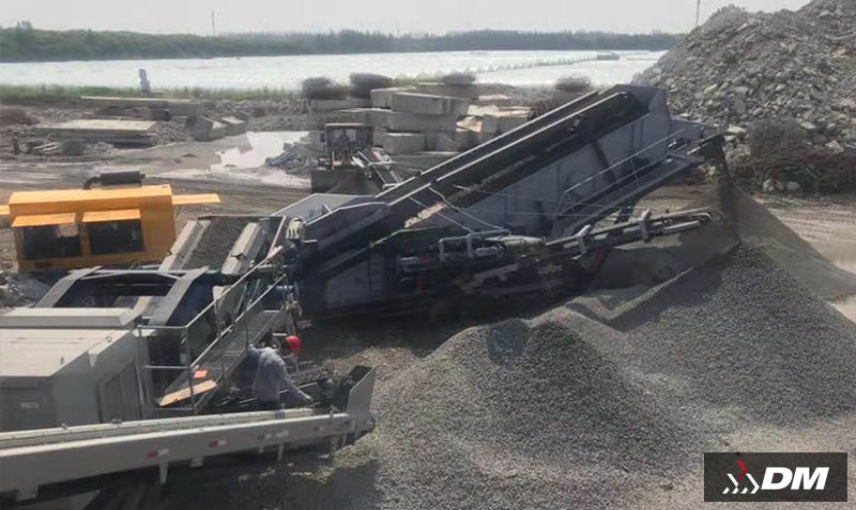
A Complete Guide to Mobile Crushing Station Selection
1. What is a mobile crusher? What are the core differences from fixed crushing stations?
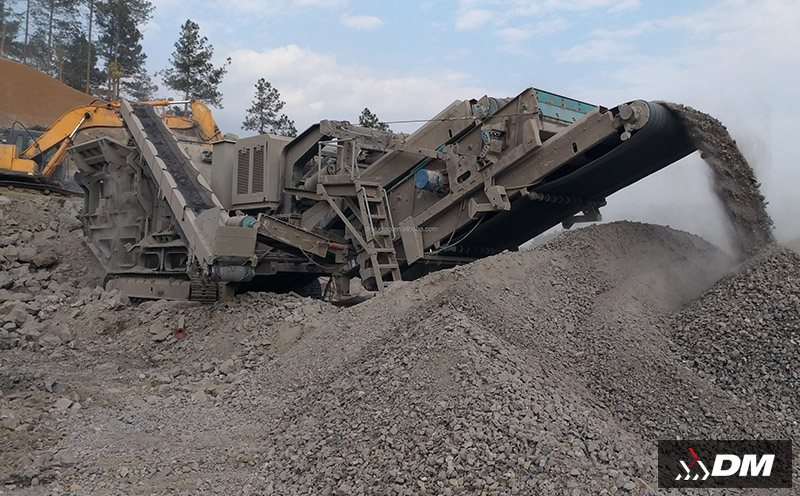
Mobile crusher is a movable crushing device integrating feeding, crushing, screening and conveying functions. It is mainly divided into tyre-mounted and crawler types according to the travelling chassis. Unlike traditional fixed crushing production lines that require on-site foundation pouring and steel frame construction, the mobile crusher is fully assembled on the chassis. It does not need large-scale disassembly and reassembly for relocation, and the equipment can travel directly to raw material piles for crushing operations.
Many managers of sand and gravel enterprises and construction waste recycling projects tend to confuse the applicable scope of the two types of equipment. Fixed crushing stations have a higher production capacity ceiling and are suitable for large quarries with long-term mining and permanent sites. The biggest advantage of the mobile crusher lies in flexibility. Where the raw materials are, the crushing process can be set up on site, eliminating high freight costs caused by long-distance round-trip transportation of bulk stone materials. For projects with short construction periods, scattered working points and frequent site relocation, the comprehensive cost advantage of the mobile crusher will be further amplified.
2. What engineering scenarios are more suitable for deploying mobile crushers?
Many buyers fall into a misunderstanding: they prefer mobile crusher for all crushing tasks. However, equipment selection must match project working conditions, and wrong model selection will directly lead to insufficient production capacity and soaring operation and maintenance costs.
The first typical scenario: construction waste recycling and disposal. Urban demolition, old urban renovation produce a large amount of concrete blocks and waste bricks. Construction waste features large volume, strict transportation control, and the landfills are far away from urban areas. Using the mobile crusher for on-site crushing at demolition sites can process waste materials into recycled aggregates, which can be directly used for subgrade backfilling and site hardening. It greatly reduces the outward transportation of muck and meets environmental control requirements.
The second scenario: highway, railway and water conservancy infrastructure projects. Such projects have long routes with multiple earth-rock excavation points along the line. The demand for stone aggregates is huge, but each quarry has a short mining cycle. Crawler-type mobile crusher can advance with the construction face to process subgrade crushed stone on site, eliminating the need for long-distance purchase of aggregates and ensuring continuous construction.
The third scenario: small open-pit quarries. The mining boundary of mines keeps changing and the position of material piles shifts continuously. Building fixed production lines is low in cost performance. The mobile crusher can move with the mining working face, saving infrastructure construction and shortening production commissioning cycles.
For large mines with long-term stable mining and high annual output, fixed crushing production lines are preferred, and the mobile crusher is mostly used as supporting auxiliary equipment.
3. What are the mainstream models of mobile crushers? How to choose different crushing hosts?
The mobile crusher is not a single machine. According to different crushing hosts equipped, it can be divided into four mainstream types: mobile jaw crusher, mobile cone crusher, mobile impact crusher and mobile hammer crusher, with obvious differences in material processing capacity.
1. Mobile jaw crusher: Mainly for primary crushing. It can handle large blocks and high-hardness raw stones with high compressive strength and large feeding size. It is suitable for the first crushing process of hard rocks such as granite and basalt. Its disadvantage is the ordinary particle shape of finished aggregates, mostly used for front-end rough processing.
2. Mobile cone crusher: Used for medium and fine crushing, suitable for hard rock processing. Wear-resistant parts have a longer service life, and the produced aggregates have excellent particle shape. It is often matched with a mobile jaw crusher to form a two-stage mobile crushing production line.
3. Mobile impact crusher: Focuses on medium and fine crushing. Finished particles show good cubic shape, suitable for medium and low hardness materials such as limestone and construction waste, widely applied in recycled aggregate production. For high-hardness rocks, hammers wear rapidly, leading to high consumable costs.
4. Mobile hammer crusher: Simple technological process with one-time forming and low investment threshold. It is mostly used for soft materials such as limestone and gangue, and not applicable for high-strength hard rocks.
In terms of chassis selection, tyre-type mobile crusher requires trailer traction for relocation and suits long-distance transportation on flat highways. The crawler-type has built-in travelling power and can pass through mountainous and muddy construction sites with strong off-road performance, ideal for remote wild construction sites.
4. When purchasing mobile crushers, do not only compare quotations! What indicators need to be calculated emphatically?
Many customers only compare the selling price of equipment when purchasing the mobile crusher, ignoring the long-term operating costs in the later stage, and finally facing the situation of "affordable to buy but expensive to operate".
First, verify the actual production capacity. The capacity marked by manufacturers is usually parameters under ideal working conditions. The actual output will be affected by raw material hardness, feed particle size and soil content. Before purchase, raw material samples need to be sent to manufacturers for testing to confirm the stable production capacity of equipment under on-site working conditions and avoid falsely marked capacity.
Second, calculate the consumption cost of vulnerable parts. Jaw plates, hammers and liners are frequently replaced accessories of the mobile crusher. The service life varies greatly among accessories made of different materials. Wear-resistant parts consume faster under hard rock working conditions. It is necessary to learn about accessory procurement channels and supply cycles in advance to prevent production shutdown caused by accessory shortage.
Third, inspect the power system. It is divided into diesel drive and electric motor drive. If the construction site has stable power supply, the motor version is preferred for lower energy consumption. For wild sites without power grid, select diesel-powered mobile crusher and evaluate fuel consumption.
Fourth, pay attention to environmental supporting facilities. Nowadays, sand, gravel and solid waste projects face strict environmental supervision. The mobile crusher can be equipped with spray dust reduction and closed dust collection devices. Confirm whether the dust removal scheme can meet local EIA requirements before purchase to avoid project shutdown due to environmental problems.
5. How to carry out daily maintenance of mobile crushers to reduce risks of breakdown shutdown?
The mobile crusher features high integration and compact space, leaving smaller maintenance space than fixed equipment. Standard maintenance is the key to guarantee continuous production.
Before starting the machine every day, check the chassis travelling system, lubricating oil level and whether fasteners are loose, clean sundries at the feeding port to prevent large materials from jamming the crushing chamber. During operation, it is forbidden to force oversized materials into the crushing chamber. Feed materials evenly and avoid long-term overload operation of equipment.
Regular maintenance requires timely replacement of lubricating oil and hydraulic oil, inspection of wear degree of wear-resistant parts, advance prediction of accessory replacement time. Do not wait until complete damage and shutdown for maintenance. When the equipment is stored after work, clean residual stones inside the machine and implement anti-rust protection. For crawler models, regularly check crawler tension to prevent crawler aging and derailment.
6. How to estimate the payback period of mobile crusher investment?
To evaluate the benefit of mobile crusher projects, the core is to compare the production cost of aggregates with the market selling price, mainly deducting stone transportation cost, fixed infrastructure cost and labor cost.
Traditional mode: Raw stone mining → long-distance truck transportation to fixed crushing station → crushing processing → secondary transportation of finished aggregates to construction site. Two times of transportation bring high freight charges.
Mobile crushing mode: The mobile crusher is driven to the raw material site for on-site crushing, and finished aggregates can be used nearby directly, eliminating the outward transportation cost of raw stones.
For construction waste recycling projects, most raw materials are demolition waste with extremely low raw material procurement cost. The processed recycled aggregates can be sold directly to municipal engineering. With stable production capacity and controllable consumables, the payback period is usually relatively short. It should also be noted that the market price of recycled aggregates is lower than natural aggregates, so it is necessary to investigate local aggregate market demand and prices in advance.
Conclusion
The mobile crusher has become the preferred crushing equipment for construction waste recycling, long-distance infrastructure projects and small quarries by virtue of advantages including flexible relocation, rapid commissioning and no need for infrastructure. However, equipment selection should not follow the trend blindly. It needs comprehensive judgment combined with material hardness, finished aggregate specifications, site road conditions, power supply conditions and environmental protection requirements.
When purchasing the mobile crusher, attention should be paid not only to the quality of the equipment itself, but also to the after-sales service and accessory supply capacity of manufacturers. Selecting the right model and implementing standard maintenance can give full play to the advantages of the mobile crusher, continuously reduce the production cost of sand and gravel aggregates and improve the overall profit of the project.
Prev Post
No More...

We will answer your email shortly!