


Latest blog
How to Match the Screening System for Cr... How to Troubleshoot Common Crusher Fault... A Complete Guide to Mobile Crushing Stat... Unstable Primary Crushing in Large Mines... How to Choose a Reliable Crusher Manufac... Crushers: Classification, Selection Prin...
Why Fixed Jaw Crushers Remain the Backbone of Modern Quarry Operations
13 Jul 2026
0View
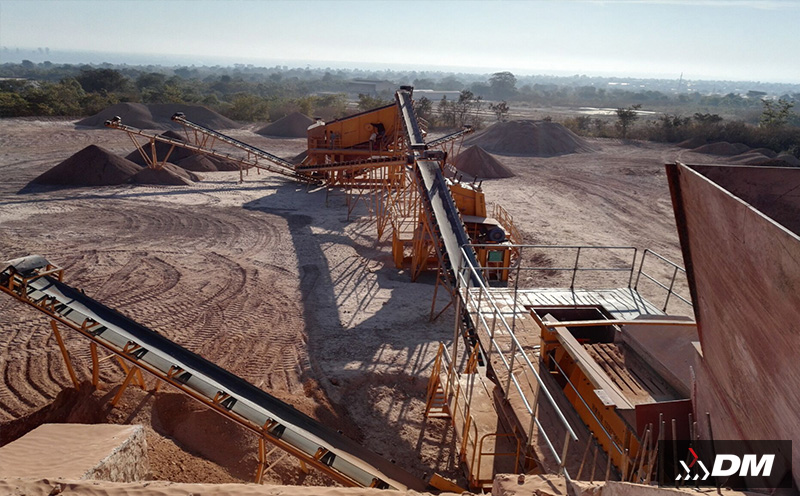
For quarry operators and aggregate producers worldwide, the first stage of any crushing circuit determines the profitability of the entire operation. When feed material is abrasive, high-volume, and delivered continuously from the pit, operators need a primary crusher that starts every morning, runs all shift, and requires minimal intervention. This is exactly where the fixed jaw crusher proves its enduring value. Unlike mobile units that trade capacity for portability, a stationary jaw crushing station is engineered for maximum uptime, heavy-duty duty cycles, and the lowest cost per ton over a 10-to-20-year service life. For quarries, cement plants, and large aggregate yards with a fixed feed location, investing in a properly sized fixed jaw crusher is not just an equipment decision—it is a strategic choice that shapes production capacity, maintenance burden, and long-term return on capital.
The Core Pain Points of Primary Crushing
Every quarry manager faces the same set of challenges. First, feed material is unpredictable. Blast fragmentation varies, oversized boulders arrive unexpectedly, and moisture content shifts with the seasons. A primary crusher must absorb these variations without tripping, without choking, and without wearing out prematurely. Second, downtime is disproportionately expensive. If the jaw station stops, every downstream cone, impactor, screen, and conveyor stops with it. A single four-hour unplanned stoppage can erase an entire day of production margin. Third, operating costs compound over time. Liner wear, power consumption, and spare parts inventory silently erode profitability when the wrong machine is selected. Fourth, safety and compliance expectations continue to rise. Modern operators need machines that can be serviced safely, inspected quickly, and integrated with modern plant control systems.
How a Fixed Jaw Crusher Solves These Challenges
Robust Construction for Uninterrupted Throughput
The fixed jaw crusher is built around a heavy, stress-relieved steel frame, a deep crushing chamber, and a toggled swing jaw mechanism optimized for compressive reduction of hard, abrasive rock. Unlike lighter-duty machines, a properly engineered stationary jaw can accept feed sizes up to 1200 mm and beyond, reducing the need for secondary blasting or pre-breaking. The single-toggle or double-toggle design—depending on application—delivers high stroke at the bottom of the chamber, ensuring consistent discharge even with sticky or clay-bearing feed. For granite, basalt, limestone, and river rock, this translates into steady throughput rates that match downstream circuits without bottlenecking.
Lower Total Cost of Ownership
Because a fixed jaw crusher is permanently installed on a reinforced concrete foundation, it avoids the structural compromises inherent in tracked or wheel-mounted units. The frame, bearings, and drive train can be sized for continuous duty rather than transport-weight limits. The result is longer liner life, fewer structural failures, and a service interval measured in months, not weeks. Wear parts—jaw plates, toggle seats, cheek plates—are standardized, widely available, and designed for quick replacement. Modern designs also feature hydraulic gap adjustment and hydraulic overload release, which used to be exclusive to higher-end crushers, further reducing the labor required for daily operation and setup changes.
Integration with Complete Stationary Plants
A fixed jaw crusher does not operate in isolation. It is the head of a complete stationary crushing and screening plant that can include grizzly feeders, belt conveyors, fixed cone crusher secondary stages, fixed impact crusher tertiary stages, and fixed screening machine decks. When engineered as a system, each piece of equipment is sized for balanced flow, optimized gradation, and minimal recirculation. Plant-level integration also means centralized control rooms, automated lubrication, dust collection, and condition monitoring—all of which are far easier and more economical to implement on a stationary installation than on mobile fleets.
Application Scenarios Where Fixed Jaw Excels
Large Hard-Rock Quarries
In granite or basalt quarries producing 500 to 2000 tons per hour, the fixed jaw crusher is the undisputed primary choice. Operators can run a single large jaw or a paired double-jaw installation to match blast cycles and stockpile build rates. The deep chamber geometry handles slabby feed without plugging, and the heavy flywheel design smooths out power demand, reducing peak electrical demand charges.
Cement Raw Material Preparation
Cement plants rely on consistent limestone feed. A fixed jaw crusher installed at the quarry face or near the raw mill delivers the reliability that 24/7 cement production demands. Abrasion-resistant manganese jaw plates stand up to high-silica limestone, and the adjustable discharge gap lets plant engineers tune the product size to match downstream roller mills or hammer mills.
Aggregate Base-Course Production
For road base and general construction aggregate, the jaw crusher produces a well-graded primary product that feeds efficiently into secondary and tertiary circuits. When paired with a fixed cone crusher and a multi-deck fixed screening machine, the complete plant can produce multiple saleable products—base course, chip, and manufactured sand—in a single pass.
Customer Benefits and Return on Investment
Uptime That Translates Directly to Revenue
A well-maintained fixed jaw crusher routinely achieves 95%+ availability. When each hour of production represents hundreds of tons of saleable product, the difference between 85% and 95% availability is enormous. Over a year, that gap can equal tens of thousands of tons of lost production.
Predictable Maintenance Budgets
Stationary jaw crushers have been around for over a century, and their wear profiles are well understood. Operators can forecast liner replacement schedules, stock critical spares, and plan shutdowns around production calendars. This predictability makes budgeting easier and reduces the risk of costly emergency parts shipments.
Residual Value and Long Service Life
A heavy-duty fixed jaw crusher often outlasts two or three generations of mobile equipment. Many units remain productive for 20 years or more with proper rebuilds. This long service life amortizes the initial capital investment over a much longer period, improving the overall net present value of the plant.
Selection Logic: Choosing the Right Fixed Jaw Crusher
Selecting the correct fixed jaw crusher begins with three numbers: maximum feed size, required throughput, and target discharge gradation. From there, operators must consider rock abrasiveness, moisture content, available power, and downstream equipment capacity. Oversizing wastes capital; undersizing creates a permanent bottleneck. Experienced operators also pay attention to the chamber profile—standard chambers for general use, deep chambers for higher reduction, and fine chambers when a smaller product is desired. Hydraulic adjustment, overload protection, and automation level are secondary but important factors that affect daily operating ease.
Operation and Maintenance Best Practices
To maximize the life of a fixed jaw crusher, operators should follow a few core principles. First, feed the crusher evenly across the full width of the chamber using a properly sized vibrating grizzly feeder. Uneven feeding causes uneven wear and can lead to premature bearing failure. Second, keep up with lubrication schedules—bearings and toggle seats are the heart of the machine. Third, monitor jaw plate wear and rotate or replace plates before they wear through to the base material. Fourth, inspect the toggle plate, tension springs, and drive belts on a weekly basis. Fifth, implement a condition-monitoring program with vibration and temperature sensors on the main bearings to catch developing faults early.
Conclusion
The fixed jaw crusher is not the flashiest piece of equipment in a modern crushing plant, but it is arguably the most important. It sets the throughput ceiling for the entire operation, dictates the wear budget for the primary stage, and establishes the reliability baseline that every downstream process depends on. For quarries, cement plants, and large aggregate producers with a fixed processing location, the stationary jaw remains the most cost-effective, most reliable, and most proven primary crushing solution available. When selected correctly, installed properly, and maintained diligently, it delivers decades of dependable service and forms the solid foundation upon which profitable aggregate production is built.


We will answer your email shortly!