


Latest blog
How to Match the Screening System for Cr... How to Troubleshoot Common Crusher Fault... A Complete Guide to Mobile Crushing Stat... Unstable Primary Crushing in Large Mines... How to Choose a Reliable Crusher Manufac... Crushers: Classification, Selection Prin...
Tracked Mobile Jaw Crushers: On-Site Crushing for C&D Recycling
13 Jul 2026
0View
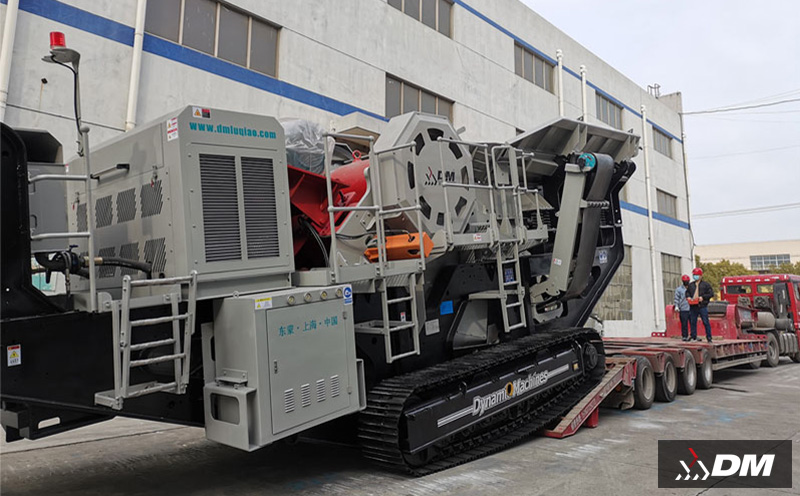
Construction and demolition (C&D) waste is one of the fastest-growing waste streams worldwide, and regulators are tightening rules on landfill disposal, tipping fees keep climbing, and project owners demand faster, cleaner site clearance. At the same time, recycled concrete aggregate is gaining acceptance as a sustainable, cost-effective substitute for virgin crushed rock. For contractors, demolition specialists, and waste management companies, the ability to crush material directly on site changes the economics of an entire project. This is the promise of the tracked mobile jaw crusher—a self-contained, track-mounted primary crushing unit that drives onto a job site under its own power, sets up in minutes, and turns demolished concrete, brick, and asphalt into saleable or reusable aggregate. Unlike a fixed jaw crusher that requires foundations and permanent infrastructure, a tracked jaw brings primary crushing directly to the material, eliminating haul trucks, reducing road wear, and slashing disposal costs.
The Pain Points of Traditional C&D Waste Handling
Before mobile crushing became mainstream, demolition contractors had limited options. They loaded demolished material into trucks, hauled it sometimes dozens of kilometers to a landfill or a fixed recycling yard, and paid tipping fees by the ton. Meanwhile, if the project also needed aggregate for backfill or base course, those same trucks would return empty and pick up virgin material from a quarry—doubling the transport cost and doubling the environmental impact. Urban job sites added another layer of difficulty: restricted truck access, noise ordinances, dust regulations, and limited laydown area. For linear projects like road rehabilitation or pipeline trenches, the work front moves constantly, making a fixed crushing point impractical. In short, the traditional model was expensive, slow, logistically complex, and increasingly out of step with modern sustainability requirements.
How a Tracked Mobile Jaw Crusher Transforms On-Site Processing
Self-Propelled Mobility and Fast Setup
The defining advantage of a tracked mobile jaw crusher is its crawler undercarriage. Powered by a diesel engine, the machine can climb stockpiles, traverse uneven ground, and reposition itself as the work face advances. Setup time is measured in minutes, not days. There is no concrete foundation to pour, no conveyor structure to erect, no lengthy commissioning process. An experienced operator can unfold the discharge conveyor, start the engine, and begin feeding material within a very short time of arriving on site. For short-duration projects—demolition of a single building, a highway repair contract, or a municipal cleanup campaign—this rapid deployment capability alone justifies the investment.
Integrated Feeder and Pre-Screening
Modern tracked mobile jaw crusher units come with integrated vibrating grizzly feeders and often a pre-screen deck that removes fines before they enter the crushing chamber. This is especially valuable with C&D material, which typically contains soil, sand, and fine rubble. Bypassing fines reduces wear on the jaw plates, increases throughput, and produces a cleaner crushed product. Some configurations also include an overband magnet that removes reinforcing steel from the crushed stream automatically—a critical feature for concrete recycling where rebar is present in virtually every piece of feed.
Compact Footprint for Urban Environments
Urban demolition sites are rarely spacious. A tracked mobile jaw crusher is designed to operate within a tight footprint. The machine itself is relatively compact, the discharge conveyor folds for transport, and the integrated design means no separate feeder or conveyor needs to be rigged up around it. This compactness also makes it easier to comply with site boundary limits and reduces the amount of temporary civil works required.
Key Application Scenarios
Building Demolition and Site Clearance
When a commercial building or industrial structure comes down, the resulting rubble pile is the perfect feed for a tracked mobile jaw crusher. The machine can be positioned right next to the demolition zone, fed directly by excavator, and produce a 0–100 mm or 0–150 mm product that can be reused on site as fill, hauled away as a saleable product, or fed into a secondary tracked mobile impact crusher for further sizing and shaping. On many projects, the value of the recycled aggregate offsets a significant portion of the demolition cost.
Road and Highway Rehabilitation
Road milling and pavement reconstruction generate enormous volumes of reclaimed asphalt pavement (RAP) and crushed concrete base. A tracked mobile jaw crusher can follow the milling train or the demolition crew, processing removed material in place. The crushed product can be reused in the road base immediately, dramatically reducing haul distances and keeping the project on schedule. For long linear projects, the tracked unit simply crawls forward as work progresses—something no stationary plant can do.
Pipeline and Trenching Projects
Utility pipelines, water mains, and fiber optic trenches all generate excavated rock and broken concrete. Hauling this material out and bringing aggregate back in is expensive and disruptive. A compact tracked mobile jaw crusher can be moved along the trench alignment, crushing rock on site for use as backfill or bedding material. This is particularly valuable in remote areas where aggregate sources are far away and trucking costs dominate the project budget.
Disaster Recovery and Emergency Clearance
After earthquakes, floods, or storms, debris must be cleared quickly to restore access. A tracked mobile jaw crusher can be transported to the affected area on a lowbed trailer and deployed immediately to reduce rubble volume, open roads, and prepare material for reuse or disposal. Its self-contained power means it operates independently of grid infrastructure—essential in disaster zones where utilities may be down.
Customer Benefits and Economic Value
Dramatic Reduction in Hauling and Tipping Costs
The single biggest financial benefit of on-site crushing with a tracked mobile jaw crusher is the elimination of haulage. Every truck that does not need to leave the site saves fuel, driver time, road permits, and wear and tear. When tipping fees are high—common in European and North American urban markets—the savings multiply quickly. Many operators report that a tracked jaw pays for itself within a few high-volume projects simply by avoiding landfill disposal costs.
Revenue Generation from Recycled Aggregate
Crushed C&D material is not just waste avoidance—it is a product. Properly crushed and cleaned recycled concrete aggregate (RCA) can be sold as road base, pipe bedding, general fill, or as feed for further processing into higher-grade products. A tracked mobile jaw crusher turns a waste stream into a revenue stream, and when paired with a tracked mobile screening machine, it can produce multiple sized products that command different prices in local markets.
Flexibility Across Multiple Job Sites
Contractors rarely work on just one project. A tracked mobile jaw crusher can be moved from site to site as contracts change, spreading the capital cost across multiple revenue streams. A single machine can serve a demolition contract one month, a road project the next, and a quarry satellite operation the month after. This utilization flexibility is a major advantage over stationary equipment, which is tied to one location for its entire service life.
Environmental and ESG Compliance
Sustainability is no longer optional in the construction industry. Developers, government agencies, and corporate clients increasingly require waste diversion targets and carbon reduction plans. On-site crushing with a tracked mobile jaw crusher reduces truck traffic, cuts CO₂ emissions from hauling, diverts material from landfills, and supports circular-economy goals. These environmental benefits translate directly into stronger bids, better client relationships, and improved ESG reporting.
Selection and Deployment Considerations
Choosing the right tracked mobile jaw crusher depends on feed size, required throughput, material type, transport constraints, and the typical project duration. Smaller units in the 20–30 ton class are easy to move between urban sites and handle feed sizes up to around 500 mm. Larger units—40 tons and up—can accept bigger feed, run at higher throughput, and handle harder rock, but they require heavier transport and more operating space. Engine choice is another factor: Tier 4 Final or Stage V emission-compliant diesels are essential for urban and regulated environments, while simpler engines may be acceptable in remote regions. Additional options like dust suppression systems, overband magnets, remote control, and variable speed feeders should be selected based on the most common application.
Operational and Maintenance Tips
Tracked mobile jaw crushers operate in challenging environments—dust, vibration, uneven ground—and proper maintenance is essential for uptime. Daily pre-start checks should include fluid levels, belt tension, jaw plate condition, track tension, and magnet function. Because the machine moves frequently, track undercarriage components—pads, rollers, idlers—need regular inspection. The diesel engine requires strict adherence to service intervals, especially in dusty conditions where air filter life is shortened. Operators should also be trained to feed the crusher at a steady rate and avoid oversize or tramp metal that can damage the jaw plates or toggle mechanism. Many modern units include hydraulic gap adjustment and overload relief, which speed up product size changes and protect the machine from uncrushable objects.
Conclusion
The tracked mobile jaw crusher has fundamentally changed how the construction and demolition industry handles waste material. What was once an expensive disposal problem is now an on-site processing opportunity that saves money, generates revenue, and improves sustainability performance. For demolition contractors, civil engineering firms, waste recyclers, and aggregate producers who need flexibility across multiple job sites, the tracked mobile jaw is an indispensable tool. It combines the proven crushing performance of a jaw crusher with the mobility of a crawler tractor, creating a machine that goes where the work is, sets up fast, and delivers immediate economic returns. In an industry where logistics costs and environmental compliance grow more important every year, on-site mobile crushing is not just a convenience—it is a competitive necessity.
Prev Post
Sand Making Plant Equipment

We will answer your email shortly!