


Latest blog
Aggregate Grading Fails to Meet Standard... Shanghai Dongmeng Heavy Industry Debuts ... How to Match the Screening System for Cr... How to Troubleshoot Common Crusher Fault... A Complete Guide to Mobile Crushing Stat... Unstable Primary Crushing in Large Mines...
Crushers: Classification, Selection Principles and Practical Maintenance Guidelines
1. Overview of Crushers in Modern Aggregate Production
Crushers are core processing equipment widely used in mining, sand‑aggregate production, infrastructure construction and construction waste recycling. They break large‑size rocks, ores and waste materials into granular finished products of different specifications through extrusion, impact, shearing and grinding forces. With the continuous advancement of green mining and environmental‑friendly construction concepts, crushers have become essential equipment for solving the shortage of natural sand resources and realizing the resource utilization of solid waste. Different working conditions such as raw material hardness, feeding size, required output capacity and finished particle size put forward differentiated requirements for crusher models, which is why scientific equipment selection is the premise to guarantee stable operation of the whole production line.
2. Main Types of Crushers and Their Applicable Working Conditions
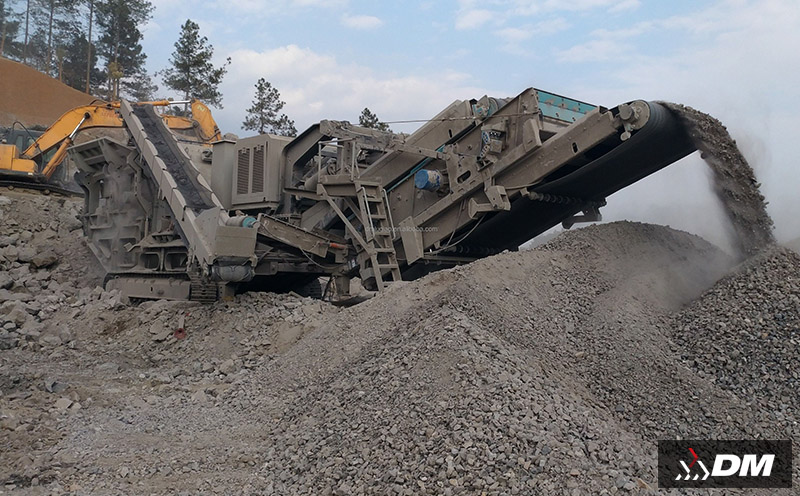
There are multiple types of crushers on the market, and each type has its own targeted application scenarios. Jaw crushers are mostly used for primary coarse crushing, suitable for processing high‑hardness ores and large‑sized raw materials, featuring stable structure and strong feeding adaptability. Cone crushers are applied in medium and fine crushing of hard rocks, with uniform finished grain shape, often used in large‑scale mine and aggregate production lines. Impact crushers perform well in medium‑hard material crushing and shaping processes, and the finished aggregate has good cubic particle shape, widely adopted in construction waste recycling projects. Hammer crushers are suitable for brittle materials with low‑medium hardness, characterized by simple process flow and low investment cost. Users should not blindly pursue high‑parameter equipment, but match the corresponding crusher type according to actual material properties.
3. Core Principles for Reasonable Crusher Selection
Many project operators fall into selection mistakes when purchasing crushers, only focusing on nominal production capacity while ignoring matching degree with on‑site conditions. First of all, confirm material parameters, including material hardness, moisture content and maximum feeding size, which directly determine the wear degree of wearing parts and equipment operation load. Secondly, clarify production requirements, including hourly output target and finished aggregate particle‑size gradation standard. Thirdly, take site conditions into consideration: fixed crushers are fit for long‑term stable projects with fixed sites, while mobile crushers are more suitable for frequent site‑switching scenarios such as urban construction waste disposal and temporary road construction. In addition, spare‑part supply cycle, after‑sales service response speed and overall operating cost in the later period also need to be included in the comprehensive evaluation scope.
4. Key Points of Daily Operation and Maintenance for Crushers
Even high‑quality crushers will suffer from performance decline and frequent faults without standardized maintenance. Pre‑start inspection work cannot be omitted: check fastening status of bolts, wear loss of wearing parts, lubricating oil level and sealing condition, eliminate hidden dangers before startup. During equipment operation, avoid feeding foreign matters such as iron blocks, prevent over‑loading feeding, and keep observing vibration noise and temperature changes. After shutdown, clean residual materials inside the machine regularly, replace severely worn components in time, and make complete operation and maintenance records. Scientific maintenance can effectively extend service life of crushers, reduce unexpected shutdown losses and cut overall production costs of the production line.
5. Development Trend of Crushers in the Green Production Era
Against the background of increasingly strict environmental‑protection requirements, crushers are continuously developing towards intelligence, energy‑saving and environmental‑protection. Intelligent monitoring modules can realize real‑time monitoring of equipment operating data, remind users of abnormal faults in advance and optimize operation parameters automatically. Optimized cavity‑type design reduces energy consumption per unit output and improves particle‑shape quality of finished materials. Meanwhile, dust‑suppression and noise‑reduction configurations are gradually becoming standard options, helping production projects meet local environmental‑protection standards. For investors, choosing crushers that conform to the development trend of the industry can not only meet current production demands, but also reserve upgrading space for subsequent project expansion.
Conclusion
As core industrial equipment for aggregate processing and solid‑waste recycling, crushers exert an irreplaceable influence on the benefit of mining and construction projects. Correctly distinguishing equipment types, abiding by practical selection principles and carrying out routine maintenance strictly are effective ways to give full play to equipment performance. Combining actual project conditions to make reasonable configuration is the key to realizing high‑efficiency, stable and green production.


We will answer your email shortly!