


Latest blog
Shanghai Dongmeng Heavy Industry Debuts ... How to Match the Screening System for Cr... How to Troubleshoot Common Crusher Fault... A Complete Guide to Mobile Crushing Stat... Unstable Primary Crushing in Large Mines... How to Choose a Reliable Crusher Manufac...
How Much Does a Vibrating Screen Cost?
In the mining industry, the vibrating screen is a core grading equipment in crushing and screening production lines. As one of the core products of Shanghai Dongmeng Road & Bridge Machinery Co., Ltd., the YK series circular vibrating screen is famous for its "advanced structure, strong exciting force, large processing capacity, and sturdiness and durability". It is widely used for sand and gravel grading in quarries, mining, mineral processing and other fields.
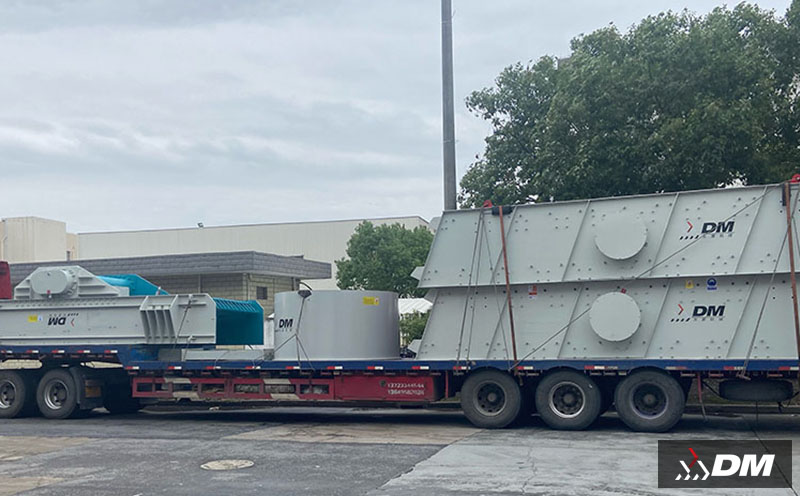
I. Product Configuration and Price Range of Dongmeng Vibrating Screens
Dongmeng YK series vibrating screens adopt a design of small amplitude, high frequency and large inclination angle, with high screening efficiency and large processing capacity. Prices vary significantly depending on model, number of layers, and screen surface specifications.
1. Small Size (Screen Size 1.2m×3.0m)
Suitable for small and medium-sized mines or mobile crushing stations:
- 2YK-1230 (2 layers): Capacity 10–90 t/h, motor power 7.5kW, weight approx. 2.3 tons
- 3YK-1230 (3 layers): Capacity 30–90 t/h, motor power 7.5kW, weight approx. 3 tons
Reference price range: 5,000–10,000 USD
2. Medium Size (Screen Size 1.5m×4.8m ~ 1.8m×5.4m)
Mainstream configuration in the mining industry, balancing capacity and cost performance:
- 2YK-1548 (2 layers): Capacity 50–190 t/h, motor power 15kW, weight approx. 5 tons
- 3YK-1548 (3 layers): Capacity 50–200 t/h, motor power 15kW, weight approx. 6 tons
- 4YK-1548 (4 layers): Capacity 50–200 t/h, motor power 18.5kW, weight approx. 7.5 tons
- 3YK-1854 (3 layers): Capacity 50–300 t/h, motor power 22kW, weight approx. 7–8.3 tons
Reference price range: 12,000–25,000 USD
3. Large Size (Screen Size 2.1m×6.0m ~ 3.6m×8.0m)
For high-output demand in large mines and quarries:
- 3YK-2160 (3 layers): Capacity 100–400 t/h, motor power 30kW, weight approx. 10–12 tons
- 3YK-2460 (3 layers): Capacity 160–450 t/h, motor power 30kW, weight approx. 10–13 tons
- 3YK-3070 (3 layers): Capacity 150–650 t/h, motor power 30×2kW, weight approx. 15.5 tons
- 3YK-3680 (3 layers): Capacity 150–1000 t/h, motor power 45×2kW, weight approx. 21.4 tons
Reference price range: 25,000–60,000 USD
Note: The above are ex-factory price references, excluding transportation, tariffs and installation costs. The final quotation shall be subject to the official offer from Shanghai Dongmeng Road & Bridge Machinery Co., Ltd.
II. Other Key Factors Affecting Cost
1. Transportation and Tariffs
Mining equipment is large and heavy, so cross-border or cross-regional transportation costs cannot be ignored:
- Domestic transportation: approx. 1,000–5,000 USD depending on distance
- International sea freight: approx. 3,000–10,000 USD depending on destination port
- Import duties: vary by country (e.g., 10%–25% in some Southeast Asian and African countries)
2. Installation and Commissioning
The cost is determined according to project scale and service period, generally about 2,000–8,000 USD.
3. Long-term Operating Costs
- Screen replacement: screens are consumables under mining conditions, replacement cost 200–2,000 USD per set (polyurethane screens have longer service life but higher initial cost)
- Vibrator maintenance: oil lubrication and large-clearance bearing design, long maintenance cycle, but regular inspection required
- Downtime loss: breakdown of vibrating screen shuts down the whole production line, with losses up to thousands of dollars per hour, so equipment reliability is critical
III. Core Advantages of Dongmeng Vibrating Screens
- Stable operation and sturdy: flexible connection with tire coupling, ring-groove rivet structure
- Adjustable amplitude and high efficiency: adjustable amplitude, long material screening line, clear classification
- Oil lubrication and long service life: vibrator with large-clearance bearing, oil lubrication, low noise, long service life
- Wide application: not only for sand and gravel screening in quarries, but also for coal washing, mineral processing, building materials, electric power, chemical industry and other industries
IV. Summary and Suggestions
For medium-sized mines with an annual capacity of 500,000–1,000,000 tons, Dongmeng 3YK-1854 or 3YK-2160 is recommended, with a total CIF cost of about 20,000–35,000 USD. For large mines, 3YK-2460 or 3YK-3070 can be selected, with a budget of about 35,000–60,000 USD.
What Are the Common Faults of Vibrating Screens?
Under harsh working conditions such as mines and quarries, vibrating screens operate under long-term high load, and various faults are difficult to avoid completely. Once the equipment shuts down, it often interrupts the entire production line and causes considerable economic losses. Understanding common faults and their causes helps to realize preventive maintenance and ensure continuous and stable production. The following are the most common types of faults in the use of vibrating screens.
I. Poor Screening Effect
Poor screening quality is the most intuitive problem in operation, mainly manifested as unclear material classification, excessive coarse particles in undersize or fine powder loss in oversize.
Main causes:
- Screen blockage: screen holes are easily clogged when material moisture or fine particle content is high
- Screen surface damage: long-term impact causes screen mesh breakage or looseness
- Uneven feeding: skewed feeding leads to over-thick material on one side of the screen surface and nearly empty on the other
- Over-thick material layer: feeding exceeds the processing capacity of the equipment
Solutions: Stop to clean the screen mesh, adjust the feeding device to ensure uniform distribution, tighten or replace the loose screen mesh, and adjust the screen inclination if necessary.
II. Failure to Start or Insufficient Amplitude
Difficulty starting or obviously insufficient amplitude during operation will directly affect screening efficiency and processing capacity.
Main causes:
- Electrical fault: motor damage, circuit component fault or insufficient voltage
- Material accumulation: excessive material on the screen surface increases starting load
- Vibrator problem: coupling bolt falling off, lubricating grease thickening and caking
- Improper eccentric block configuration: insufficient counterweight or unreasonable angle setting
Solutions: Check the electrical system, clean up accumulated materials, repair the vibrator and replace suitable lubricating grease, adjust the number and angle of eccentric blocks.
III. Bearing Overheating
The bearing is the core component of the vibrating screen, and abnormal heating is often a precursor to equipment failure.
Main causes:
- Poor lubrication: lack of lubricating oil, excessive grease or unqualified oil quality
- Bearing contamination: dust intrusion due to failure of sealing device
- Bearing wear: increased bearing clearance or pitting after long-term operation
Solutions: Fill or replace lubricating oil according to specifications, clean the bearing and check the sealing device, replace the entire bearing set in case of serious wear. Dongmeng vibrating screens adopt oil lubrication and large-clearance bearing design, which can effectively reduce bearing failure rate.
IV. Abnormal Noise During Operation
Unusual noise during operation is usually an early warning of damaged mechanical parts.
Main causes:
- Bearing damage: broken cage or worn rolling elements
- Loose screen mesh: slapping noise from untightened screen mesh
- Bolt looseness: loose connecting bolts fixing bearings or screen box
- Spring damage: broken or stiffness attenuation of damping springs
Solutions: Replace damaged bearings in time, tighten the screen mesh, fully tighten bolts at all parts, replace failed springs.
V. Abnormal Vibration
The vibration trajectory and amplitude of the vibrating screen are designed; any abnormality will affect the screening effect and service life.
Common types of abnormal vibration:
1. Polarization
Manifested as inconsistent amplitude on both sides of the screen box. Causes include inconsistent height or stiffness of four support springs, abnormal vibrator operation, inconsistent angle of motor eccentric blocks, etc.
2. Torsional Vibration
Mainly occurs in linear vibrating screens, with torsional movement of the screen box, accompanied by material deviation and retention. Most causes are deflection of exciting force direction of two vibration motors or failure of spring damping system.
3. Too Small or Severe Vibration
Too small amplitude is usually related to insufficient voltage, insufficient eccentric block counterweight or excessive feeding; severe vibration may be caused by excessive exciting force, too hard damping springs or loose anchor bolts.
Solutions: Check and adjust the consistency of spring support height and stiffness, ensure the same angle of each vibrator eccentric block, adjust motor installation angle according to specifications (generally 30°–45°), tighten anchor bolts.
VI. Structural Component Cracking
Damage to structural parts such as cracks on the side plate of the screen box, broken beams and main beams is the most serious type of fault, with high repair cost and impact on equipment safety.
Main causes:
- Long-term operation at critical frequency, resulting in resonance
- Loose connecting bolts reduce the stiffness of the screen box
- Excessive feeding impact, long-term concentrated load at the feeding position
- Severe spring deformation leading to large height difference between left and right
Solutions: Avoid long-term operation at resonance frequency, regularly tighten high-strength bolts, install buffer devices or wear-resistant liners at the feeding position. When repairing cracks, drill holes at the end of cracks to prevent extension and weld reinforcing plates.
Preventive Maintenance Recommendations
Most faults of vibrating screens can be prevented through standardized daily maintenance:
| Maintenance Cycle | Main Content |
| Weekly Inspection | Check looseness of vibrator and bolts at all parts, check screen surface looseness and damage |
| Monthly Inspection | Check for cracks on screen frame components and welds, repair and reinforce in time if problems are found |
| Annual Inspection | Overhaul and clean the vibrator, check bearing pitting, replace if necessary |
In addition, it is recommended to establish an equipment operation benchmark file. Record key parameters (amplitude, frequency, spring height, etc.) when the equipment is newly put into use (no-load and load), and re-measure and compare regularly to detect abnormal changes early.
Shanghai Dongmeng Road & Bridge Machinery Co., Ltd. is a modern high-tech enterprise specializing in R&D and manufacturing of complete sets of large crushing and screening equipment. It has passed ISO9001:2015 international quality system certification, and its products are exported to many countries and regions around the world. Dongmeng YK series circular vibrating screen adopts ring-groove rivet connection structure and oil-lubricated large-clearance bearing design, featuring stable operation and sturdiness and durability. For more product information or technical consultation, please contact Dongmeng official for professional support.
Prev Post
Is rock crusher profitable?

We will answer your email shortly!