


Latest blog
Shanghai Dongmeng Heavy Industry Debuts ... How to Match the Screening System for Cr... How to Troubleshoot Common Crusher Fault... A Complete Guide to Mobile Crushing Stat... Unstable Primary Crushing in Large Mines... How to Choose a Reliable Crusher Manufac...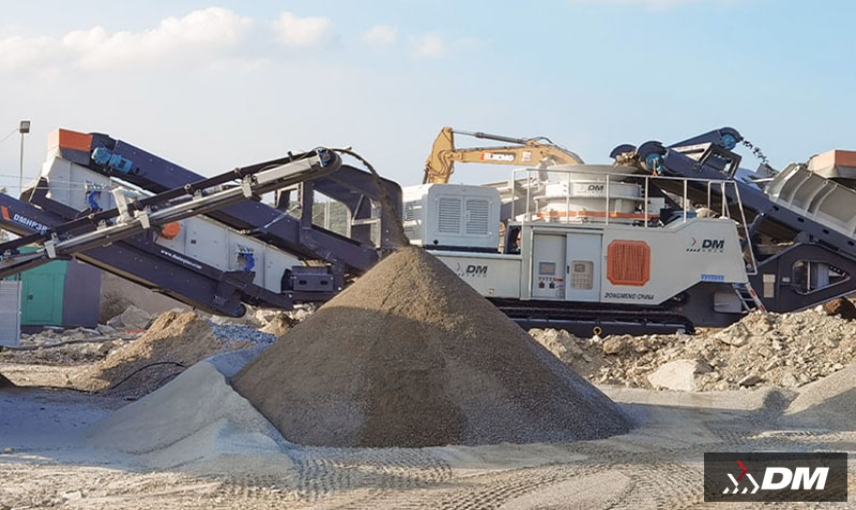
Is rock crusher profitable?
Rock crusher (aggregate production) is an essential industry for global infrastructure and construction. It offers stable long-term profitability, but returns depend on market supply and demand, investment scale, equipment selection, and operation management. Profits are not guaranteed by blind investment. From a global perspective, this industry features both rigid demand and regional differences, making it a classic sector for converting natural resources into economic benefits.
1. Global Demand: Supported by Rigid Need with Varied Growth
Aggregate is the most consumed solid mineral in the world, with a global demand of over 50 billion tons per year and a market size of nearly 400 billion US dollars. Almost all roads, bridges, buildings, and water conservancy projects rely on crushed stone and manufactured sand.
- High-growth markets: Southeast Asia, Africa, Latin America and other emerging markets are in an infrastructure boom. Driven by roads, airports and urbanization, aggregate is in short supply with rising prices. Profit per ton can reach 8–15 USD.
- Stable mature markets: Europe, North America and Australia focus on urban renewal and infrastructure maintenance. Demand is steady, and high-quality aggregate enjoys a premium. Profit is stable at 5–10 USD per ton.
- Optimizing markets: Markets such as China have entered a consolidation phase after capacity expansion. Prices have returned to a reasonable level, but leading enterprises still maintain a solid profit of 3–6 USD per ton through large-scale and intelligent production.
2. Profit Logic: Key Links from Rock to Revenue
The core profit model of rock crushing is low-cost processing plus stable sales, with a clear income and cost structure:
- Revenue: The price of finished crushed stone and manufactured sand is determined by regional supply and demand, about 30–60 USD per ton in emerging markets and 15–30 USD per ton in mature markets.
- Cost: Mainly includes equipment investment (30%–40%), ore/raw materials, electricity, labor, wear parts, environmental protection and transportation. The total comprehensive cost is about 10–30 USD per ton.
- Profit margin: Under normal operation, the gross profit per ton is generally 5–20 USD. A production line with 200 tons per hour, operating 200 days a year, can achieve an annual gross profit of 2–8 million USD.
3. Investment and Payback Period
- Small mobile crushing plant: Investment 50,000–150,000 USD, suitable for small projects and construction waste recycling. Payback period 6–12 months, high flexibility and low risk.
- Medium fixed line (100–300 tph): Investment 1–3 million USD, suitable for medium-sized mines and aggregate plants. Payback period 1–3 years, the mainstream profitable model worldwide.
- Large intelligent line (over 500 tph): Investment 5–20 million USD, suitable for large mining areas. Payback period 2–4 years, strong scale effect and stable long-term profit.
4. Core Variables Affecting Profit
- Raw material and process: Soft rocks such as limestone have low processing cost and high profit. Hard rocks such as granite require high-end equipment, with costs 20%–30% higher. Proper equipment selection (jaw crusher + cone crusher) can save 20% energy and double the service life of wear parts.
- Environmental protection and compliance: Environmental investment accounts for 15%–20% of total cost, but compliance is a prerequisite for survival. Green mines and recycled aggregates can enjoy policy incentives and product premiums.
- Transportation radius: Aggregate is heavy with high freight cost. The effective sales radius is 50–100 km. Projects near construction sites with convenient transportation ensure better profits.
- Operation management: Intelligent production lines can reduce labor by 30% and downtime rate, increasing annual efficiency by more than 1 million USD.
5. Risks and Solutions
Industry risks focus on overcapacity, price competition, non-compliance with environmental standards, and resource exhaustion. Key solutions:
- Choose regional markets with strong demand and insufficient supply.
- Take the path of large-scale, high-quality and green development to avoid low-price competition with high-quality aggregate.
- Use a combination of mobile and fixed plants to cover long-term bases and short-term projects and improve capital efficiency.
Summary
Rock crushing is a sustainable profitable business, but not a windfall industry. Global infrastructure demand is rigid. As long as investors accurately grasp the regional market, reasonably control investment, and strengthen technology and management, stable returns can be achieved. For investors, this is a professional, long-term and profitable industrial track, especially in emerging markets and green transformation, where considerable opportunities still exist.
What is the best way to crush rock?
In global mines, quarries and engineering construction, how to crush rock efficiently is always the core issue that determines production efficiency and cost. Rocks vary in hardness, abrasiveness, moisture content and required finished particle size. Therefore, there is no single best method, only the most suitable solution for specific working conditions.
At present, the mainstream rock crushing methods are mainly divided into two categories: mechanical crushing and blasting crushing. Among them, mechanical crushing has become the first choice for modern aggregate production and ore processing due to its high controllability, good product shape, and easy automation and continuous operation.
1. Mechanical Crushing: The Core of Modern Aggregate Production
Mechanical crushing uses crushing equipment to apply external force to break rocks. According to the action mode of crushing force, it is mainly divided into three types: extrusion, impact and grinding. Different equipment corresponds to different crushing stages and rock characteristics.
1.1 Primary Crushing: Preferred Jaw Crusher
Working principle: Uses extrusion and bending between two jaw plates to crush materials.
Suitable materials: Hard and abrasive rocks such as granite and basalt.
Advantages: Simple structure, reliable operation, can handle large materials up to 1020mm.
Dongmeng solution: Shanghai Dongmeng jaw crusher has a large feed opening and deep crushing chamber, which can efficiently handle large rocks and provide stable particle size materials for subsequent crushing.
1.2 Secondary and Fine Crushing: Cone Crusher vs Impact Crusher
Cone Crusher – The Choice for Hard Rock Experts
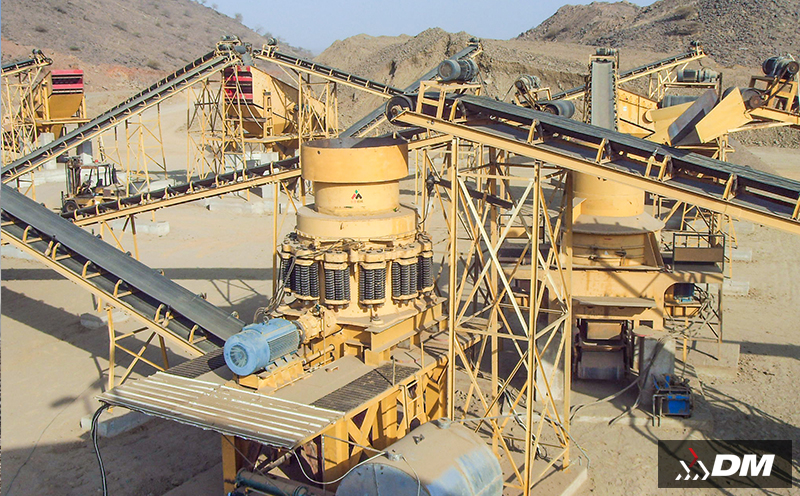
- Working principle: Uses eccentric pendulum movement between the moving cone and fixed cone for extrusion, shearing and grinding.
- Suitable materials: High-hardness and high-abrasiveness rocks (such as iron ore, pebble).
- Advantages: Large reduction ratio, low energy consumption, uniform particle size, high degree of automation.
- Dongmeng solution: Shanghai Dongmeng crawler mobile cone crushing station adopts multi-cylinder hydraulic technology, with fully automatic crushing process control and over-iron protection, high output and good grain shape.
Impact Crusher – The Tool for Medium-Soft Rock and Grain Shape Optimization
- Working principle: Uses high-speed impact of blow bars on the rotor to throw rocks to the impact plate for secondary crushing.
- Suitable materials: Medium-hardness and below rocks (such as limestone), compressive strength ≤ 320MPa.
- Advantages: Extremely large reduction ratio (over 50), cubic finished products, flakiness content below 10%, the best choice for high-grade aggregate.
- Dongmeng solution: Shanghai Dongmeng mobile impact crushing station adopts heavy rotor and alloy high-wear-resistant blow bar design, with good finished grain shape. It can complete crushing and screening with a single machine, and realizes fast relocation with crawler traveling system.
1.3 Sand Making and Shaping: Vertical Shaft Impact Crusher
Working principle: Uses stone-on-stone or stone-on-iron principle. Materials collide and grind with each other driven by a high-speed rotating rotor.
Suitable materials: Fine crushing and shaping of various rocks.
Advantages: Can produce manufactured sand with excellent gradation and round shape, significantly improving concrete performance.
2. Blasting Crushing: Traditional Primary Mining Method
Working principle: Uses high temperature and high pressure gas released by explosive explosion to collapse rocks.
Application scenario: The source of mining, separating the original rock mass from the mountain.
Limitations: Blasting requires high safety, and the stone shape is irregular. Secondary blasting or mechanical crushing is often required to handle large boulders. Therefore, modern processes usually adopt a combined mode of blasting + mechanical crushing.
3. How to Choose the Best Crushing Method?
The best method depends on three core factors:
| Consideration | Recommended Equipment/Method | Reason |
| Rock Hardness | High hardness (granite/basalt) → Jaw + Cone Crusher | Extrusion crushing has good wear resistance and low equipment loss |
| Medium & low hardness (limestone/gypsum) → Impact Crusher | Large reduction ratio, high efficiency, controllable grain shape | |
| Product Grain Shape | Cubic shape required (high-grade road/construction aggregate) → Impact / VSI Crusher | Flakiness content can be controlled below 10% |
| Working Site | Multi-site / short-term / mountainous → Mobile Crushing Plant | Fast relocation, no foundation needed, save installation time |
| Fixed mine / long-term mining → Fixed Production Line | One-time investment, stable and reliable large-scale production |
4. Summary: Dongmeng’s Way of Efficient Crushing
In summary, the best way to crush rock is to follow the principle of more crushing and less grinding and match the optimal crushing equipment according to material characteristics. For hard rocks, use a combination of jaw crusher and cone crusher. For medium-hardness rocks, impact crusher is an ideal solution to achieve large reduction ratio and excellent grain shape. In complex working conditions that require frequent relocation or strict environmental protection, Shanghai Dongmeng crawler mobile crushing station has become a wise choice for global customers to optimize crushing operations due to its intelligent, high-efficiency, good grain shape and fast relocation advantages.
Prev Post
How to start a mobile crusher?

We will answer your email shortly!