


Latest blog
Fixed Jaw Crusher: Is Bigger Better? Aggregate Grading Fails to Meet Standard... Shanghai Dongmeng Heavy Industry Debuts ... How to Match the Screening System for Cr... How to Troubleshoot Common Crusher Fault... A Complete Guide to Mobile Crushing Stat...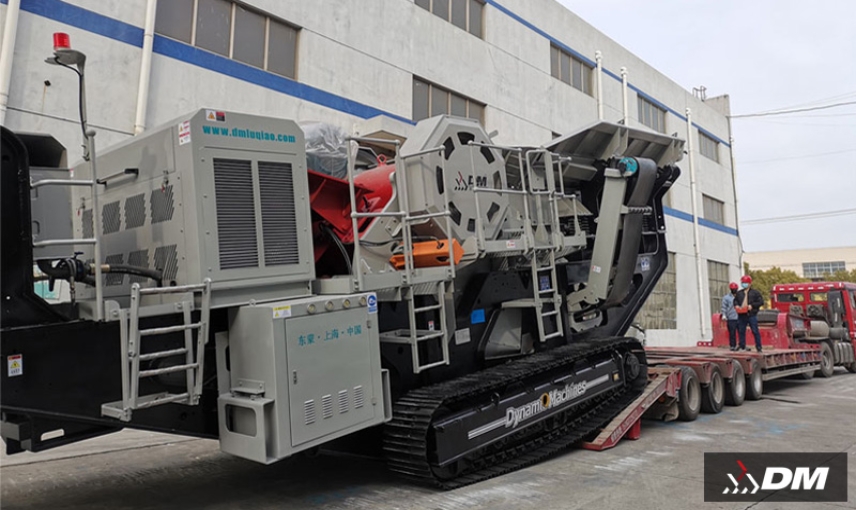
Tracked Mobile Jaw Crushers for Satellite Quarry Pit Primary Crushing
27 Jul 2026
0View
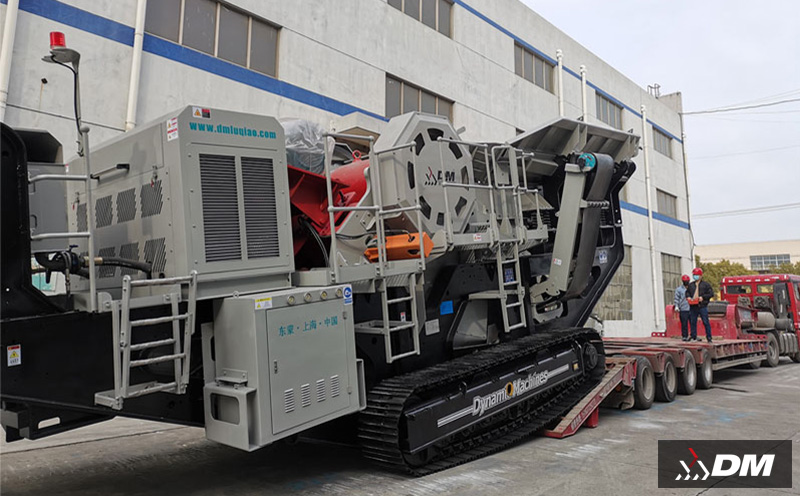
Established quarry operators know that not every deposit justifies a permanent crushing plant. Main quarries have the scale and reserves to support a full stationary installation with concrete foundations, steel structures, and conveyor galleries. But many quarry companies also hold smaller satellite deposits, marginal reserves, and borrow pits that are too small or too short-lived to warrant permanent infrastructure. Leaving these deposits undeveloped means leaving revenue on the table; building a fixed plant at each one means tying up capital that may never be recovered. This is the sweet spot for the tracked mobile jaw crusher in satellite quarry service. A self-propelled, track-mounted primary crusher that can be driven from pit to pit, set up in hours, and produce saleable primary-crushed product without any permanent infrastructure, the mobile jaw allows quarry operators to economically develop smaller deposits that would otherwise sit idle. When paired with a tracked mobile screening machine for basic sizing, it creates a complete portable primary production unit that follows the reserves across the quarry holding.
The Satellite Pit Challenge for Quarry Operators
Satellite and marginal deposits present a specific set of economic and logistical challenges. First, reserve size is limited. A satellite pit might contain only a few hundred thousand tons of usable rock—enough for six months to two years of production but nowhere near enough to amortize a stationary plant. Second, deposit quality can be variable. Marginal reserves may have more overburden, more clay seams, or more variable rock hardness than the main quarry. The crushing equipment must handle this variability without excessive wear or downtime. Third, haulage distance from the main plant may be long. Trucking run-of-mine rock from a remote satellite pit back to the main quarry's fixed crusher is expensive and wears out trucks faster. Fourth, permitting for new permanent structures can be slow and costly. Getting approval for a permanent crushing building, conveyor system, and electrical substation at a small pit may not be worth the time and expense. Fifth, redeployment flexibility has value. When the satellite pit is exhausted, the equipment should be able to move to the next opportunity rather than becoming a stranded asset.
How a Tracked Mobile Jaw Crusher Unlocks Satellite Deposits
No Permanent Infrastructure Required
The single biggest advantage of a tracked mobile jaw crusher for satellite pit operations is that it requires no permanent infrastructure. There is no concrete foundation to pour, no crusher building to erect, no conveyor gallery to build, and no permanent electrical connection to install. The machine simply drives into the pit, unfolds its discharge conveyor, and starts crushing. This eliminates the largest upfront cost associated with developing a new pit—the civil and structural works—and dramatically reduces the time from decision to production.
Self-Propelled Mobility Within and Between Pits
The crawler undercarriage on a tracked mobile jaw crusher allows it to move around the satellite pit as the working face advances. Instead of hauling rock to a fixed crusher point, the crusher moves to the rock, reducing loader or haul truck travel distance within the pit. Between pits, the crusher loads onto a lowbed trailer for highway transport to the next deposit. For quarry companies with multiple satellite pits within a region, a single mobile jaw can serve them all sequentially, keeping utilization high and spreading capital cost across multiple revenue streams.
Integrated Feeder and Dust Control for Standalone Operation
A modern tracked mobile jaw crusher is a complete self-contained primary crushing plant on tracks. It includes a heavy-duty feed hopper sized for wheel loader or excavator feeding, a vibrating grizzly feeder that removes fines before they enter the crushing chamber, the jaw crusher itself, a discharge conveyor that stockpiles crushed product, and an onboard diesel engine with hydraulic drives. Dust suppression spray bars at the feed point and discharge are standard on most models. This integration means the machine can operate standalone with nothing more than a loader and a fuel supply—ideal for remote satellite pits with minimal infrastructure.
Scalable Production with Add-On Equipment
Satellite pit operations can start simple and add capability as needed. Initially, a tracked mobile jaw crusher alone produces a single primary-crushed product that can be hauled to the main plant for further processing or sold as crusher run. If the deposit proves larger or higher quality than expected, the operator can add a tracked mobile screening machine to produce sized fractions, and later a tracked mobile cone crusher or tracked mobile impact crusher for secondary reduction. This modular, scalable approach allows operators to match investment to actual deposit performance rather than betting everything upfront.
Key Satellite Quarry Application Scenarios
Marginal Reserve Development
Many established quarries have identified reserves on their property that are classified as marginal—too small or too low-quality for the main plant but potentially profitable at the right cost structure. A tracked mobile jaw crusher allows operators to test these reserves with minimal capital commitment. If the material processes well and the market absorbs the product, production can be expanded; if not, the crusher moves on and the financial loss is limited.
Remote Borrow Pits for Local Sales
Quarry companies often acquire small borrow pits near population centers to serve local construction markets with reduced haulage costs. A tracked mobile jaw crusher set up at the borrow pit produces crushed aggregate that can be sold locally without trucking it from the main quarry 30 or 50 kilometers away. The reduced delivered cost makes the product more competitive in the local market, and the mobile crusher can be redeployed when the borrow pit is exhausted.
Overburden and Waste Rock Recovery
In some quarries, the overburden or waste rock contains usable aggregate material that has historically been discarded. A tracked mobile jaw crusher can process this material as it is stripped, turning waste into a saleable product. This improves the overall yield of the quarry, extends the life of the valuable clean rock reserves, and reduces the size and cost of waste dumps.
Seasonal or Peak Demand Supplement
When the main quarry's fixed plant is at capacity during peak construction season, a tracked mobile jaw crusher working a satellite pit can provide additional production to meet demand. This avoids the need to expand the main plant for seasonal peaks that may not be sustained. When demand drops back to normal levels, the mobile crusher can be redeployed, sold, or kept as a backup.
Phased Main Quarry Development
In new greenfield quarry developments, operators sometimes use a tracked mobile jaw crusher for initial production while the permanent stationary plant is being designed, permitted, and built. This allows the quarry to start generating revenue early and provides real production data that can inform the final design of the permanent plant. Once the fixed plant is operational, the mobile jaw moves to satellite pit duty or serves as a backup primary crusher.
Customer Benefits and Economic Value
Low Capital Entry Cost
Compared to building even a modest fixed jaw crusher station, deploying a tracked mobile jaw crusher at a satellite pit requires a fraction of the upfront capital. There are no civil works costs, no structural steel costs, and no electrical infrastructure costs—the machine itself is essentially the entire investment. This low entry cost makes it economically feasible to develop deposits that would otherwise stay in the ground.
Improved Reserve Utilization
Every quarry operator wants to maximize the value of their mineral reserves. A tracked mobile jaw crusher allows operators to economically extract and process smaller, lower-grade, and more remote reserves that a fixed-plant model would skip. This improves overall reserve recovery, extends the effective life of the quarry holding, and increases the total value of the mineral asset.
Reduced Haulage Costs
Processing rock at the satellite pit with a tracked mobile jaw crusher rather than hauling run-of-mine rock to the main plant reduces haulage costs in two ways. First, crushing reduces volume, so each truck carries more productive material per load. Second, the satellite pit may be closer to the customer, reducing delivery distance. Both effects reduce truck operating cost per ton of saleable product.
Flexible Asset Deployment
A tracked mobile jaw crusher is a flexible asset that can be deployed wherever it generates the most value. If a satellite pit runs out, if a new deposit is discovered, if a contract opportunity arises, the crusher can be moved. This flexibility reduces business risk and allows quarry management to respond quickly to changing market conditions and reserve profiles.
Faster Time to Production
Permitting and building a permanent crushing station can take six months to a year or more. A tracked mobile jaw crusher can be delivered and producing at a satellite pit within weeks of the decision to proceed. This speed means revenue starts flowing much sooner, improving the project's cash flow profile and reducing the time capital is tied up before production begins.
Selection Considerations for Satellite Quarry Use
Choosing the right tracked mobile jaw crusher for satellite pit operations depends on several factors. Throughput capacity should be matched to the expected production rate of the satellite deposit—oversizing wastes capital, undersizing limits revenue. Feed size capability must match the blast fragmentation or excavator bucket size typical of the pit. Engine power and fuel consumption affect operating cost, especially for remote pits where fuel delivery is expensive. Transport weight and dimensions determine how easily the machine can move between pits on public roads. Additional options like integrated pre-screens, overband magnets, and remote control should be evaluated based on the typical material and operating conditions. Operators should also consider service and parts support from the local dealer, since satellite pits may be far from the main quarry's maintenance facilities.
Operation and Maintenance Best Practices
Pit Layout and Material Flow
A well-organized satellite pit improves the productivity of the tracked mobile jaw crusher. The crusher should be positioned so the loader or excavator has a clear, short path from the working face to the feed hopper. The crushed product stockpile should be located where haul trucks can access it without interfering with the feeding operation. The crusher should be moved periodically as the face advances to keep haul distances short.
Feeder and Jaw Setting Optimization
Satellite pit material can be more variable than main quarry feed. Operators should adjust the grizzly feeder and jaw closed side setting to match the actual material being processed. If the feed contains a lot of fines, the grizzly should be set to bypass as much as possible to reduce unnecessary jaw wear. If the rock is harder than expected, closing the CSS slightly may help maintain throughput.
Regular Maintenance on Remote Sites
Satellite pits often lack the full maintenance facilities of the main quarry, so disciplined routine maintenance is especially important. Daily pre-start checks, weekly servicing, and scheduled major maintenance should all follow the manufacturer's recommendations. The main quarry's maintenance team should visit the satellite pit regularly to perform inspections and address any issues before they become breakdowns. Keeping a basic set of spare parts and tools on site at the satellite pit reduces downtime from minor failures.
Dust and Environmental Management
Even at remote satellite pits, dust control matters. The tracked mobile jaw crusher's water spray system should be used whenever conditions are dry. Operators should be aware of local environmental regulations—setback distances from property lines, noise limits, hours of operation—and ensure the satellite pit operation stays in compliance. Good environmental practice reduces the risk of complaints and regulatory issues that could shut down the pit.
Production Tracking and Reserve Management
Because satellite deposits are smaller, it is important to track production against remaining reserves. Regular surveying and tonnage records help the operator plan when the pit will be exhausted and when to start looking for the next deployment opportunity. Production data also helps evaluate the profitability of each satellite pit and informs future decisions about which marginal reserves to develop.
Conclusion
For established quarry operators, satellite deposits and marginal reserves represent both an opportunity and a challenge. The rock is there, and it has value, but developing it with traditional fixed-plant methods is often uneconomical. The tracked mobile jaw crusher solves this problem by bringing primary crushing capability to the deposit with minimal upfront capital, no permanent infrastructure, and full redeployability when the reserves run out. Whether used to develop marginal reserves, process overburden recovery material, supply local borrow pit markets, or supplement main plant production during peak seasons, the mobile jaw is a tool that improves overall reserve utilization and increases the total value of a quarry company's mineral holdings. When selected with the right capacity and features for the typical satellite pit application, and operated with attention to material flow and routine maintenance, a tracked mobile jaw crusher unlocks production from deposits that would otherwise sit idle, turning stranded reserves into active revenue streams and strengthening the overall profitability of the quarry operation.
Prev Post
Sand Making Equipment: The Best Choice

We will answer your email shortly!