


Latest blog
A Complete Guide to Mobile Crushing Stat... Unstable Primary Crushing in Large Mines... How to Choose a Reliable Crusher Manufac... Crushers: Classification, Selection Prin... Performance advantages of tire‑mounted m... What are the characteristics of tire‑mou...
Tracked Mobile Impact Crushers for Mobile C&D Recycling Fleets
10 Aug 2026
0View
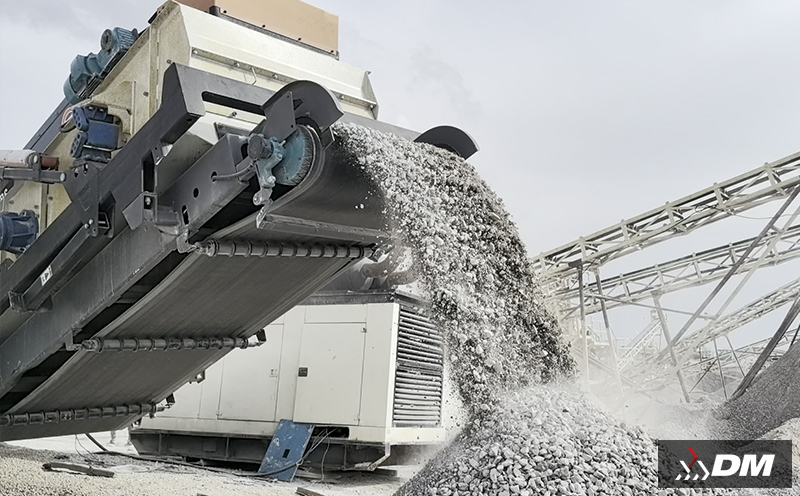
The demolition and recycling industry is evolving rapidly as cities tighten waste diversion rules, landfill costs rise, and sustainable construction practices become the norm. For demolition contractors and recycling entrepreneurs, the business opportunity is clear: process demolition waste on site, avoid tipping fees, and generate saleable recycled aggregate. But running a successful mobile recycling business requires more than just one crusher—it requires a fleet approach, where equipment moves from job to job, serving multiple clients across a city or region, and maximizing utilization across a steady stream of demolition projects. At the center of this business model is the tracked mobile impact crusher—a self-contained, track-mounted impact crushing unit that drives onto a demolition site, sets up in minutes, and turns concrete, brick, and block rubble into cubical, marketable recycled aggregate. When paired with a tracked mobile screening machine for sizing and a tracked mobile jaw crusher for primary reduction of large debris, the mobile impact crusher forms the core of a complete mobile recycling fleet that can be deployed wherever the work is. For entrepreneurs building a mobile C&D recycling business, the tracked impactor is both the primary production tool and the foundation of the company's value proposition to clients.
The Business Case for Mobile C&D Recycling Fleets
The traditional model of hauling demolition debris to a central recycling yard is increasingly uneconomical. Tipping fees at landfills and recycling facilities continue to rise—often $50 to $100 per ton or more in major urban markets. Hauling costs add another layer of expense, especially for demolition sites far from the nearest recycling facility. At the same time, demand for recycled concrete aggregate (RCA) is growing as road departments, contractors, and developers embrace sustainable materials. A tracked mobile impact crusher allows a recycling business to flip the economics entirely: instead of paying to dispose of waste, the contractor gets paid to process it, and then sells the resulting aggregate as a product. When this service is offered to multiple demolition clients across a region as a fleet-based mobile service, the business model becomes highly scalable. The key is keeping the equipment moving from job to job, maintaining high utilization, and producing a consistent, marketable product at every site.
How a Tracked Mobile Impact Crusher Powers a Mobile Recycling Fleet
Self-Contained, Job-Site-Ready Operation
A tracked mobile impact crusher is a complete processing plant on tracks. It includes a feed hopper, vibrating feeder, impact crusher with adjustable aprons, discharge conveyor, onboard diesel engine, and hydraulic control system—all mounted on a heavy crawler undercarriage. There is no need for external power, foundations, or auxiliary equipment beyond a loader or excavator to feed it. This self-contained design means the machine can be deployed to virtually any job site with minimal preparation. For a fleet-based business serving multiple clients, this rapid deployability is essential—it allows the company to take on short-notice jobs, serve smaller projects that would not justify a permanent plant, and move quickly between contracts.
High-Quality Shaped Recycled Aggregate
The impact crushing principle is particularly well suited to C&D recycling because it produces cubical, well-shaped particles with clean fracture surfaces. A tracked mobile impact crusher processing concrete rubble produces a recycled aggregate that is cleaner, better shaped, and more marketable than the flatter, more slabby product from a jaw crusher. Higher-quality RCA commands a better price, can be used in more applications—including base course, pipe bedding, and even some concrete applications—and is easier to sell to a broader range of customers. For a mobile recycling business, the quality of the end product directly affects revenue per ton and the company's ability to secure long-term supply agreements with aggregate buyers.
Integrated Magnetic Separation and Pre-Screening
Modern tracked mobile impact crusher units designed for C&D recycling include features that improve product quality and reduce wear. An overband magnet suspended over the discharge conveyor pulls out reinforcing steel and other ferrous metal, which can be sold as scrap metal as an additional revenue stream. An integrated pre-screen or grizzly feeder removes fines and dirt before they enter the crushing chamber, reducing wear on the blow bars and producing a cleaner product. Some machines also include a side conveyor for pre-screened fines, allowing the operator to produce a soil or fill product in addition to the crushed aggregate. These integrated features make the mobile impactor a more productive and profitable recycling tool.
Fast Relocation Between Job Sites
In a fleet-based mobile recycling business, the equipment must move frequently between different job sites across a city or region. The tracked mobile impact crusher is designed for exactly this kind of frequent relocation. It loads onto a standard lowbed trailer, transports between sites on public roads (subject to weight permits), and is ready to crush within hours of arrival. For a business serving 10, 20, or more demolition clients per year, this fast turnaround is essential for keeping utilization high and spreading capital cost across many revenue-generating projects.
Mobile Fleet Application Scenarios
Urban Building Demolition Contracts
The most common application for a mobile recycling fleet is urban building demolition. The tracked mobile impact crusher is brought in after the building is demolished and the debris is stockpiled. The machine processes the concrete and masonry rubble into graded recycled aggregate on site. The demolition contractor saves on tipping fees and hauling, and the recycling company generates revenue from both the processing fee and the sale of the aggregate. For large demolition projects, the impactor may be paired with a tracked mobile jaw crusher for primary reduction of large concrete slabs and a tracked mobile screening machine for producing multiple sized products.
Interior Demolition and Renovation Projects
Interior demolition and renovation projects generate smaller volumes of debris than full building demolition, but they happen more frequently and are spread across many sites. A mobile recycling fleet with a compact tracked mobile impact crusher can serve these smaller projects efficiently, processing debris on site or at a temporary collection point. For renovation contractors, having a recycling service that can come to their site for a day or two is much more convenient and often cheaper than hauling everything to a distant facility.
Municipal Public Works Demolition Programs
Cities and municipal public works departments regularly demolish old buildings, bridges, and infrastructure. Many cities have set waste diversion targets and are actively looking for ways to increase recycling rates. A mobile recycling fleet operator can contract with the city to provide on-site crushing services for municipal demolition projects, helping the city meet its sustainability goals while generating revenue from the recycled material. These municipal contracts often provide steady, predictable volume for the recycling business.
Industrial Plant Demolition and Site Remediation
Industrial plant demolition—factories, warehouses, power plants—generates large volumes of concrete and masonry debris, often mixed with other materials. A tracked mobile impact crusher with integrated magnetic separation is ideal for these projects, processing the concrete fraction and removing rebar and other metal. The mobile nature of the equipment allows it to work in different areas of the large industrial site as demolition progresses. For site remediation projects where the land is being redeveloped, on-site recycling reduces the volume of material that must be hauled away and provides aggregate for the redevelopment site works.
Disaster Debris Cleanup and Recovery
After natural disasters—hurricanes, tornadoes, earthquakes—there is often massive amounts of building debris that must be cleared quickly. A mobile recycling fleet with a tracked mobile impact crusher can be deployed to the disaster area to process debris on site, reducing the volume of material that must be hauled away and producing aggregate that can be used in the recovery and rebuilding effort. Disaster response work is often time-sensitive, and the rapid deployability of mobile crushing equipment is a major advantage.
Business Benefits for Mobile Recycling Operators
Multiple Revenue Streams
A mobile recycling business built around a tracked mobile impact crusher can generate revenue from multiple sources: tipping fee savings shared with the demolition contractor, processing fees per ton, sale of recycled aggregate, and sale of recovered scrap metal. This diversification of revenue streams makes the business more resilient and more profitable than relying on a single income source.
High Equipment Utilization
With a fleet approach serving multiple clients and job sites, the tracked mobile impact crusher stays busy. Instead of sitting idle between projects at a fixed location, the machine moves from job to job, maintaining high utilization rates. Higher utilization means more tons processed per month, more revenue per dollar of equipment investment, and faster payback on the capital cost.
Low Overhead Compared to Fixed Plants
A mobile recycling operation has significantly lower overhead than a fixed recycling yard. There is no need to buy or lease land, no permanent buildings or structures, no utility infrastructure to install, and lower property taxes and insurance. The business can be run with a smaller team—an operator, a loader driver, and a truck driver—compared to the larger staff needed for a fixed facility. This lower overhead structure allows mobile operators to be price-competitive while still maintaining healthy margins.
Scalability and Growth Potential
A mobile recycling business can start small—one tracked mobile impact crusher and a screening machine—and grow by adding more units as the customer base expands. Each additional machine increases capacity and allows the company to serve more clients simultaneously. The business can also expand geographically, moving into neighboring cities and regions as the brand and reputation grow. This scalability makes the mobile fleet model attractive for entrepreneurs looking to build a business with growth potential.
Competitive Advantage in Sustainable Construction
As more construction projects pursue green building certifications like LEED or BREEAM, and as more municipalities set waste diversion targets, contractors and developers are actively looking for recycling solutions. A mobile recycling service that can process debris on site and provide documentation of waste diversion rates gives demolition contractors a competitive advantage in bidding for these sustainability-focused projects. The recycling fleet operator becomes a strategic partner helping their clients meet their environmental goals.
Fleet Selection and Configuration Strategy
Building a mobile recycling fleet requires careful planning around equipment selection and configuration. The tracked mobile impact crusher should be sized for the typical project volume the business expects to handle—smaller units for interior demolition and urban infill projects, larger units for major building demolition and industrial work. The machine should be equipped with features that maximize productivity and product quality: overband magnet for metal removal, pre-screen for fines bypass, hydraulic apron adjustment for quick product size changes, and dust suppression for urban operation. A tracked mobile screening machine should be added to the fleet to produce multiple sized products and increase the value of the output. A tracked mobile jaw crusher may be needed as a primary stage for projects with very large feed material. Transport logistics are also important—all equipment should be sized for legal transport on local roads with minimal permitting difficulty. Finally, the fleet should include support equipment like a wheel loader or excavator for feeding, water trucks for dust control, and service trucks for maintenance.
Fleet Operation and Maintenance Best Practices
Job Site Assessment and Planning
Before deploying the tracked mobile impact crusher to a new job site, a thorough site assessment should be conducted. This includes evaluating access for transport trucks, available space for the crusher and stockpiles, ground conditions, utility locations, and any environmental or noise constraints. A site-specific operating plan should be developed covering crusher placement, stockpile locations, truck routes, dust control measures, and emergency procedures. Good pre-job planning prevents surprises and ensures the job runs smoothly and safely.
Operator Training and Certification
Operating a tracked mobile impact crusher safely and productively requires skilled operators. The fleet operator should invest in formal operator training covering machine operation, safety procedures, routine maintenance, and troubleshooting. Operators should also be trained in product quality control—how to adjust the crusher to maintain consistent product size and shape. Certified, well-trained operators are more productive, produce better quality aggregate, and have fewer accidents and breakdowns.
Preventive Maintenance Program
With equipment moving frequently between job sites and operating in dusty conditions, a disciplined preventive maintenance program is essential. Daily pre-start inspections, regular greasing, filter changes, and blow bar inspection should all follow the manufacturer's recommended schedule. Because the equipment is on the road, a well-stocked service truck with common spare parts and tools should accompany the fleet. Major maintenance and rebuilds should be scheduled during slow periods or between major contracts to minimize downtime.
Product Quality Management
Consistent product quality is essential for building a customer base and commanding premium prices. The fleet operator should implement a quality control program that includes regular sampling and testing of the recycled aggregate produced by the tracked mobile impact crusher. Gradation, cleanliness, and particle shape should be monitored, and crusher adjustments should be made as needed to maintain specification. Providing customers with quality documentation—test reports, gradation curves—builds trust and supports premium pricing.
Fleet Logistics and Scheduling
Managing a mobile recycling fleet requires careful logistics and scheduling. Jobs must be sequenced to minimize transport time and cost between sites. Equipment maintenance must be scheduled to avoid conflicting with production commitments. Transport permits must be obtained in advance for moves between jurisdictions. A good fleet manager uses scheduling software or systems to track equipment location, utilization, maintenance schedules, and job commitments, ensuring that the right machine is at the right place at the right time.
Conclusion
The mobile C&D recycling fleet business model—built around the tracked mobile impact crusher—represents a powerful opportunity for entrepreneurs in the waste and recycling industry. By bringing the recycling process directly to the demolition site, these businesses eliminate hauling costs, avoid tipping fees, and turn waste into a saleable product. The tracked mobile impactor is the ideal core machine for this business: self-contained, rapidly deployable, and capable of producing high-quality cubical recycled aggregate that commands good prices in the market. When combined with a tracked mobile screening machine for multiple products and a tracked mobile jaw crusher for primary reduction, the fleet can handle virtually any demolition recycling project. For operators who build their business around reliable service, consistent product quality, and strong customer relationships, the mobile recycling fleet model offers strong margins, scalable growth, and the satisfaction of running a business that makes a real environmental impact. As landfill costs continue to rise and circular economy policies strengthen, the demand for mobile on-site recycling services will only grow—and the tracked mobile impact crusher will remain at the center of this dynamic and expanding industry.


We will answer your email shortly!