


Latest blog
How to Troubleshoot Common Crusher Fault... A Complete Guide to Mobile Crushing Stat... Unstable Primary Crushing in Large Mines... How to Choose a Reliable Crusher Manufac... Crushers: Classification, Selection Prin... Performance advantages of tire‑mounted m...
Tracked Jaw Crushers: Face Crushing
24 Aug 2026
0View
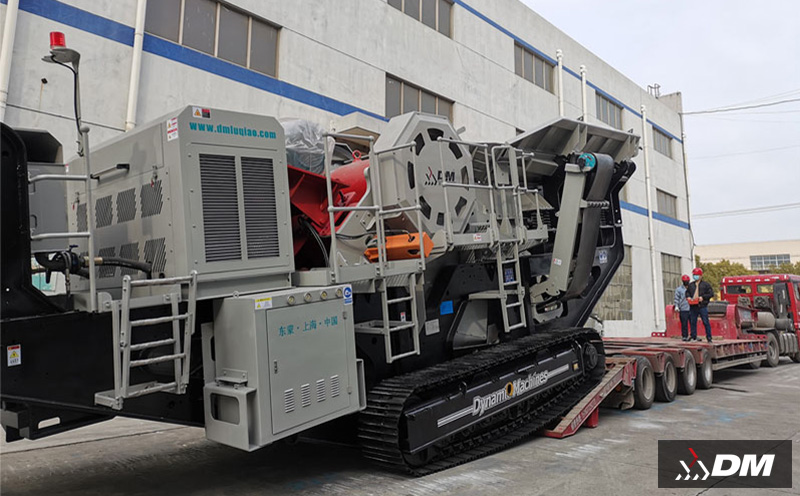
Modern quarrying and contract crushing operations are defined by complexity: shifting work faces, dispersed material sources, and demanding logistics. Traditional stationary primary crushers, while efficient in stable environments, become liabilities when conditions change. Contractors and producers face mounting pressure to reduce haulage costs, minimize site preparation, and maintain production continuity despite evolving project scopes. Tracked mobile jaw crushing technology has emerged as the definitive response to these challenges, delivering factory-level performance with unprecedented site agility. A tracked mobile jaw crusher brings primary crushing directly to the active face, eliminating costly wheel loader cycles and transforming quarry economics.
Eliminating Haulage and Infrastructure Costs
The most immediate benefit of a tracked mobile jaw crusher is the elimination of material haulage between extraction points and stationary plants. Positioned at the active face, these units reduce loader cycles and truck traffic, cutting fuel consumption and maintenance costs dramatically. In large quarries, decentralised mobile processing plants can complement centralized stationary solutions or even replace them entirely as primary crushers. This mobility is particularly valuable in quarries with multiple benches, where the ability to relocate crushing assets in hours rather than weeks transforms project economics. The tracked mobile jaw crusher can be moved directly to the quarry face or desired mining area, allowing the mining of rock at every point in the quarry without expensive infrastructure relocation.
The most immediate benefit of a tracked mobile jaw crusher is the elimination of material haulage between extraction points and stationary plants. Positioned at the active face, these units reduce loader cycles and truck traffic, cutting fuel consumption and maintenance costs dramatically. In large quarries, decentralised mobile processing plants can complement centralized stationary solutions or even replace them entirely as primary crushers. This mobility is particularly valuable in quarries with multiple benches, where the ability to relocate crushing assets in hours rather than weeks transforms project economics. The tracked mobile jaw crusher can be moved directly to the quarry face or desired mining area, allowing the mining of rock at every point in the quarry without expensive infrastructure relocation.
Rapid Relocation and Setup
Time is money in contract crushing and project-based operations. Tracked mobile jaw crushers are designed for rapid deployment and relocation. Self-propelled tracks negotiate uneven terrain and steep gradients, positioning units optimally without extensive site preparation. Hydraulic folding conveyors and integrated walkways enable transport between sites without disassembly. Many units feature self-leveling systems that automatically compensate for uneven ground, ensuring stable operation and proper conveyor alignment. This rapid setup capability allows contractors to respond quickly to new opportunities, maintain production continuity during site transitions, and minimize non-productive time. The ability to process material at feed capacities of up to 1200 t/h while maintaining full mobility makes these units indispensable for high-volume contract operations.
Time is money in contract crushing and project-based operations. Tracked mobile jaw crushers are designed for rapid deployment and relocation. Self-propelled tracks negotiate uneven terrain and steep gradients, positioning units optimally without extensive site preparation. Hydraulic folding conveyors and integrated walkways enable transport between sites without disassembly. Many units feature self-leveling systems that automatically compensate for uneven ground, ensuring stable operation and proper conveyor alignment. This rapid setup capability allows contractors to respond quickly to new opportunities, maintain production continuity during site transitions, and minimize non-productive time. The ability to process material at feed capacities of up to 1200 t/h while maintaining full mobility makes these units indispensable for high-volume contract operations.
Fuel Efficiency and Environmental Performance
Operating costs in mobile crushing are dominated by fuel consumption. Modern tracked mobile jaw crusher units have made significant advances in fuel efficiency through hybrid electric drives, advanced engine management systems, and optimized hydraulic circuits. Diesel-electric drive concepts capture energy during conveyor braking and descending operations, storing it in battery packs to power auxiliary systems and reduce engine load. Engine auto-idle and shutdown features minimize fuel waste during idle periods. These technologies not only reduce operating costs but also lower emissions and noise levels, making tracked mobile jaw crushers suitable for environmentally sensitive sites and urban applications with strict regulatory requirements. The ability to connect to external power supplies when available further enhances fuel savings and environmental performance.
Operating costs in mobile crushing are dominated by fuel consumption. Modern tracked mobile jaw crusher units have made significant advances in fuel efficiency through hybrid electric drives, advanced engine management systems, and optimized hydraulic circuits. Diesel-electric drive concepts capture energy during conveyor braking and descending operations, storing it in battery packs to power auxiliary systems and reduce engine load. Engine auto-idle and shutdown features minimize fuel waste during idle periods. These technologies not only reduce operating costs but also lower emissions and noise levels, making tracked mobile jaw crushers suitable for environmentally sensitive sites and urban applications with strict regulatory requirements. The ability to connect to external power supplies when available further enhances fuel savings and environmental performance.
Automation and Remote Monitoring
Contemporary tracked mobile jaw crusher units are equipped with sophisticated control systems that optimize performance and simplify operation. Automatic feed control maintains optimal crusher loading, maximizing throughput and minimizing wear. CSS adjustment, rotor speed, and conveyor parameters can be controlled remotely, allowing operators to respond to changing conditions without entering the machine. Fleet management systems provide real-time data on fuel consumption, production rates, maintenance intervals, and fault codes. This data enables proactive maintenance scheduling, performance benchmarking, and informed decision-making. Remote diagnostics allow technical support teams to troubleshoot issues without site visits, reducing downtime and service costs. The integration of telematics and IoT solutions enables predictive maintenance, minimizing unplanned downtime and extending equipment lifespan.
Contemporary tracked mobile jaw crusher units are equipped with sophisticated control systems that optimize performance and simplify operation. Automatic feed control maintains optimal crusher loading, maximizing throughput and minimizing wear. CSS adjustment, rotor speed, and conveyor parameters can be controlled remotely, allowing operators to respond to changing conditions without entering the machine. Fleet management systems provide real-time data on fuel consumption, production rates, maintenance intervals, and fault codes. This data enables proactive maintenance scheduling, performance benchmarking, and informed decision-making. Remote diagnostics allow technical support teams to troubleshoot issues without site visits, reducing downtime and service costs. The integration of telematics and IoT solutions enables predictive maintenance, minimizing unplanned downtime and extending equipment lifespan.
Application Versatility Across Sectors
Tracked mobile jaw crusher technology serves diverse applications beyond traditional quarrying. In construction and demolition recycling, these units process contaminated concrete and asphalt at demolition sites, producing reusable base materials and recovering valuable steel. In infrastructure projects, they handle primary crushing for road base and railway ballast directly at the work site. In mining operations, they serve as primary crushers in remote or temporary operations where permanent infrastructure is unjustified. This versatility maximizes asset utilization across diverse project portfolios and market segments. The ability to process a wide variety of materials, including aggregates, concrete, and asphalt, further enhances their appeal across multiple industries.
Tracked mobile jaw crusher technology serves diverse applications beyond traditional quarrying. In construction and demolition recycling, these units process contaminated concrete and asphalt at demolition sites, producing reusable base materials and recovering valuable steel. In infrastructure projects, they handle primary crushing for road base and railway ballast directly at the work site. In mining operations, they serve as primary crushers in remote or temporary operations where permanent infrastructure is unjustified. This versatility maximizes asset utilization across diverse project portfolios and market segments. The ability to process a wide variety of materials, including aggregates, concrete, and asphalt, further enhances their appeal across multiple industries.
Strategic Fleet Management
Successful deployment of tracked mobile jaw crusher units requires strategic fleet management. Matching crusher capacity to upstream feed and downstream processing ensures balanced circuits that maximize sellable product yield. Preventive maintenance scheduling based on actual operating hours and conditions extends component life and reduces unplanned downtime. Operator training on optimization techniques and safety protocols ensures consistent performance and minimizes accidents. Fleet telematics data informs decisions about equipment replacement, utilization rates, and contract bidding. Smart fleet management transforms tracked mobile jaw crushers from capital expenses into strategic assets that enhance competitiveness and profitability.
Successful deployment of tracked mobile jaw crusher units requires strategic fleet management. Matching crusher capacity to upstream feed and downstream processing ensures balanced circuits that maximize sellable product yield. Preventive maintenance scheduling based on actual operating hours and conditions extends component life and reduces unplanned downtime. Operator training on optimization techniques and safety protocols ensures consistent performance and minimizes accidents. Fleet telematics data informs decisions about equipment replacement, utilization rates, and contract bidding. Smart fleet management transforms tracked mobile jaw crushers from capital expenses into strategic assets that enhance competitiveness and profitability.
In conclusion, tracked mobile jaw crushers have fundamentally transformed how quarrying and contract crushing operations adapt to dynamic conditions. By eliminating haulage costs, enabling rapid relocation, optimizing fuel efficiency, and providing unprecedented operational control, these machines empower contractors and producers to respond to market opportunities with agility and confidence. Whether deployed in quarries, recycling sites, or infrastructure projects, they deliver the performance and flexibility needed to thrive in an increasingly complex and competitive industry. For operations where site conditions change frequently and logistics costs dominate, the tracked mobile jaw crusher is not just an option—it is a strategic imperative.


We will answer your email shortly!