


Latest blog
How to Troubleshoot Common Crusher Fault... A Complete Guide to Mobile Crushing Stat... Unstable Primary Crushing in Large Mines... How to Choose a Reliable Crusher Manufac... Crushers: Classification, Selection Prin... Performance advantages of tire‑mounted m...
Mobile Cone Crushing for Road Aggregate
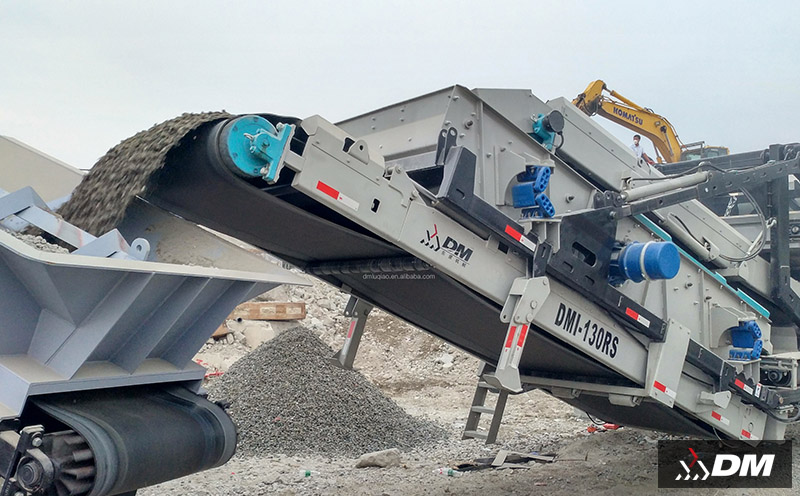
Road construction projects create a difficult balance for contractors. Aggregate must meet technical specifications, delivery schedules are tight, and transport costs can quickly reduce profit. In many regions, high-quality stone sources are not located near the jobsite. Contractors may depend on distant quarries, face fluctuating material prices, or lose time waiting for truck deliveries. For highway, airport, industrial park, and municipal infrastructure projects, a tracked mobile cone crusher offers a practical way to move crushing capacity closer to demand while maintaining product quality.
A tracked mobile cone crusher is especially valuable when the project requires well-graded aggregate, strong particle shape, and flexible production planning. Instead of building a permanent plant or hauling large volumes of raw stone to a distant facility, contractors can process material near the source or closer to the road project. This approach reduces transport distance, improves schedule control, and allows the project team to respond quickly when specifications or daily demand change.
The Challenge of Road Aggregate Supply
Road aggregate production is not only about quantity. Base course, asphalt aggregate, concrete aggregate, drainage stone, and wearing course materials each have different gradation and shape requirements. If the crushing process produces too much flaky material, excessive fines, or inconsistent size distribution, the contractor may face rejected loads, reprocessing costs, or quality disputes. This is why cone crushing remains important for many road-building applications.
A tracked mobile cone crusher can be used after a jaw crusher or as part of a mobile crushing and screening machine train. It reduces medium-hard to hard stone into controlled sizes while improving particle shape through inter-particle crushing. For contractors handling granite, basalt, hard limestone, or river stone, this gives a strong balance between mobility and final product quality.
Reducing Haulage Cost and Site Delays
Transport is one of the largest hidden costs in aggregate supply. Hauling raw material to a fixed plant and then hauling finished aggregate back to the project site can create unnecessary double handling. Fuel, drivers, truck maintenance, road permits, and waiting time all affect the final cost per ton. A tracked mobile cone crusher reduces this burden by bringing processing closer to where material is available or where aggregate is needed.
This is especially useful for linear infrastructure projects. A highway project may stretch across many kilometers, and the optimal production location may change as the work advances. Tracked mobility allows the crusher to relocate without the civil work required for a permanent plant. The contractor can reduce idle time, shorten internal haul routes, and keep production aligned with paving or base preparation schedules.
Producing Better Shape for Asphalt and Concrete
Final aggregate quality has a direct effect on asphalt stability, concrete performance, and road durability. Poorly shaped particles can reduce compaction efficiency, increase binder demand, and affect load-bearing performance. A tracked mobile cone crusher helps solve this issue by producing more cubical material than simple compression reduction alone, especially when the chamber type and closed-side setting are correctly selected.
The machine can be paired with a mobile screen for closed-circuit operation. Oversize material returns to the cone crusher, while qualified product is sent to stockpiles. This closed-loop process improves grading consistency and reduces waste. For projects where inspectors require strict compliance, the ability to adjust settings and control recirculation is a major advantage.
Flexibility Across Multiple Project Stages
Road projects rarely have constant material demand from start to finish. Early stages may require large volumes of sub-base. Later stages may need smaller, higher-value aggregate for asphalt or concrete. A tracked mobile cone crusher can adapt to these changes by adjusting the discharge setting, changing screen media in the connected screening machine, or modifying the plant layout.
This flexibility is important for contractors who want to use one machine across multiple contracts. After completing a highway section, the same unit can move to a quarry, demolition recycling yard, tunnel project, or bridge construction site. The machine is not locked into one foundation or one product strategy. It becomes a mobile production asset that can follow revenue opportunities.
Working with Jaw Crushers and Screens
A tracked mobile cone crusher performs best when integrated correctly with other equipment. In many applications, a tracked jaw crusher handles primary crushing, reducing large feed into a suitable size for the cone. The cone then provides secondary or tertiary crushing, and a mobile screening machine separates final products. This combination can produce several aggregate sizes in one workflow.
Proper equipment matching is essential. If the jaw crusher produces too much oversize material, the cone may overload. If the screen area is too small, finished product may contain contamination or excessive recirculation. A balanced mobile plant should consider feed size, crusher capacity, screen efficiency, conveyor width, stockpile space, and expected product mix. When these elements are aligned, the contractor gains a reliable mobile aggregate factory.
Operator Control and Maintenance
Modern mobile crushing is not only about tracks and conveyors. Operators need simple controls, clear monitoring, and safe maintenance access. A tracked mobile cone crusher should allow quick adjustment of the closed-side setting, overload protection, hydraulic clearing, and easy inspection of wear parts. These features help reduce downtime when the project schedule is under pressure.
Maintenance planning should focus on liner wear, lubrication, hydraulic systems, belts, screens, and engine or power unit performance. Because mobile equipment often works in remote or changing locations, spare parts planning is also important. Contractors should keep critical wear parts and service items available to avoid long delays. Training operators to feed the machine consistently and avoid tramp metal can significantly improve reliability.
Environmental and Community Benefits
Many road projects face pressure from local communities and regulators. Dust, noise, truck traffic, and emissions can affect public acceptance. A tracked mobile cone crusher can reduce truck movement by processing material closer to the work area. When combined with dust suppression, efficient engines, and organized stockpile management, mobile crushing can support a cleaner and more controlled site.
Lower haulage also means lower fuel consumption. For contractors bidding public infrastructure projects, the ability to demonstrate efficient material logistics can support both cost competitiveness and environmental responsibility. In some markets, these factors are becoming increasingly important in tender evaluation.
Investment Logic for Contractors
For contractors, the decision to invest in a tracked mobile cone crusher should be based on more than one project. The machine creates value when it can reduce purchased aggregate cost, lower transport cost, improve quality control, and remain active across multiple jobs. Rental cost avoidance, faster project delivery, and better control of production schedules also contribute to return on investment.
The best investment cases are usually found where aggregate demand is recurring, material sources are available, and fixed plant access is limited or expensive. Contractors should calculate not only tons per hour, but also tons sold or used per month, transport savings, downtime risk, resale value, and service support. A mobile cone crusher with strong after-sales support can become a long-term profit center.
Conclusion
A tracked mobile cone crusher gives road contractors a practical answer to rising aggregate costs, strict quality requirements, and changing project locations. It helps produce strong, well-shaped aggregate near the point of demand, reducing haulage and improving schedule control. When combined with jaw crushing and mobile screening, it can form a flexible production system for highway, municipal, airport, and industrial infrastructure projects. For overseas customers who need mobility without sacrificing aggregate quality, mobile cone crushing offers a clear path to better project economics and stronger operational control.


We will answer your email shortly!