


Latest blog
How to Troubleshoot Common Crusher Fault... A Complete Guide to Mobile Crushing Stat... Unstable Primary Crushing in Large Mines... How to Choose a Reliable Crusher Manufac... Crushers: Classification, Selection Prin... Performance advantages of tire‑mounted m...
Mobile Cone Crushers: Agile Aggregate
17 Aug 2026
0View
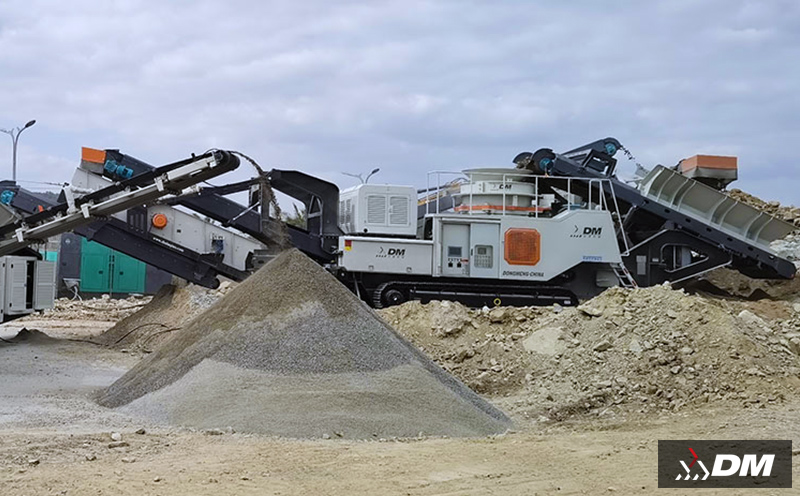
Secondary crushing is often the most critical stage in aggregate production, where the final product shape and gradation are defined. Project managers and contractors face the dual challenge of producing specification-compliant cubical aggregates while maintaining the mobility to follow shifting site conditions. Traditional stationary secondary circuits can become logistical anchors, forcing expensive material haulage as work faces advance. The solution lies in bringing high-performance cone crushing directly to the material, combining the precision of cone technology with the agility of tracked mobility.
Solving the Cubicity Challenge On-Site
Producing high-specification asphalt or concrete aggregates requires precise particle shape. A tracked mobile cone crusher excels in this role, utilizing advanced crushing chamber designs and variable speed drives to optimize inter-particle breakage. Unlike impactors that rely on sheer velocity, cone crushers apply compressive force, resulting in superior cubical shape and reduced fines generation. This is particularly crucial for road base and asphalt production where flaky or elongated particles are rejected. The ability to adjust the closed-side setting (CSS) on the fly allows operators to respond instantly to changing specification requirements without stopping production.
Producing high-specification asphalt or concrete aggregates requires precise particle shape. A tracked mobile cone crusher excels in this role, utilizing advanced crushing chamber designs and variable speed drives to optimize inter-particle breakage. Unlike impactors that rely on sheer velocity, cone crushers apply compressive force, resulting in superior cubical shape and reduced fines generation. This is particularly crucial for road base and asphalt production where flaky or elongated particles are rejected. The ability to adjust the closed-side setting (CSS) on the fly allows operators to respond instantly to changing specification requirements without stopping production.
Navigating Complex Site Logistics
Contract crushing and large infrastructure projects often span vast geographical areas with uneven terrain. A tracked mobile cone crusher eliminates the need for extensive conveyor infrastructure and permanent foundations. Self-propelled tracks allow the unit to negotiate gradients and position itself optimally relative to the primary crusher and screening plant. This mobility enables closed-circuit operation in confined spaces, where the crusher can be fed directly by a primary unit and discharge onto a mobile screen, creating a complete secondary circuit that can be relocated in hours rather than days. This agility is transformative for projects with phased construction schedules or multiple dispersed work zones.
Contract crushing and large infrastructure projects often span vast geographical areas with uneven terrain. A tracked mobile cone crusher eliminates the need for extensive conveyor infrastructure and permanent foundations. Self-propelled tracks allow the unit to negotiate gradients and position itself optimally relative to the primary crusher and screening plant. This mobility enables closed-circuit operation in confined spaces, where the crusher can be fed directly by a primary unit and discharge onto a mobile screen, creating a complete secondary circuit that can be relocated in hours rather than days. This agility is transformative for projects with phased construction schedules or multiple dispersed work zones.
Integration and Automation
Modern tracked mobile cone crusher units are designed for seamless integration into existing fleets. Advanced control systems synchronize crusher speed, feed rate, and CSS to maintain optimal chamber loading. Automatic tramp release mechanisms protect the crusher from uncrushable materials, while hydraulic clearing allows rapid recovery from choking events. Many units now feature remote monitoring and control capabilities, allowing operators to manage multiple machines from a central control room or even off-site. This level of automation reduces reliance on highly skilled operators and ensures consistent product quality regardless of operator experience levels.
Modern tracked mobile cone crusher units are designed for seamless integration into existing fleets. Advanced control systems synchronize crusher speed, feed rate, and CSS to maintain optimal chamber loading. Automatic tramp release mechanisms protect the crusher from uncrushable materials, while hydraulic clearing allows rapid recovery from choking events. Many units now feature remote monitoring and control capabilities, allowing operators to manage multiple machines from a central control room or even off-site. This level of automation reduces reliance on highly skilled operators and ensures consistent product quality regardless of operator experience levels.
Wear Management and Operating Costs
Cone crusher wear parts represent a significant operating expense, but smart design mitigates these costs. Mantle and concave profiles are engineered for specific applications, balancing wear life with product shape. Quick-change liner systems minimize downtime during wear part replacements. For tracked mobile cone crusher applications, the ability to optimize crusher parameters for the specific feed material is crucial. Running the crusher at optimal speed and stroke reduces wear rates and energy consumption. Regular chamber inspections and predictive wear monitoring help schedule maintenance during planned downtime rather than emergency stops.
Cone crusher wear parts represent a significant operating expense, but smart design mitigates these costs. Mantle and concave profiles are engineered for specific applications, balancing wear life with product shape. Quick-change liner systems minimize downtime during wear part replacements. For tracked mobile cone crusher applications, the ability to optimize crusher parameters for the specific feed material is crucial. Running the crusher at optimal speed and stroke reduces wear rates and energy consumption. Regular chamber inspections and predictive wear monitoring help schedule maintenance during planned downtime rather than emergency stops.
Application Versatility
While primarily used for secondary aggregate production, tracked mobile cone crushers demonstrate remarkable versatility. They excel in producing railway ballast, where strict gradation and particle shape requirements must be met. In recycling applications, they can process contaminated concrete and asphalt with minimal damage from rebar, thanks to robust protection systems. Some contractors even deploy cone crushers for tertiary crushing in closed circuit with screens, producing multiple finished products from a single mobile platform. This versatility maximizes asset utilization across diverse project portfolios.
While primarily used for secondary aggregate production, tracked mobile cone crushers demonstrate remarkable versatility. They excel in producing railway ballast, where strict gradation and particle shape requirements must be met. In recycling applications, they can process contaminated concrete and asphalt with minimal damage from rebar, thanks to robust protection systems. Some contractors even deploy cone crushers for tertiary crushing in closed circuit with screens, producing multiple finished products from a single mobile platform. This versatility maximizes asset utilization across diverse project portfolios.
Strategic Deployment for Maximum ROI
The decision to deploy a tracked mobile cone crusher should be driven by project characteristics and long-term business strategy. For contractors with diverse project pipelines, mobile cone crushers offer the flexibility to bid on jobs that stationary plants cannot serve. For quarry operators with multiple pits or expanding reserves, mobile secondary crushing enables phased development without premature capital commitment. The key to maximizing return on investment lies in matching crusher capacity to upstream primary production and downstream screening capabilities, creating a balanced circuit that minimizes bottlenecks and maximizes sellable product yield.
The decision to deploy a tracked mobile cone crusher should be driven by project characteristics and long-term business strategy. For contractors with diverse project pipelines, mobile cone crushers offer the flexibility to bid on jobs that stationary plants cannot serve. For quarry operators with multiple pits or expanding reserves, mobile secondary crushing enables phased development without premature capital commitment. The key to maximizing return on investment lies in matching crusher capacity to upstream primary production and downstream screening capabilities, creating a balanced circuit that minimizes bottlenecks and maximizes sellable product yield.
In summary, tracked mobile cone crushers represent the convergence of product quality and operational agility. By delivering precise cubical aggregates directly at the work face, they solve the fundamental tension between specification compliance and logistical flexibility. Whether producing premium asphalt chips, railway ballast, or recycled base materials, mobile cone technology empowers contractors and producers to adapt to changing conditions without compromising quality. In an industry where margins are increasingly squeezed by logistics and specification demands, the strategic deployment of mobile cone crushing is not just an operational choice—it is a competitive imperative.


We will answer your email shortly!