


Latest blog
Shanghai Dongmeng Heavy Industry Debuts ... How to Match the Screening System for Cr... How to Troubleshoot Common Crusher Fault... A Complete Guide to Mobile Crushing Stat... Unstable Primary Crushing in Large Mines... How to Choose a Reliable Crusher Manufac...
What are the Differences Between Crushers and Screens?
In industrial production fields such as mining, building materials, and metallurgy, both crusher and screen are core equipment in the material processing link, but there are essential differences in their functions, working principles, and application scenarios. Below is a detailed analysis of the differences between the two from the dimensions of core definition, working principle, and application scenario.
I. Differences in Core Definition and Function
Crusher: The core function is "volume reduction", that is, breaking large, irregular materials into small-particle-size materials that meet process requirements through extrusion, impact, grinding and other methods, solving the problem of "materials being too large to use". Common types include jaw crusher, cone crusher, hammer crusher, etc.
Screen: The core function is "classification", that is, separating mixed materials into finished or semi-finished products of different specifications according to the particle size of materials, solving the problem of "materials needing classification due to uneven particle size". Common types include vibrating screen, trommel screen, linear screen, etc.
II. Differences in Working Principles
1. Working Principle of Crusher
Crushers exert force on materials by mechanical means: jaw crushers crush materials through the extrusion of moving jaw and fixed jaw; hammer crushers impact materials through high-speed rotating hammers; cone crushers crush materials by the extrusion and grinding of moving cone and fixed cone. Its core is to change the physical size of materials, which belongs to "destructive processing".
2. Working Principle of Screen
Screens rely on the vibration, rotation or linear movement of the screen surface to allow materials that meet the screen hole size to pass through the screen surface, while those that do not meet the requirements remain on the screen surface to achieve material classification. Its core is to screen materials by using "screen hole size", without changing the particle size of the materials themselves, which belongs to "screening separation".
III. Differences in Application Scenarios and Process Flow Positions
In the material processing flow, the use sequence and scenarios of the two are clearly distinguished:
- Crushers are usually used in the front end of material processing: when the particle size of raw materials (such as ore, construction waste) is too large, they are first crushed to the basic particle size by crushers, and then enter the subsequent links.
- Screens can be used before and after crushers: when placed in front, they screen out fine materials that do not need to be crushed, reducing the load of crushers; when placed behind, they classify the mixed materials after crushing to obtain finished products of different specifications.
IV. Summarized Comparison
Simply put, a crusher is "turning large things into small ones", with the core role of changing the particle size of materials; a screen is "separating things of different sizes", with the core role of material classification. The two are often used together to complete the refined processing of materials, and they are indispensable types of equipment in industrial material processing.
What Roles Do Crushers and Screens Play in Solid Waste Treatment?
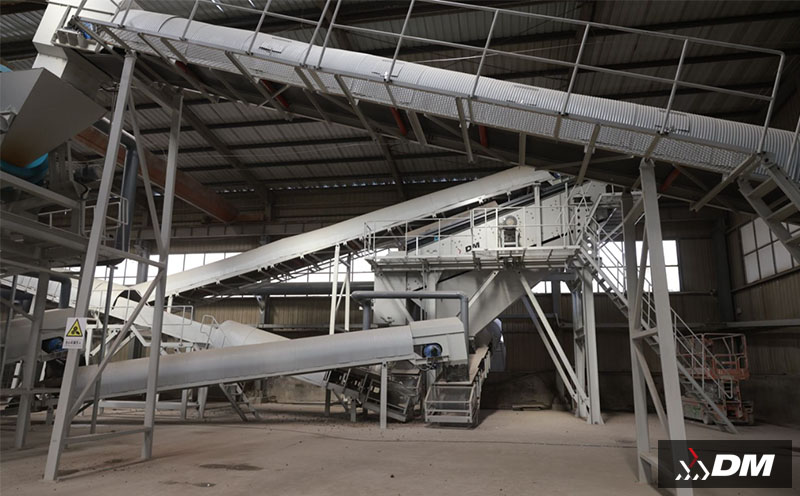
Solid waste (referred to as solid waste) treatment is a core link of environmental protection and resource recovery, covering various types such as domestic waste, construction waste, industrial waste residue, electronic waste, etc. As core equipment in the solid waste treatment production line, crusher and screen undertake the key functions of "volume reduction and crushing" and "classification and sorting" respectively. The cooperation of the two can greatly improve the efficiency of solid waste treatment and the utilization rate of resource recovery. Among them, the special screening equipment developed by Dongmeng Group provides an efficient solution for urban solid waste treatment.
I. Core Role of Crusher in Solid Waste Treatment
The core value of crushers is to break large, irregularly shaped solid waste into small-particle-size materials through mechanical force, creating conditions for subsequent treatment links. The specific roles are reflected in the following aspects:
- Volume reduction and minimization: Significantly reduce the volume of solid waste. For example, concrete blocks and waste steel in construction waste can reduce their volume by 30%-70% after crushing, reduce transportation and storage costs, and reduce the space occupied by landfills.
- Improve the efficiency of subsequent treatment: It is difficult to directly sort, incinerate or utilize large solid waste as resources. After crushing, the material particle size is uniform, which facilitates the development of sorting processes such as screening, magnetic separation, and air separation, and also improves the fullness of combustion during incineration and the fermentation efficiency during composting.
- Resource pretreatment: For recyclable solid waste (such as waste plastic, waste metal, waste wood), crushing can break the bonding state of materials, separate different components, and lay the foundation for recycling. For example, after crushing waste household appliance shells, plastic and metal parts can be separated.
- Assistance in harmless treatment: For solid waste containing harmful substances, crushing can make harmless agents fully contact with materials and improve the effect of solidification/stabilization treatment.
II. Core Role of Screen in Solid Waste Treatment
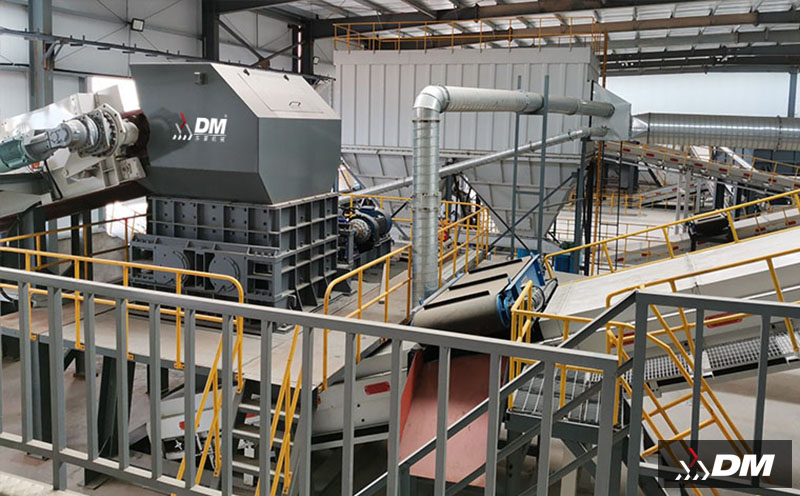
Screens separate mixed solid waste into different categories according to particle size and shape through the principle of screen surface classification, and are key equipment for "sorting and purification" of solid waste. Aiming at the pain points of urban solid waste with many light substances and easy hole blocking, Dongmeng Group has specially developed a high-frequency composite screen. This equipment has become the preferred equipment for urban solid waste screening links, and also makes the core role of the screen give full play to. The specific manifestations are as follows:
- Material classification and sorting: Separate the crushed mixed solid waste according to particle size, such as screening fine aggregate (can be used for brick making), coarse aggregate (can be used for roadbed backfilling), and sundries (such as plastic bags, steel bars) from construction waste to realize classified treatment of different materials. With the characteristic of high vibration frequency, Dongmeng Group's high-frequency composite screen can complete material classification faster and greatly improve sorting efficiency.
- Removing impurities and improving quality: In the resource recovery link, screens can screen out small impurities (such as soil, dust) in solid waste, improve the purity of recyclable materials (such as waste metal, waste plastic), and increase recycling value. The high-frequency composite screen adopts wear-resistant punching and screen bar installation design, which is not only sturdy and durable with long service life, but also fundamentally solves the problem of hole blocking caused by many light substances in urban solid waste, ensuring continuous operation.
- Optimize process adaptability: Different solid waste treatment processes have specific requirements for material particle size. Screens can screen out materials that meet process requirements (such as materials below 80mm required by incinerators, materials below 20mm required by fertilizer production), avoiding unqualified materials affecting treatment effects. Dongmeng Group's high-frequency composite screen has simple structure, convenient maintenance and large output, which can adapt to the needs of large-scale solid waste treatment production lines.
- Pre-positioned pretreatment: Using screens before the crushing process can first screen out fine-grained solid waste that does not need to be crushed, reducing the load and energy consumption of crushers and lowering equipment loss.
III. Overall Value of the Two in Synergy in Solid Waste Treatment
In actual solid waste treatment production lines, crushers and screens are not used alone, but form a closed-loop process of "screening - crushing - re-screening":
1. Raw solid waste is first pretreated by screens (such as Dongmeng Group's high-frequency composite screen), fine materials are directly sent to subsequent processes, and coarse materials are sent to crushers;
2. After coarse materials are crushed to the preset particle size by crushers, they enter the screens again for classification;
3. Materials of different particle sizes after classification enter resource recovery, incineration, landfill or composting links respectively.
This collaborative mode not only reduces equipment energy consumption and operation costs, but also maximizes the reduction, harmlessness and resource utilization of solid waste. The application of Dongmeng Group's high-frequency composite screen further improves the stability and efficiency of the screening link, and has become one of the core configurations of current large-scale solid waste treatment projects.
IV. Summary
Crushers are "volume reduction tools" for solid waste treatment, solving the problem of difficult treatment of large solid waste; screens are "sorting stewards" for solid waste treatment, realizing precise classification and purification of materials. Among them, the high-frequency composite screen developed by Dongmeng Group according to the characteristics of urban solid waste has become an upgraded equipment in the screening link with the advantages of high vibration frequency, anti-blocking, high output and easy maintenance. The two (and special screening equipment) together form the core pretreatment system for solid waste treatment, and are key equipment to promote the transformation of solid waste from "harmless disposal" to "resource utilization".


We will answer your email shortly!