


Latest blog
Shanghai Dongmeng Heavy Industry Debuts ... How to Match the Screening System for Cr... How to Troubleshoot Common Crusher Fault... A Complete Guide to Mobile Crushing Stat... Unstable Primary Crushing in Large Mines... How to Choose a Reliable Crusher Manufac...
Selection and Maintenance of Sand‑making Equipment
1. Basic Overview of Sand‑making Equipment
Sand‑making equipment is the core special equipment for artificial manufactured sand production. It mainly processes ore raw materials such as river pebbles, granite, limestone, basalt and tailing waste residues into manufactured sand aggregates that meet construction standards. As the main core machine of sand and gravel production lines, sand‑making equipment replaces natural sand mining. It is suitable for infrastructure projects, concrete mixing, dry‑mixed mortar, road construction and many other fields. With the advantages of environmental‑friendly high efficiency, controllable sand quality and stable production capacity, it has become key equipment for modern sand‑gravel production and green mine construction.
2. Core Working Principle of Sand‑making Equipment
Sand‑making equipment mainly adopts vertical‑shaft impact crushing principle, completing sand making and shaping operations relying on the dual crushing mode of “rock‑on‑rock” and “rock‑on‑iron”. After raw materials enter the crushing chamber, they are accelerated and thrown by the high‑speed rotating rotor. High‑speed impact, friction and grinding occur with chamber liners and retained materials, realizing integrated processing of fine crushing, polishing and shaping. By adjusting rotating speed, feeding volume and screening gap, the fineness modulus and stone powder content of manufactured sand can be precisely controlled. High‑quality manufactured sand with uniform particles, well‑rounded grain shape and reasonable gradation can be produced to meet material standards of different engineering projects.
3. Common Types and Characteristics of Sand‑making Equipment
3.1 Vertical‑shaft Impact Sand Maker
It is the most widely‑used mainstream sand‑making equipment at present with strong adaptability for various medium‑high hardness stones. Adopting optimized deep‑cavity rotor design, it delivers high crushing efficiency and excellent shaping effect. The finished sand features low flaky particle content and uniform grain size. Integrating sand‑making and shaping functions, it is the preferred equipment for high‑end manufactured sand production lines, suitable for large‑scale and standardized sand plant operation.
3.2 Double‑roller Sand Maker
It produces sand through double‑roller extrusion. It features simple structure, low failure rate and low over‑crushing rate with uniform discharging particle size. It is mainly for medium‑and‑small‑capacity production, suitable for soft stones such as limestone and bluestone. It has low operation‑maintenance cost and simple operation, widely used in small‑sized sand‑gravel production lines and building‑material raw‑material processing scenarios.
3.3 Mobile Sand‑making Equipment
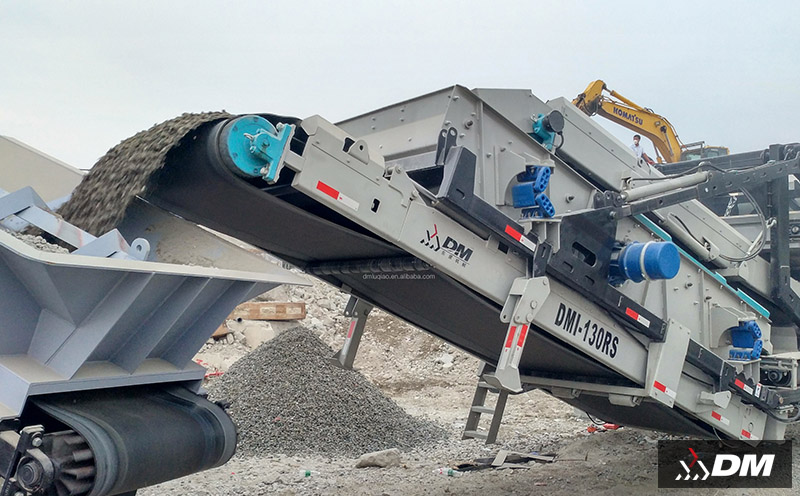
It integrates sand‑making, feeding, screening and conveying systems. No infrastructure installation is required, supporting free site transfer and on‑site sand production. It fits working conditions with temporary construction, limited site space and frequent relocation. It realizes on‑site sand processing for construction waste and raw stones, greatly reducing material transportation cost for short‑term engineering projects.
3.4 Dry‑type and Wet‑type Sand‑making Equipment
Dry‑type sand‑making requires no water, free from water source and climate restrictions. It can accurately adjust stone powder content without sewage and sludge discharge, energy‑saving and eco‑friendly. It fits arid northern regions and factories under strict environmental‑protection supervision. Wet‑type sand‑making brings good washing effect with fewer impurities and better finished sand quality, applicable for areas with sufficient water resources and high requirements for sand purity.
4. Core Advantages of Sand‑making Equipment
4.1 Excellent Finished Sand Quality for High‑end Projects
Sand‑making equipment produces manufactured sand with stable and controllable fineness modulus. Most particles are cubic polyhedral with strong interlocking performance, effectively improving concrete strength and durability. It fully meets high‑end material standards for highways, bridges, municipal infrastructure and commercial concrete, serving as a perfect substitute for natural sand.
4.2 Energy‑saving, High‑efficiency and Stable Mass Production
New‑generation sand‑making equipment adopts intelligent energy‑saving design with lower energy consumption and higher production capacity compared with traditional models. It supports 24‑hour non‑stop continuous operation. Featuring high automation degree and minimum manual intervention, it delivers stable and uniform output for large‑scale continuous production in big sand plants with high return on investment.
4.3 Eco‑friendly Performance Complying with Environmental‑protection Policies
Equipped with professional dust removal, noise reduction and powder collection systems, it effectively controls dust and noise pollution during production. Dry‑type sand‑making can recycle stone powder to avoid resource waste without sewage pollution, complying with green mine and eco‑production standards and solving industry pain points of excessive pollution and resource waste in traditional sand‑gravel production.
4.4 Wide Material Compatibility and Flexible Production
It can process granite, river pebbles, limestone, basalt, construction waste, mine tailings and other materials for sand making with multi‑purpose performance. Discharging particle size and stone powder content can be freely adjusted to produce multiple specifications of manufactured sand as required, meeting material demands of various scenarios and achieving high equipment utilization rate.
5. Main Application Scenarios of Sand‑making Equipment
Sand‑making equipment is widely used in various sand‑gravel production and building‑material processing fields. Core scenarios include standardized manufactured‑sand production in large‑scale sand plants, aggregate processing for infrastructure projects, raw‑material preparation for concrete mixing stations, raw‑material production for dry‑mixed mortar, resource recycling of construction waste, mine tailings recovery and river pebble processing. It adapts to both large‑scale mass production in fixed factories and flexible sand‑making on temporary construction sites, serving as essential core equipment in the sand‑gravel industry.
6. Key Points for Selecting Sand‑making Equipment
6.1 Match Machine Model According to Material Hardness
For high‑hardness stones such as granite and basalt, vertical‑shaft impact sand‑making equipment is preferred. For soft materials such as limestone and bluestone, double‑roller sand maker is optional to balance production capacity, sand quality and equipment wear. Avoid model mismatch which may lead to low efficiency and severe wear of wear‑resistant parts.
6.2 Choose Fixed or Mobile Models Based on Working Conditions
For long‑term fixed‑site and large‑scale mass production, fixed sand‑making equipment delivers stable capacity with higher cost‑performance. For short‑term projects with unfixed sites and frequent relocation, mobile sand‑making equipment features fast commissioning and high flexibility.
6.3 Select Dry‑type or Wet‑type Sand‑making Process According to Environment
Dry‑type sand‑making equipment is preferred for arid and water‑shortage areas under strict environmental‑protection control. Wet‑type sand‑making equipment is adopted for water‑sufficient areas requiring high sand purity, matching site conditions to guarantee compliant and efficient production.
6.4 Select Equipment Combined with Production Capacity and Sand‑quality Requirements
Select corresponding‑specification equipment and supporting screening & dust‑removal devices according to hourly output, finished‑sand fineness and stone‑powder content requirements, to ensure finished sand meets engineering production standards.
7. Daily Maintenance Skills for Sand‑making Equipment
Standardized maintenance can effectively extend the service life and stabilize production capacity of sand‑making equipment. Regularly check wear conditions of wear‑resistant parts such as rotors, impellers and liners, and replace aged accessories timely. Lubricate bearings and transmission systems regularly, and inspect working status of hydraulic and electric‑control systems. Clean residual materials inside equipment every day to prevent material blockage and dust accumulation. Calibrate rotating speed and discharging gap periodically to stabilize finished sand quality. Implement dust‑proof and rust‑proof treatment to avoid failure shutdown and guarantee long‑term efficient operation.
8. Summary
Sand‑making equipment, as core equipment for artificial sand production, addresses industry bottlenecks of natural‑sand resource shortage and restricted mining with excellent finished‑sand performance, energy‑saving high efficiency, eco‑friendly features and wide compatibility. Widely applied in infrastructure, building materials, solid‑waste recycling and mine development, it is critical equipment for green, large‑scale and intelligent development of modern sand‑gravel industry. Reasonable model selection based on material characteristics, site conditions and capacity demands together with standardized daily maintenance can maximize equipment output, cut production cost and improve overall economic benefits of sand‑gravel production lines.


We will answer your email shortly!