


Latest blog
A Complete Guide to Mobile Crushing Stat... Unstable Primary Crushing in Large Mines... How to Choose a Reliable Crusher Manufac... Crushers: Classification, Selection Prin... Performance advantages of tire‑mounted m... What are the characteristics of tire‑mou...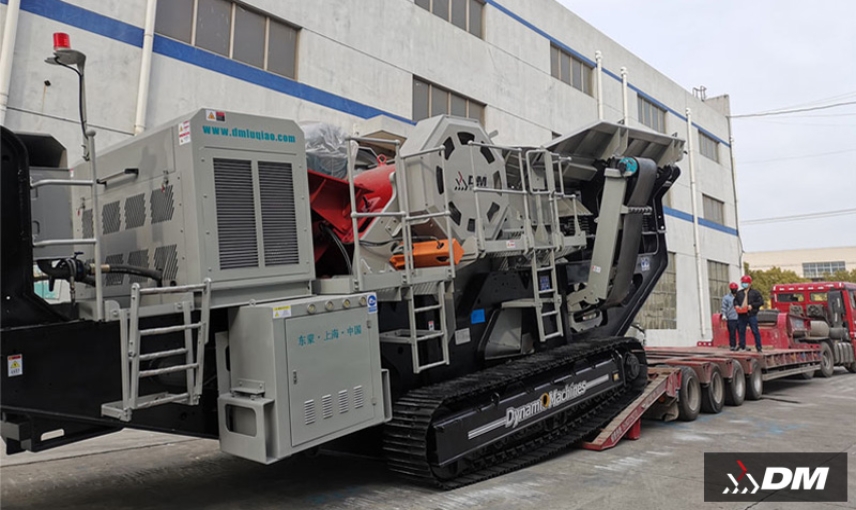
Remote Projects Need Tracked Jaw Crusher
Remote Projects Need Tracked Jaw Crusher
Remote infrastructure projects rarely fail because of a lack of demand. They fail because logistics become more expensive than expected, material supply is inconsistent, and the site cannot wait for aggregate to arrive from far away. For contractors working on roads, dams, pipelines, wind farm foundations, and temporary quarry operations, the real challenge is not just crushing stone. It is producing usable material exactly where it is needed, with minimal relocation cost and minimal interruption to the schedule.
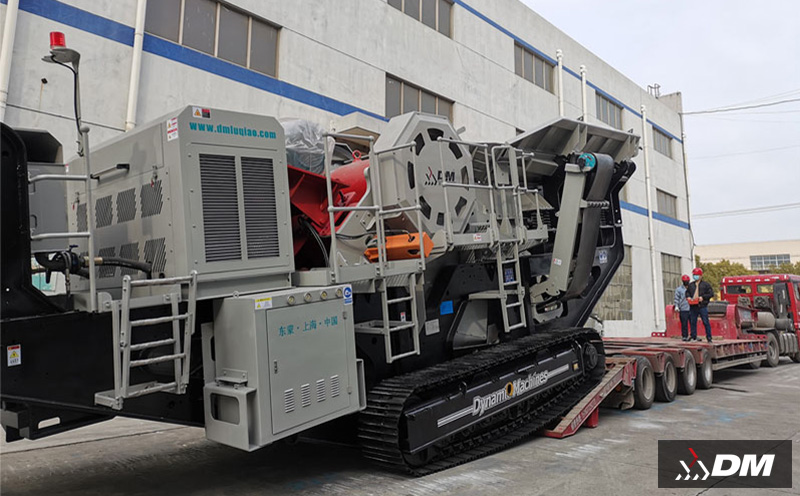
That is why the tracked mobile jaw crusher has become such a critical machine for modern field operations. It gives project teams the ability to move primary crushing closer to the face, the demolition zone, or the borrow pit, reducing truck cycles and allowing production to follow the work. In remote or fast-moving projects, that flexibility often makes the difference between a profitable contract and a delayed one.
For overseas customers, especially in regions with difficult terrain, limited fixed infrastructure, or high fuel and labor costs, the tracked mobile jaw crusher is not just a convenient option. It is a way to solve multiple site problems at once: mobility, feed variability, setup speed, and supply chain dependence.
Why Transporting Raw Material Is Often the Hidden Cost
Many contractors initially focus on machine price, fuel use, or nameplate capacity. But on remote projects, one of the biggest hidden costs is hauling raw rock or demolition waste over unnecessary distance. Moving unprocessed material is expensive because it requires more trucks, more fuel, more road maintenance, and more time.
When crushing is performed off-site or far from the excavation zone, the project absorbs several avoidable penalties:
High internal transport cost
Large raw feed is heavier and less efficient to move than processed material.
Delays caused by changing work fronts
As excavation shifts, fixed processing points may no longer be practical.
Longer setup time between project phases
If equipment cannot relocate quickly, production falls behind construction progress.
More exposure to site access constraints
Remote roads, seasonal weather, and temporary permits can disrupt external aggregate supply.
A tracked mobile jaw crusher addresses these issues by moving the primary crushing function directly to the active zone. Instead of forcing the material to travel to the plant, the plant travels to the material.
Mobility Changes the Project Economics
The main advantage of a tracked mobile jaw crusher is not simply that it has tracks. The real value is how those tracks change project economics.
First, they reduce dependence on civil works. A fixed plant often requires extensive foundations, structural steel, and permanent layout decisions. A tracked machine can be deployed with much less site preparation, which is especially important for temporary projects or contracts with uncertain duration.
Second, they improve phase-to-phase continuity. Road construction, dam work, and large earthworks rarely stay in one location for long. When the crushing unit can relocate efficiently, production stays close to demand. This reduces double handling and simplifies site traffic management.
Third, mobility improves response time. If blasted rock characteristics change, or if one borrow source becomes less attractive, the tracked mobile jaw crusher can be repositioned to support a new material flow strategy.
For contractors managing multiple jobs each year, this flexibility increases machine utilization across projects rather than tying capital to one permanent site.
The Best Situations for a Tracked Mobile Jaw Crusher
The tracked mobile jaw crusher is particularly strong in environments where primary crushing must be both reliable and adaptable.
Road and highway construction
Projects often progress linearly across large distances. Aggregate production needs to move with the work.
Dam and hydropower sites
Access roads may be limited, and hauling from external quarries can become expensive and slow.
Remote quarry development
Where temporary production is needed before a permanent plant is justified.
Construction and demolition recycling
Urban and industrial sites benefit from on-site primary reduction that cuts transport volume.
Mining support works
Temporary crushing during pre-stripping, access development, or satellite pit operations can benefit from mobility.
In these applications, the tracked mobile jaw crusher turns crushing from a static plant function into a field production tool.
What Overseas Buyers Should Evaluate
Buying a mobile unit requires more than checking throughput. Overseas customers should focus on how the machine behaves in real field conditions.
Feed opening and chamber design must match the expected material. Hard rock, reinforced concrete, and mixed demolition waste place different demands on the crusher. Engine performance, hydraulic functions, and control systems also matter, especially in hot climates, high altitudes, or dusty environments.
Transport dimensions are critical. A tracked mobile jaw crusher that is easy to relocate on paper but difficult to move legally between job sites may create unnecessary complications. Fuel efficiency, maintenance access, and compatibility with mobile screens or conveyors should also be assessed early.
Another important factor is operator simplicity. Site crews in remote areas need controls that are intuitive and diagnostics that are clear. A machine that requires constant specialist intervention will not perform well in isolated conditions.
How It Helps Solve Contractor Pain Points
Contractors usually face the same core pressures: finish on time, control fuel and labor, adapt to changing site conditions, and maintain output without adding too many support machines. The tracked mobile jaw crusher answers these needs in practical ways.
Faster project startup
Because civil work requirements are lower, crushing can begin earlier.
Lower haulage burden
Shorter internal transport routes reduce truck hours and operating costs.
Better adaptation to site movement
The unit can shift as the blasting face, demolition zone, or material source changes.
Reduced external supply risk
Producing aggregate on-site protects the project from market shortages and delivery delays.
Easier integration with mobile trains
The tracked mobile jaw crusher can work with mobile screens and secondary units to build a flexible process line.
These benefits are especially valuable in overseas markets where fuel prices, labor availability, and road quality can vary significantly.
Operating and Maintenance Considerations
Mobility does not remove the need for discipline. To get the best results, operators must still manage feed presentation, wear monitoring, and daily service routines carefully.
A tracked mobile jaw crusher should be fed consistently to avoid chamber blockages and uneven liner wear. Pre-screening can improve performance when fines content is high. Daily inspections of tracks, hydraulics, engine systems, and discharge areas help prevent avoidable stoppages.
Maintenance accessibility is a major selection factor. Field service is easier when key components are reachable without excessive disassembly. International buyers should also confirm parts support, remote troubleshooting capability, and training assistance. In remote projects, after-sales response time often matters as much as machine quality.
ROI Comes From Schedule Protection
The strongest financial argument for a tracked mobile jaw crusher is often schedule protection. When a contractor can crush on-site, move quickly, and reduce haulage dependence, the project becomes more resilient. That resilience has real monetary value.
A machine that saves days during setup, cuts truck hours every week, and helps maintain aggregate supply during difficult weather or access conditions can produce a compelling return even if its purchase price is higher than a simpler alternative. In many cases, the equipment pays back through avoided delays rather than through crushing volume alone.
That is especially true on infrastructure contracts with penalties for late completion or with remote logistics that amplify every operational inefficiency.
Conclusion
The tracked mobile jaw crusher is a strong answer to one of the biggest problems in modern project delivery: how to produce reliable aggregate without locking the operation into a fixed location. For roads, dams, remote quarries, and temporary field projects, mobility is not a luxury. It is an economic advantage.
Overseas customers who need fast deployment, lower haulage cost, and production that follows the work will find that a properly selected tracked mobile jaw crusher does more than crush stone. It helps keep the entire project moving, with less dependency, less disruption, and more control over cost and schedule.


We will answer your email shortly!