


Latest blog
Shanghai Dongmeng Heavy Industry Debuts ... How to Match the Screening System for Cr... How to Troubleshoot Common Crusher Fault... A Complete Guide to Mobile Crushing Stat... Unstable Primary Crushing in Large Mines... How to Choose a Reliable Crusher Manufac...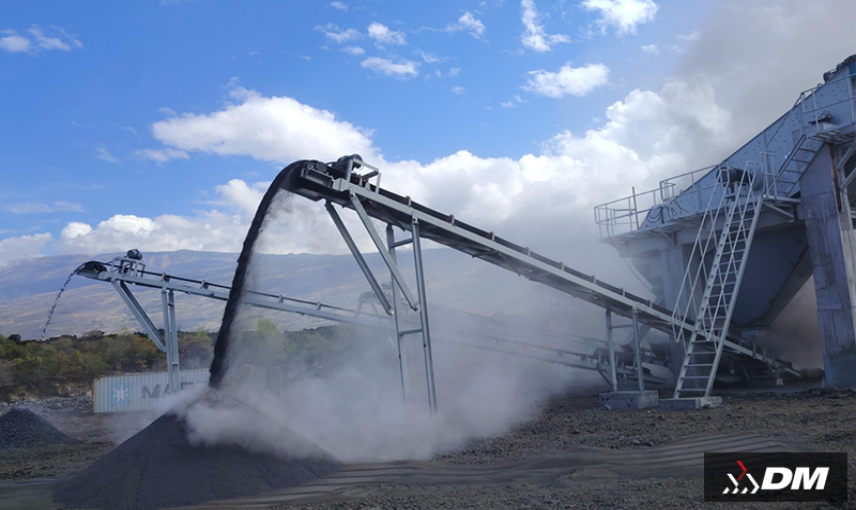
Mobile Crusher Plant for Infrastructure Projects
How Tracked Mobile Crushers Support Large-Scale Construction in 2026
Why Mobile Crushing Plants Are Becoming the Preferred Choice
Traditional aggregate production often depends on transporting blasted rock to a fixed crushing facility. This approach can increase fuel consumption, trucking expenses, and project delays.
A tracked mobile crushing plant solves several common challenges:
- Faster project deployment
- Reduced material transportation costs
- Lower labor requirements
- Greater flexibility between project locations
- Simplified permitting in temporary operations
For contractors working on road construction, railway foundations, and industrial developments, mobility has become a competitive advantage.
Typical Configuration for Infrastructure Projects
A common mobile crushing and screening setup includes:
Primary Crushing Stage
A tracked mobile jaw crusher receives raw materials directly from excavators or wheel loaders.
Typical feed material:
- Granite
- Basalt
- Limestone
- River stone
Feed size:
- Up to 700 mm
Output capacity:
- 150–450 TPH
The jaw crusher performs the initial reduction while maintaining stable throughput under varying material conditions.
Secondary Crushing Stage
After primary crushing, material enters a tracked cone crusher or impact crusher.
Cone crushers are preferred for:
- Granite
- Basalt
- Hard rock applications
Impact crushers are commonly selected for:
- Limestone
- Recycled concrete
- Construction waste
Final products may include:
- 0–5 mm
- 5–10 mm
- 10–20 mm
- 20–40 mm
These sizes meet the requirements of most infrastructure and concrete production projects.
Screening Stage
A mobile screening plant ensures consistent product gradation.
Benefits include:
- Improved aggregate quality
- Reduced oversize material
- Better asphalt and concrete performance
Cost Comparison: Mobile vs Stationary Crushing
Many contractors assume stationary plants always provide lower production costs.
However, project economics often tell a different story.
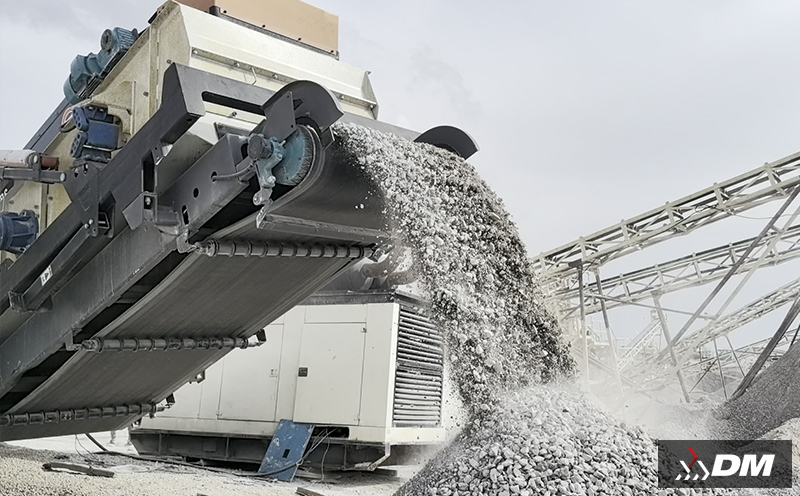
| Mobile Plant | Stationary Plant | |
| Installation Time | Days | Weeks or Months | |
| Civil Foundation | Minimal | Significant | |
| Relocation | Easy | Difficult | |
| Transportation of Raw Material | Low | High | |
| Temporary Projects | Excellent | Limited |
For projects lasting less than three years, mobile systems frequently deliver lower total ownership costs due to reduced infrastructure requirements.
Infrastructure Growth Is Driving Aggregate Demand
Governments throughout the Middle East continue to invest heavily in transportation and industrial infrastructure. Industry forecasts suggest sustained growth in regional construction activity through 2030, creating long-term demand for aggregate production equipment.
At the same time, African governments are placing increasing emphasis on infrastructure development to support mining, logistics, and industrial expansion. Recent reports highlight the importance of new infrastructure investment across the continent.
These developments are encouraging contractors to adopt equipment that can move quickly between projects without sacrificing productivity.
Key Advantages for Contractors
Modern tracked mobile crushing plants provide:
Faster Project Start-Up
Production can begin shortly after equipment arrival.
Reduced Logistics Costs
Material can be processed near the excavation area.
Improved Fuel Efficiency
Shorter hauling distances reduce truck operating costs.
Flexible Production Capacity
Plants can be configured for changing project requirements.
Better Return on Investment
Equipment can be redeployed to multiple sites throughout its service life.
Conclusion
As global infrastructure investment continues to expand in 2026, contractors face increasing pressure to deliver projects faster and more efficiently. Tracked mobile crushing plants provide a practical solution by combining mobility, productivity, and lower operational costs.
For quarry operators, infrastructure contractors, and aggregate producers, mobile crushing technology is no longer an alternative option—it is becoming a standard requirement for modern construction projects.


We will answer your email shortly!